Article 1: The Commercial Revolution — Transforming Rocketry with Reusable Systems
Space exploration once depended exclusively on expendable launch vehicles funded entirely by state budgets. Today, private aerospace engineering has disrupted that paradigm through fully and partially reusable rocketry. By vertical-landing boosters and refurbishing fairings, commercial operators have cut launch costs per kilogram by over 70%, turning orbital transit from a rare, multi-billion-dollar endeavor into a routine operational cadence. This economic shift allows academic institutions, tech startups, and emerging space nations to deploy payloads into low Earth orbit and deep space at unprecedented frequency.
Article 2: Public-Private Alliances — NASA and Global Space Agency Partnerships
Modern lunar and interplanetary ambitions are no longer isolated government programs. Agencies like NASA, ESA, and JAXA rely heavily on fixed-price commercial contracts—such as the Commercial Lunar Payload Services (CLPS) initiative and the Human Landing System (HLS) framework. Instead of building every component in-house, space agencies define scientific objectives and purchase transportation services from private innovators. This synergy combines the rigorous scientific oversight and risk management of national programs with the rapid iteration and capital efficiency of the private sector.
Article 3: Deep-Space Eyes — Next-Generation Space Observatories
Observatories stationed at Lagrange points—such as the James Webb Space Telescope and wide-field survey observatories—continue to rewrite astrophysics textbooks. Equipped with cryogenic infrared sensors, microshutter arrays, and high-precision coronagraphs, these platforms capture the earliest light of the cosmic dawn, penetrate dense nebular dust, and scan the atmospheric chemistry of transiting exoplanets. The precision engineering required to unfold sunshields and calibrate optical mirrors millions of kilometers away represents one of the greatest collaborative hardware feats in history.
Article 4: Sustainable Lunar Infrastructure & The Artemis Era
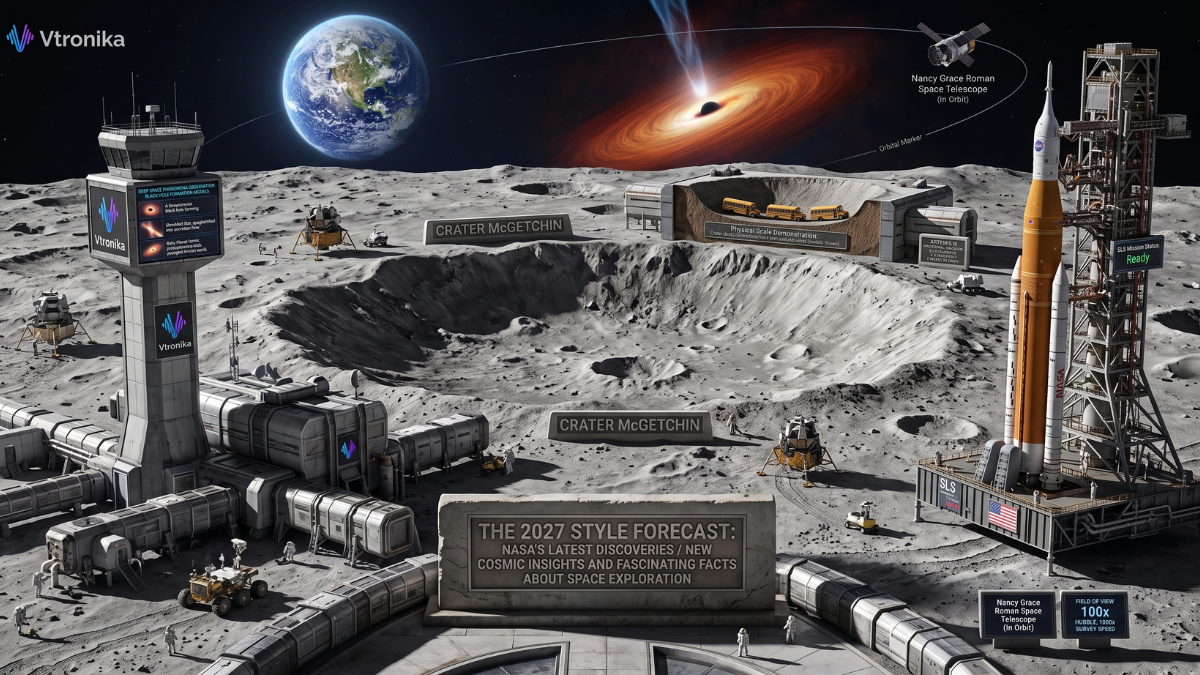
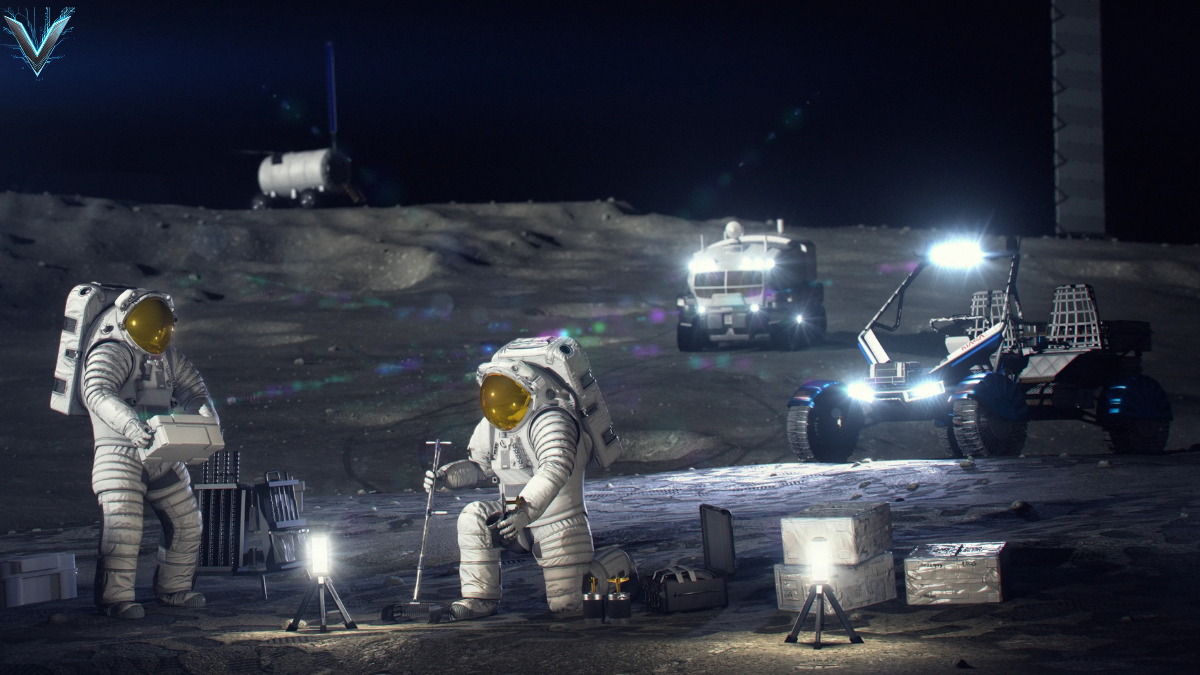
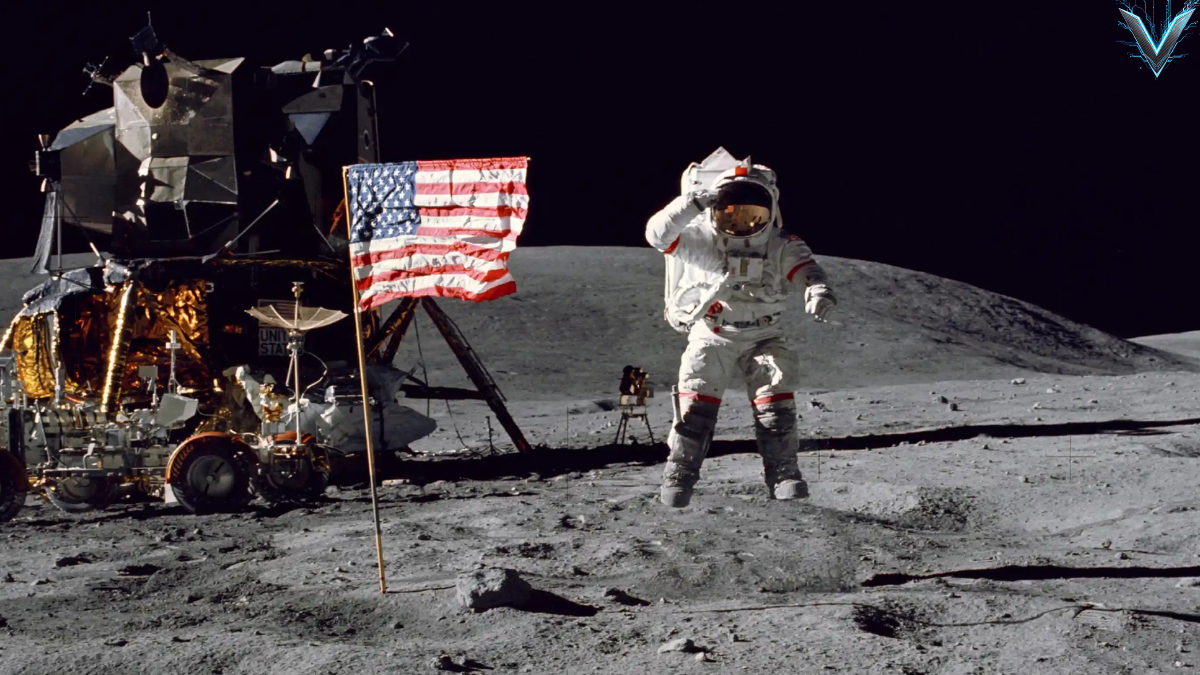
The long-term focus of crewed spaceflight has pivoted from brief exploratory visits to building a permanent infrastructure around and on the Moon. Strategic roadmaps center on the lunar south pole, where permanently shadowed craters harbor billions of tons of water ice. Partnerships are currently manufacturing autonomous landers, pressurized rovers, and orbiting lunar staging habitats. Establishing reliable water extraction, oxygen synthesis, and power grids on the Moon serves as the essential proving ground for human survival before launching multi-year crewed expeditions to Mars.
Article 5: In-Situ Resource Utilization (ISRU) — Living Off the Cosmic Land
Carrying all necessary propellant, breathable air, and building materials from Earth’s gravity well makes deep-space exploration logistically and economically unsustainable. In-Situ Resource Utilization (ISRU) focuses on extracting useful compounds directly from planetary soil and atmospheres. Breakthrough experiments have demonstrated oxygen production from carbon dioxide on Mars, while ongoing efforts focus on refining lunar regolith into radiation shielding and 3D-printable structural materials. ISRU transforms foreign celestial bodies into self-sustaining resupply stations.
Article 6: Autonomous Probes & AI Navigation Across the Solar System
Signal delays across astronomical distances make direct joysticking of planetary spacecraft impossible. Modern deep-space probes rely on machine vision and autonomous hazard avoidance systems to navigate asteroid fields, descend safely onto cratered surfaces, and identify scientifically valuable rock formations without human intervention. Advanced onboard algorithms analyze spectroscopic data in real time, prioritizing high-value transmissions back to Earth’s Deep Space Network and extending mission lifespans across extreme planetary environments.
Article 7: Nuclear Propulsion and Deep-Space Energy Systems
Chemical propulsion has pushed humanity to outer planetary orbits, but its physics limits transit speeds and payload capacities. Bridging the gap to Mars and the outer solar system requires nuclear thermal propulsion (NTP) and advanced space-grade solar-electric thrusters. By utilizing enriched fuel cores to superheat propellants like liquid hydrogen, NTP systems double the efficiency of chemical rockets, significantly shortening travel times, reducing radiation exposure for human crews, and providing dependable power in sunlight-starved deep space.
Article 8: Low Earth Orbit Industrialization & Commercial Space Stations
As government-operated orbital laboratories near their planned retirement, private aerospace developers are building modular commercial space stations. These microgravity hubs host continuous manufacturing facilities that exploit zero-gravity physics to produce high-purity optical fiber (such as ZBLAN), protein crystals for targeted pharmaceuticals, and high-strength semiconductor layers. Private orbital manufacturing turns space into an active industrial sector that directly supplies terrestrial markets with high-value technologies.
Article 9: Earth-Bound Spin-offs — How Space Technology Powers Everyday Life
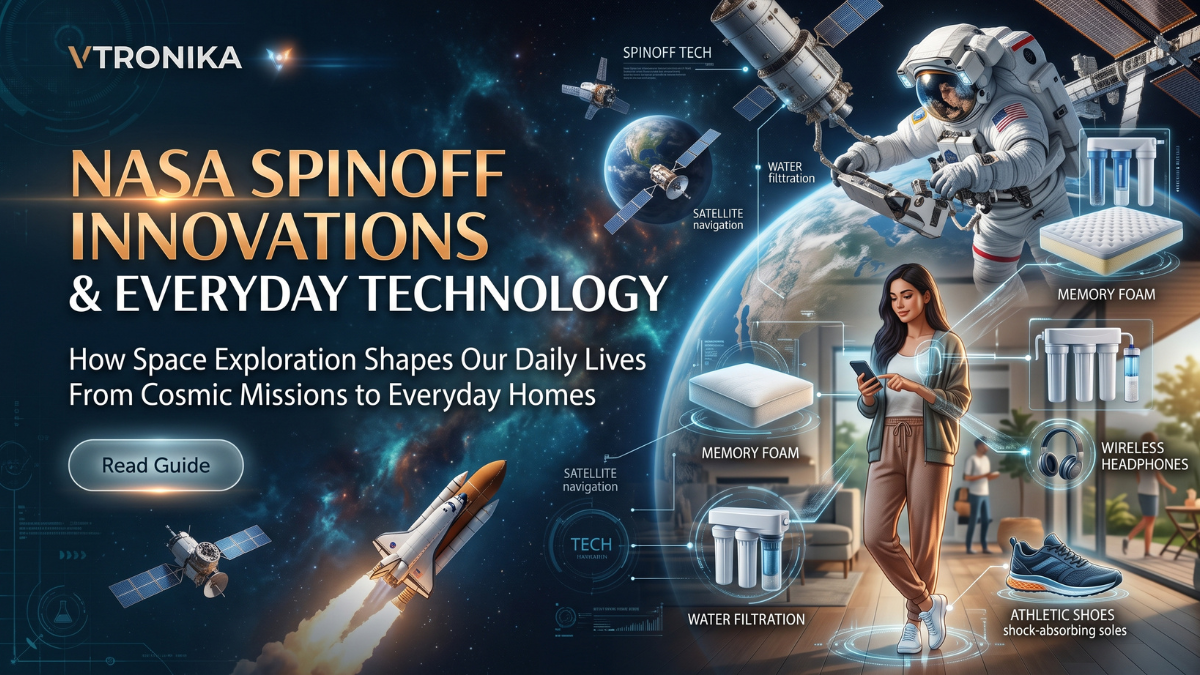
The technological demands of space exploration drive advancements that directly solve critical terrestrial challenges. Closed-loop life-support systems have yielded ultra-efficient water filtration membranes and atmospheric scrubbers currently used in disaster relief zones and remote communities. Simultaneously, advanced satellite constellations equipped with synthetic aperture radar, hyperspectral imagers, and greenhouse gas monitors track deforestation, agricultural yield variations, polar ice melt, and methane leaks with pinpoint accuracy.
Article 10: Inspiring the Next STEM Generation & Global Workforce
The broader value of space exploration lies in its capacity to inspire human curiosity and cultivate high-skill technical capital. Educational institutions, aerospace incubators, and global hackathons draw thousands of students into software engineering, materials science, astrophysics, and orbital mechanics. By celebrating breakthrough milestones—from planetary sample returns to autonomous orbital dockings—the aerospace ecosystem ensures a continuous pipeline of diverse innovators capable of solving humanity’s most complex technical challenges.