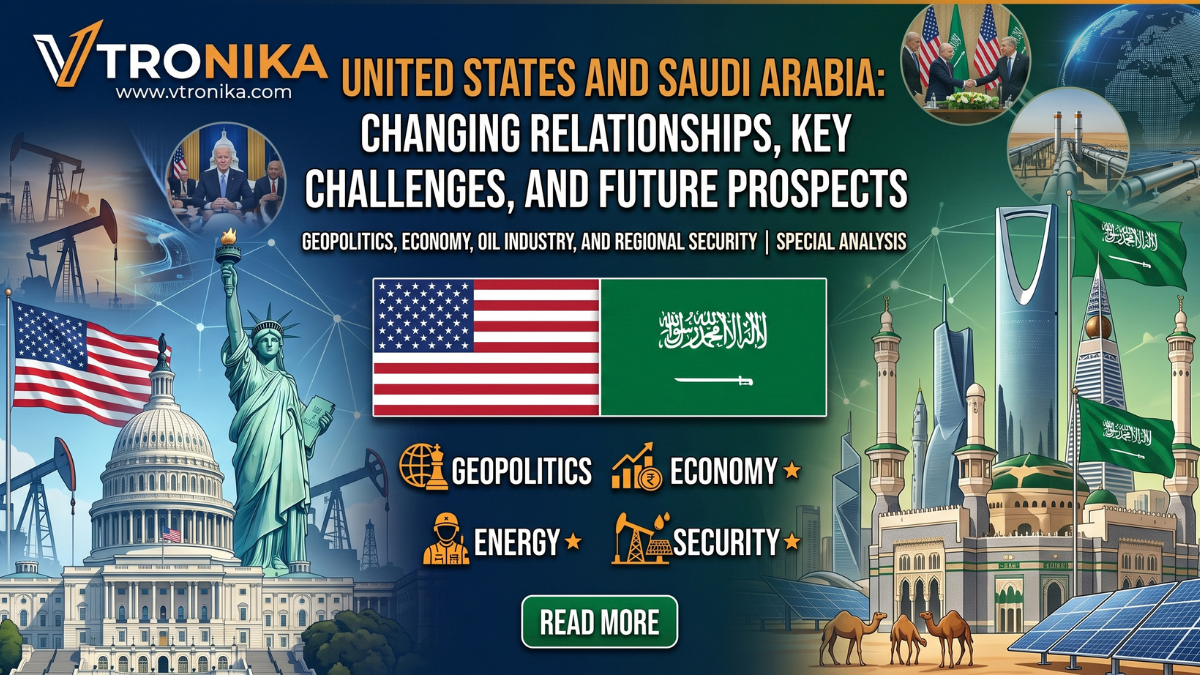
Here is a comprehensive 10-article series examining the interconnected themes of “Shaping The Future Together: Digital Partnership, Saudi Royalty, and Defence.” Each article provides an in-depth analysis of geopolitical strategy, technological modernisation, and institutional reform under Saudi Arabia’s Vision 2030 framework.
1. Vision 2030 and Royal Leadership: The Architecture of a Modern Sovereign State
The transformation of Saudi Arabia from an oil-dependent petrostate into a diversified global economic powerhouse is anchored in the leadership of the Saudi Royal Court, particularly under the stewardship of Crown Prince Mohammed bin Salman. Through the Vision 2030 framework, the monarchy has shifted governance from traditional bureaucratic consensus toward performance-driven, state-capitalist execution. The Public Investment Fund (PIF) has been positioned as the primary sovereign engine, deploying hundreds of billions of dollars across critical infrastructure, manufacturing, sports, renewable energy, and artificial intelligence.
This royal vision balances long-standing institutional legitimacy with aggressive modernisation. Social liberalization, increased female workforce participation, and sweeping regulatory overhauls are paired with high-impact mega-projects such as NEOM, the Red Sea Project, and Qiddiya. By taking calculated strategic risks, the royal leadership has redefined Saudi Arabia’s national brand: transforming the Kingdom from a passive energy exporter into an active architect of regional stability, international commerce, and sovereign industrial capability.
2. Digital Partnerships: Global Tech Alliances and Cloud Infrastructure
At the core of the Kingdom’s domestic modernisation is a deliberate, multi-billion-dollar pivot toward enterprise-grade digital architecture. Rather than building proprietary systems in complete isolation, Saudi Arabia has orchestrated expansive digital partnerships with the world’s leading technology conglomerates, including Google Cloud, Microsoft, Amazon Web Services (AWS), Oracle, and Alibaba Cloud. These arrangements go well beyond basic software procurement; they involve the physical deployment of enterprise hyperscale cloud data regions directly within Saudi borders.
By mandating that sensitive state, commercial, and financial records reside on local servers, the Kingdom strengthens its digital data sovereignty while minimizing network latency for high-speed industrial applications. These digital alliances also include direct funding for regional research centres, localized software developer bootcamps, and accelerator hubs for local start-ups. Through these collaborative channels, the Kingdom is developing an adaptable, digitally literate workforce capable of managing and expanding critical telecommunications networks, smart logistics chains, and governmental administrative services.
3. The Frontlines of Cyber Defence: Securing Critical National Infrastructure
As Saudi Arabia rapidly digitizes its critical infrastructure—spanning desalination complexes, automated port facilities, electrical grids, and petroleum refineries—the attack surface for nation-state and non-state cyber actors expands exponentially. In response, royal decrees established the National Cybersecurity Authority (NCA) and the Saudi Information Technology Company (SITE), constructing a unified, centralized shield over civil and military digital systems.
The Kingdom’s cyber defence architecture operates on a strict zero-trust model, combining real-time threat intelligence feeds, localized Security Operations Centres (SOCs), and sovereign cryptographic standards. Recognizing that energy infrastructure like Saudi Aramco remains a primary target for sophisticated wiper malware and advanced persistent threats (APTs), national cyber policy mandates continuous penetration testing, supply-chain vetting, and automated anomaly detection. Through strategic military-civilian coordination, Saudi Arabia regularly ranks among the top globally validated nations on the ITU Global Cybersecurity Index.
4. GAMI and SAMI: The 50% Military Localization Doctrine
Historically, Saudi Arabia ranked among the world’s largest importers of foreign military hardware, purchasing turn-key fighter jets, surface-to-air missile systems, and armoured personnel carriers from Western suppliers. Under Vision 2030, this dynamic has been replaced by an enforceable national doctrine: localizing more than 50% of the Kingdom’s total defence equipment and services spending within domestic borders.
To execute this mandate, the royal government created two complementary entities:
- GAMI (General Authority for Military Industries): The national regulator that oversees procurement licenses, defines manufacturing standards, and manages industrial offsets.
- SAMI (Saudi Arabian Military Industries): A state-owned subsidiary of the PIF operating as the premier national defence contractor, partnering with foreign aerospace and arms firms to transfer technology (ToT) directly into Saudi plants.
This program prioritizes domestic assembly of unmanned aerial vehicles (UAVs), tactical communications gear, naval patrol vessels, and advanced artillery shells, developing a resilient domestic industrial base that reduces reliance on foreign supply chains during geopolitical crises.
5. Artificial Intelligence and Cognitive Infrastructure: The NEOM Paradigm
NEOM and its flagship linear metropolis, The Line, represent the Kingdom’s most ambitious attempt to build an entirely automated, cognitive civil-military environment. Unlike legacy smart cities that graft digital sensors onto aged physical infrastructure, NEOM is engineered from the ground up to operate on ambient artificial intelligence, edge-computing nodes, and predictive analytics.
In partnership with international AI consortiums, the development integrates digital twins, autonomous transit networks, and zero-carbon water desalination grids. Autonomous systems operate without manual dispatchers, relying instead on real-time computer vision and machine-learning models to balance electrical distribution, manage human transit corridors, and route municipal resources. This infrastructure serves as a real-world testbed for dual-use technologies, where algorithms developed for civil urban efficiency directly inform autonomous border surveillance, robotic perimeter security, and automated logistics networks for the armed forces.
6. Strategic Multi-Alignment: Balancing Western Alliances and Eastern Cooperation
The Saudi Royal leadership has refined its foreign policy toward “strategic multi-alignment”—a pragmatic, balance-of-power doctrine that avoids rigid, exclusive commitments to any single superpower. While the United States remains the historical cornerstone of Saudi air defence integration and counter-terrorism logistics, Riyadh has expanded its strategic engagements with China, India, and European partners.
China has emerged as Saudi Arabia’s primary crude oil purchaser and an essential partner for digital infrastructure (notably via Huawei’s 5G rollout and cloud hubs) and non-Western defence platforms, including co-development arrangements for military drones and ballistic missile systems. Meanwhile, the Kingdom maintains comprehensive bilateral security partnerships with the United Kingdom, France, and NATO members. By diversifying its strategic and defense relationships across multiple geopolitical power centres, Saudi Arabia shields its sovereign interests from political shifts in Western capitals while securing modern technical capabilities from across the globe.
7. Next-Generation Air and Missile Defence: Shielding Vital Corridors
The Arabian Peninsula occupies a complex airspace environment characterized by asymmetrical threats, including low-altitude suicide drones, cruise missiles, and ballistic trajectories directed at energy assets, international airports, and shipping lanes along the Red Sea and Arabian Gulf. Protecting these strategic zones demands an integrated, multi-layered air and missile defence architecture.
The Royal Saudi Air Defence Forces (RSADF) operate one of the world’s most battle-tested missile interceptor systems, coordinating high-altitude Terminal High Altitude Area Defense (THAAD) and Patriot PAC-3 surface-to-air missile batteries. However, as the proliferation of inexpensive, low-radar-cross-section drones has challenged traditional radar systems, the Kingdom’s defence priority has pivoted toward directed-energy weapons (high-energy lasers), mobile short-range air defence (C-UAS), and high-frequency counter-drone electronic warfare systems. Through deep digital integration, data from forward radar installations, airborne early warning aircraft (AWACS), and naval frigates feed into a unified tactical picture, enabling rapid intercept decisions.
8. Space as the New Frontier: Satellite Telecommunications and Orbital Defence
Space has emerged as a critical domain of national power, prompting the reorganization of the Saudi Space Commission into the Supreme Space Council, chaired directly by the Crown Prince. A modern military and civil digital network cannot function without dedicated orbital assets that provide unjammable GPS alternatives, tactical satellite telecommunications, and real-time synthetic-aperture radar (SAR) Earth observation.
Through international joint ventures with established aerospace programs in the United States, Europe, and Asia, Saudi Arabia is investing in sovereign satellite production, orbital launch capabilities, and geospatial intelligence analysis. These space-based assets serve a dual role: providing high-resolution environmental data for domestic agricultural and mega-city monitoring, while granting the Ministry of Defence persistent tactical reconnaissance capabilities over vital waterways—such as the Bab el-Mandeb and the Strait of Hormuz—independent of third-party allied feeds.
9. Maritime Security and Autonomous Naval Operations in Strategic Waterways
Saudi Arabia is framed by two of the world’s most critical maritime choke points: the Red Sea to the west and the Arabian Gulf to the east. Uninterrupted maritime commerce through these corridors is vital not only for national oil and chemical exports, but for the entire system of global trade. Consequently, the modernization of the Royal Saudi Naval Forces (RSNF) is moving toward unmanned surface vessels (USVs), autonomous underwater submersibles, and automated coastal radar arrays.
Working in concert with international task forces (such as Combined Maritime Forces Task Force 153) and integrating sovereign developments from SAMI’s naval divisions, the Kingdom has deployed autonomous patrol vessels equipped with AI-based object classification and passive sonar. These unmanned vessels act as remote force multipliers, patrolling thousands of nautical miles of coastline, identifying suspicious dhows, interdicting illicit weapons smuggling, and shielding commercial container traffic from sea mines and asymmetric waterborne improvised explosive devices (WBIEDs).
10. Human Capital and Defence Academies: Cultivating Sovereign Technical Mastery
A core tenet of Vision 2030 is that high-tech platforms and multi-billion-dollar defence contracts are ineffective without sovereign operational mastery. True self-reliance requires homegrown engineers, algorithmic tacticians, intelligence analysts, and data scientists capable of maintaining, optimizing, and reverse-engineering complex hardware and software systems.
To close this skill gap, the Royal Court has authorized the creation of specialized national academies, including the National Defence University, advanced cybersecurity academies, and technical polytechnics operated alongside foreign industrial partners. Talented Saudi students are placed in targeted global educational tracks focusing on avionics, quantum computing, systems engineering, and robotics. By replacing foreign contractor dependency with trained domestic personnel, the Kingdom is ensuring that its digital networks, military formations, and strategic infrastructure will be operated, maintained, and commanded by its own citizens for decades to come.