Article 1: Artemis vs. Apollo: The Digital Paradigm Shift in Lunar Exploration
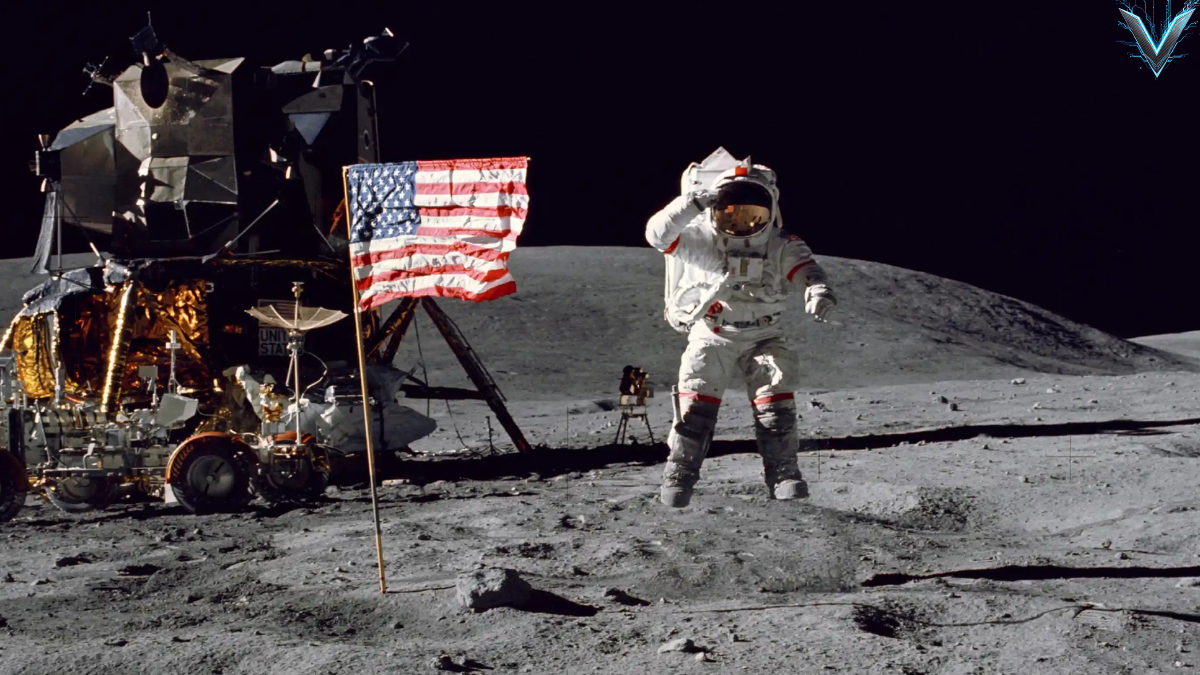
The Apollo missions of the late 1960s and 1970s relied on bespoke analog engineering, hardwired guidance computers with mere kilobytes of memory, and isolated telemetry downlinks. In stark contrast, the NASA Artemis campaign is built entirely upon an interconnected digital aerospace infrastructure. Modern lunar exploration is not merely a contest of chemical propulsion and orbital mechanics; it is a networked software endeavor. High-speed onboard flight computers, software-defined avionics, and fault-tolerant distributed networks allow Artemis spacecraft to execute billions of calculations per second. This digital foundation enables autonomous docking, automated trajectory corrections, and continuous telemetry aggregation, shifting human spaceflight from single-event exploratory visits toward a sustainable, permanent infrastructure in cislunar space.
Article 2: Hybrid Cloud Architectures: Bridging Ground Control with Deep Space
Handling the unprecedented volume of raw scientific and engineering telemetry generated by the Space Launch System (SLS), Orion capsule, and lunar orbiters requires a radical departure from on-premise compute servers. NASA and commercial aerospace partners have deployed secure, multi-region hybrid cloud ecosystems. Massive petabyte-scale data lakes ingest high-frequency sensor readings—covering vibration profiles, thermal gradients, and cryogenic propellant flows—the moment downlinks reach the Deep Space Network (DSN). Commercial cloud instances automatically scale to process complex aerothermodynamic simulations, reconstruct trajectories within seconds, and provide distributed engineering teams worldwide with zero-latency access to mission-critical analytics.
Article 3: LunaNet and Optical Communications: Building the Deep-Space Internet
Historically, deep-space communications have been bottlenecked by congested radio frequency (RF) bands, resulting in limited bandwidth and latency lags. Under the Artemis framework, NASA is deploying LunaNet—a federated communications and navigation architecture that establishes an extraterrestrial internet across lunar space. A core pillar of this network is deep-space optical (laser) communications. By using near-infrared light rather than traditional S-band or X-band radio waves, optical relays achieve data transmission rates 10 to 100 times higher. This throughput enables continuous 4K scientific video broadcasting, multi-gigabit raw telemetry downlinks, and synchronized positioning data for surface rovers operating across extreme distances.
Article 4: Earth-Observation & Lunar Remote Sensing: High-Precision Topographical Mapping
Selecting landing zones near the lunar South Pole presents extraordinary engineering challenges due to long, moving shadows, extreme sub-zero temperatures, and treacherous crater fields. Artemis missions depend on high-resolution synthetic aperture radar (SAR), laser altimetry (LIDAR), and multispectral orbital imagers. Satellite data collected by orbital reconnaissance spacecraft is processed via cloud pipelines into millimeter-precision digital elevation models (DEMs). These models map surface slope, boulder density, and thermal distribution, giving flight dynamics engineers the navigational certainty required to target safe landing sites within permanently shadowed regions (PSRs).
Article 5: In-Situ Resource Utilization (ISRU): Hunting Lunar Ice via Satellite Analytics
A permanent human outpost on the Moon cannot rely entirely on logistical resupply lines from Earth; it requires In-Situ Resource Utilization (ISRU). Permanently shadowed craters at the lunar South Pole harbor billions of metric tons of water ice, a critical feedstock for generating breathable oxygen, potable drinking water, and liquid hydrogen/oxygen rocket propellant. Satellite-mounted neutron spectrometers, thermal radiometers, and bistatic radar sensors gather volumetric signatures of subsurface volatile deposits. Cloud-hosted machine learning models parse these orbital datasets to construct subsurface ice-concentration maps, pinpointing viable excavation zones for autonomous drilling systems.
Article 6: Edge Computing in Orbit: Overcoming Cislunar Latency with Onboard AI
Communications between the Earth and the Moon incur a minimum round-trip signal delay of roughly 2.6 seconds, which can stretch significantly during data relay bottlenecks or line-of-sight occultation behind lunar topography. For high-speed maneuvers like atmospheric re-entry or autonomous landing, ground-in-the-loop control is impossible. Artemis incorporates edge computing directly onboard spacecraft, landers, and uncrewed rovers. Hardened edge processors run optimized neural networks locally, enabling Terrain Relative Navigation (TRN). The lander visually compares incoming camera feeds against pre-loaded orbital maps in real time, detecting hazards and recalculating descent trajectories autonomously without waiting for instructions from mission control.
Article 7: Digital Twins and Predictive Maintenance in Deep-Space Operations
Before a mechanical thruster fires or a life-support valve actuates in cislunar space, it is simulated on Earth using a high-fidelity Digital Twin. Every subsystem on the Orion spacecraft, Gateway space station, and Human Landing System (HLS) has an exact, physics-grounded computational counterpart running continuously in the cloud. Streaming sensor telemetry from the physical spacecraft updates the digital twin in real time. Advanced predictive maintenance algorithms monitor subtle telemetry deviations—such as minor voltage drops, thermal dissipation changes, or seal pressure decay—identifying mechanical fatigue and recommending proactive workarounds long before a hardware anomaly occurs.
Article 8: Securing the Space Supply Chain: Zero-Trust Cyber Defense for Cislunar Assets
As civilian space agencies integrate deeply with commercial vendors, defense contractors, and international partners, the cyber attack surface expands dramatically. Satellite telemetry downlinks, cloud storage nodes, and mission command centers are prime targets for state-sponsored actors and cyber intrusions. The Artemis digital framework implements a rigorous Zero-Trust architecture across all ground, satellite, and orbital segments. Telemetry pipelines and uplink commands are secured via end-to-end post-quantum cryptographic standards. Automated security orchestration platforms monitor command streams for anomalous commands or unauthorized access, ensuring that critical guidance commands remain tamper-proof.
Article 9: Autonomous Surface Robotics and Fleet Telemetry Orchestration
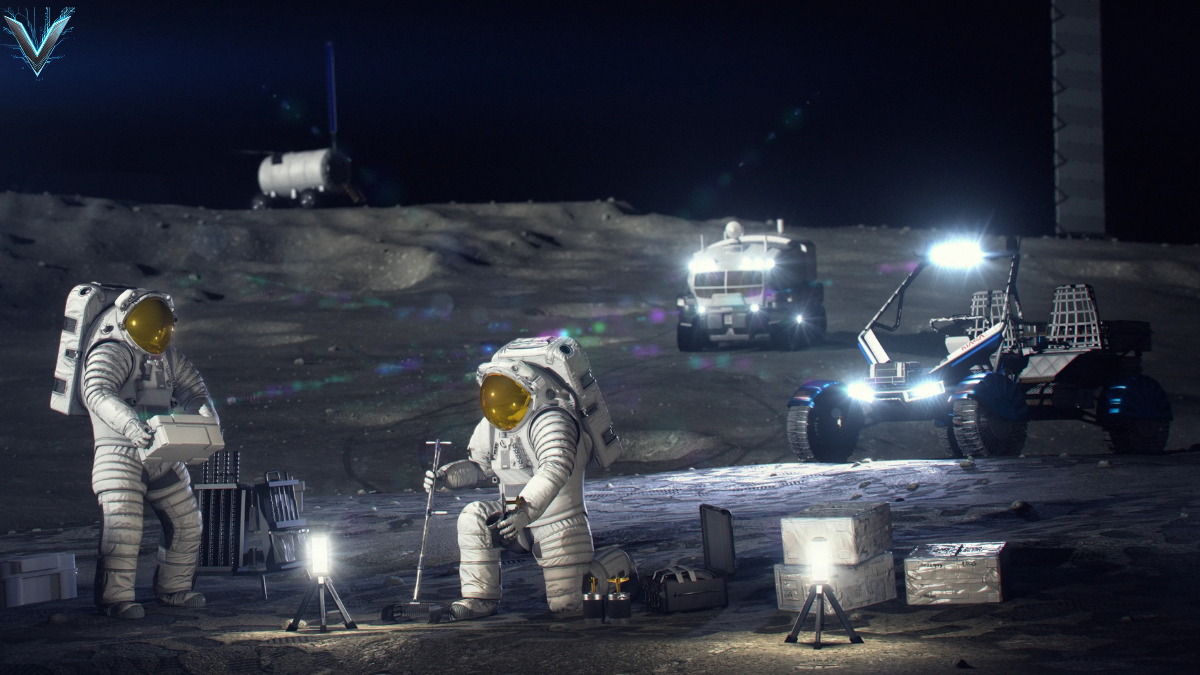
Establishing surface infrastructure—such as power stations, habitat modules, and launch pads—requires fleets of uncrewed autonomous rovers and robotic construction units operating in coordination. Autonomous surface assets ingest satellite positioning data and local sensor telemetry (stereoscopic cameras and LIDAR) to navigate boulder-strewn terrain, plan transit routes, and avoid steep crater drops. Telemetry data from multiple rovers is routed through localized surface mesh networks up to orbiting relay satellites and into cloud repositories on Earth, allowing remote operators to monitor battery health, thermal balance, and payload status across dozens of simultaneous robotic assets.
Article 10: The Proving Ground for Mars: Building Deep-Space Digital Blueprints
The technological, cloud, and satellite frameworks built for the NASA Artemis missions are not designed solely for the Moon; they serve as the foundational testbed for the human journey to Mars. A mission to Mars involves communication delays ranging from 4 to 24 minutes each way, rendering real-time mission control support impossible. The autonomous software architectures, orbital data pipelines, edge-compute decision engines, and resilient satellite mesh networks refined in cislunar space represent the operational blueprint for deep-space self-reliance. By mastering cloud-integrated, software-driven exploration at the Moon, humanity is engineering the scalable digital spine required to navigate, survive, and thrive on Mars.