1. The Global Alliance: Why Space Exploration Demands International Partnership
The sheer scale of the cosmos means that no single nation, regardless of its wealth or technological prowess, can explore it alone. Deep space discovery requires colossal financial budgets, diverse scientific minds, and specialized launch systems. NASA has recognized this reality by establishing collaborative treaties and operational partnerships with space agencies worldwide, including ESA (Europe), JAXA (Japan), and CSA (Canada). By pooling fiscal resources and technological strengths, international coalitions distribute the massive economic risks of space missions while ensuring that every scientific breakthrough serves all humanity rather than an isolated national agenda.
2. The James Webb Space Telescope: A Masterpiece of Transatlantic Engineering
The James Webb Space Telescope (JWST) represents one of the most successful technical partnerships in astronomical history. Built collaboratively by NASA, the European Space Agency, and the Canadian Space Agency, JWST operates approximately 1.5 million kilometers from Earth at Lagrange Point 2 (L2). NASA developed the primary observatory and optical systems, ESA provided the Ariane 5 launch vehicle and key spectroscopic instruments, and CSA delivered high-precision guidance sensors. This combined engineering enables Webb to peer through cosmic dust clouds using infrared vision, capturing light from the universe’s earliest galaxies formed over 13.5 billion years ago.
3. The Hubble Legacy: Decades of Shared Cosmic Discovery
Before Webb, the Hubble Space Telescope demonstrated the power of long-term international partnership. Launched in 1990 as a joint enterprise between NASA and ESA, Hubble has conducted over 1.5 million astronomical observations. ESA contributed crucial solar arrays and specialized scientific cameras, guaranteeing European astronomers guaranteed observation time alongside American scientists. Hubble’s shared datasets helped determine the precise expansion rate of the universe (the Hubble Constant), verified the existence of supermassive black holes at galactic centers, and delivered some of the most iconic images of star birth ever captured.
4. The International Space Station: A Microgravity Laboratory for Earth and Beyond
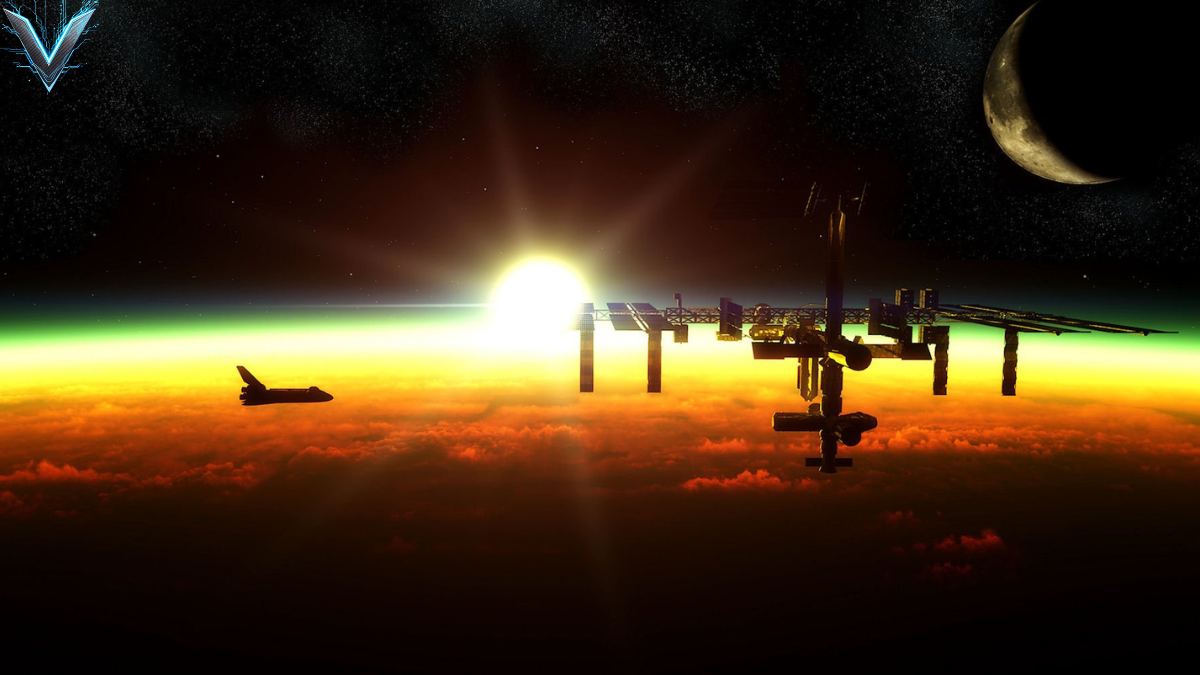
The International Space Station (ISS) stands as the pinnacle of human cooperation in space, uniting NASA, Roscosmos, ESA, JAXA, and CSA under an integrated orbital framework. Beyond serving as a diplomatic triumph, the ISS functions as a world-class microgravity laboratory. Scientists from dozens of partner countries conduct experiments in human physiology, advanced robotics, vaccine development, and materials science. Research conducted aboard the ISS reveals how extended cosmic radiation and low gravity impact the human body, providing essential medical baselines needed before sending astronauts on multi-year journeys across deep space.
5. The Artemis Accords: Establishing Rules for Deep Space Governance
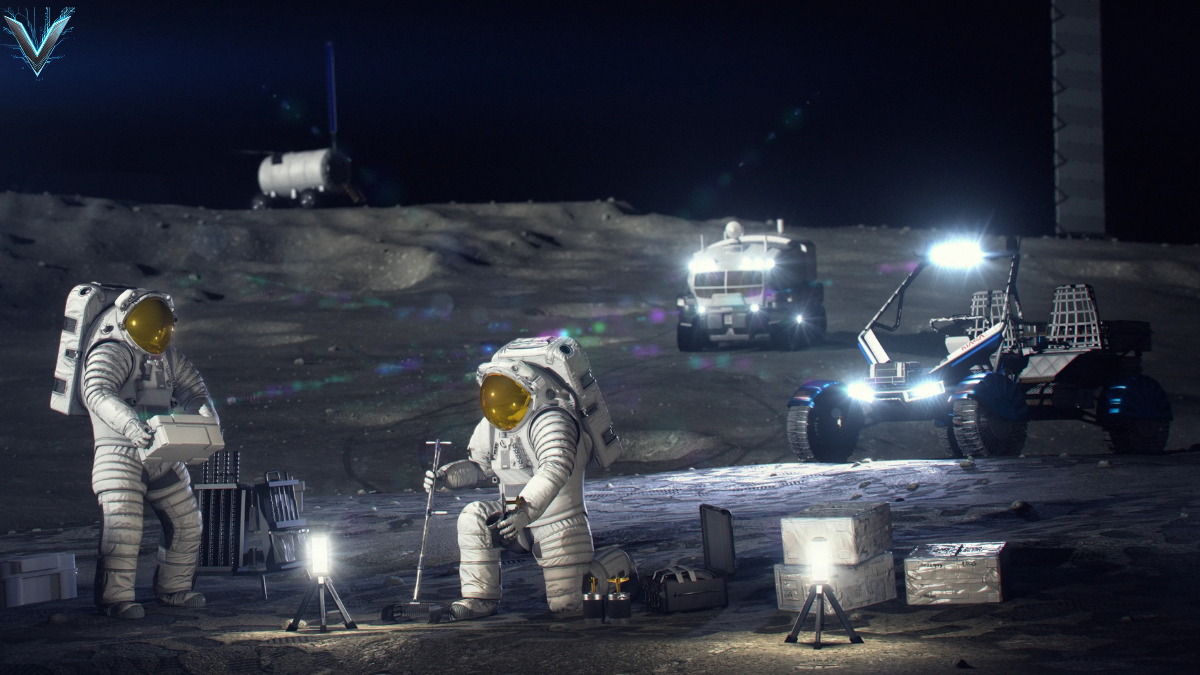
As humanity prepares to return to the Moon and venture toward Mars, NASA established the Artemis Accords—a multilateral set of principles grounded in the 1967 Outer Space Treaty. These agreements bring together dozens of signatory nations to promote the peaceful, safe, and transparent exploration of deep space. The accords govern crucial issues such as space resource extraction, the interoperability of emergency life-support hardware, orbital debris mitigation, and the protection of historic lunar landing sites. By defining legal and ethical standards early, NASA and its allies ensure that outer space remains an inclusive, peaceful frontier.
6. Mapping the Invisible: Searching for Dark Matter and Dark Energy
Roughly 95% of the cosmos consists of dark matter and dark energy—substances that emit no light but dictate the expansion and structure of the universe. To crack this cosmic enigma, NASA is partnering closely with international missions like the European Space Agency’s Euclid space telescope and NASA’s upcoming Nancy Grace Roman Space Telescope. By synchronizing observational strategies and sharing high-throughput computing networks, global astrophysicists create wide-area 3D cosmic maps that trace how gravity and dark energy have distorted galactic shapes over billions of years.
7. Searching for Alien Oceans and Habitable Exoplanets
One of the most profound quests in modern astrophysics is determining whether life exists beyond Earth. NASA coordinates closely with planetary science groups worldwide to study ocean worlds within our solar system—such as Jupiter’s moon Europa and Saturn’s moon Enceladus—as well as thousands of exoplanets orbiting distant stars. Collaborative missions like Cassini-Huygens (NASA/ESA/ASI) proved that subsurface oceans exist under icy crusts. Moving forward, combined spectroscopic techniques enable international teams to search exoplanet atmospheres for biosignatures like methane, water vapor, and oxygen.
8. Planetary Defense: Protecting Earth Through Planetary Collaboration
Deep space exploration is not just about looking outward; it is also about protecting our home planet from celestial hazards. NASA’s Double Asteroid Redirection Test (DART) successfully altered the orbit of the asteroid moon Dimorphos in 2022, proving that kinetic deflection is viable. To complete the scientific investigation, ESA’s Hera mission follows up to survey the impact crater, measure mass displacement, and calculate the exact momentum transfer. This division of labor between NASA and international partners establishes an end-to-end planetary defense system capable of safeguarding Earth against asteroid threats.
9. The Mars Sample Return Campaign: Unlocking the Red Planet’s History
Unraveling the geological and biological history of Mars requires analyzing pristine Martian soil and rock samples inside advanced laboratories on Earth. The Mars Sample Return campaign is an intricate joint effort between NASA and ESA. While NASA’s Perseverance rover collects and seals core samples across Jezero Crater, ESA contributes critical elements such as the Earth Return Orbiter and sample fetch architecture. Retrieving and returning these samples will provide definitive clues about whether microbial life ever emerged in the ancient Martian lakebeds.
10. The Gateway and Beyond: The Stepping Stone to Interplanetary Travel
Looking toward the future of deep space travel, NASA and its international partners are constructing the Lunar Gateway—a small space station that will orbit the Moon. JAXA, ESA, and CSA are designing critical modules, including pressurized habitats, advanced robotics (Canadarm3), and cargo refueling systems. Gateway will serve as a staging platform for lunar surface expeditions and a testing hub for deep-space life-support technologies. By uniting global engineering talent, Gateway lays the physical foundation for the ultimate frontier: sending international crews of human explorers to Mars.