Comprehensive SEO Content Series: The Evolution of Global Cricket
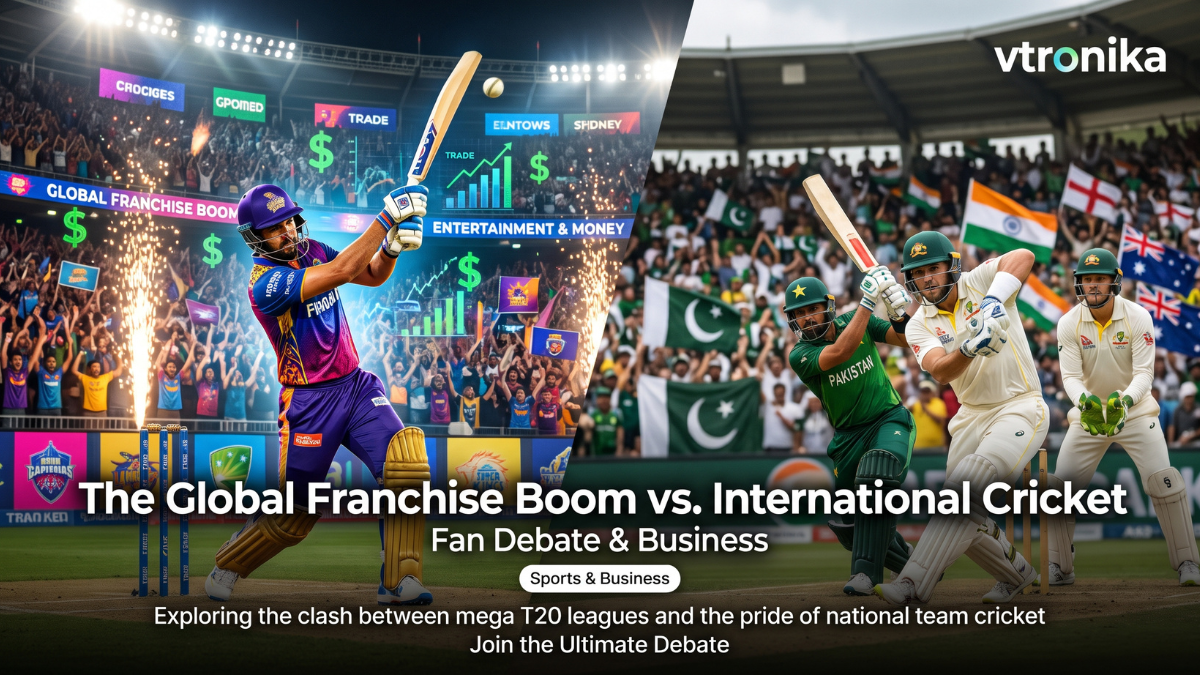
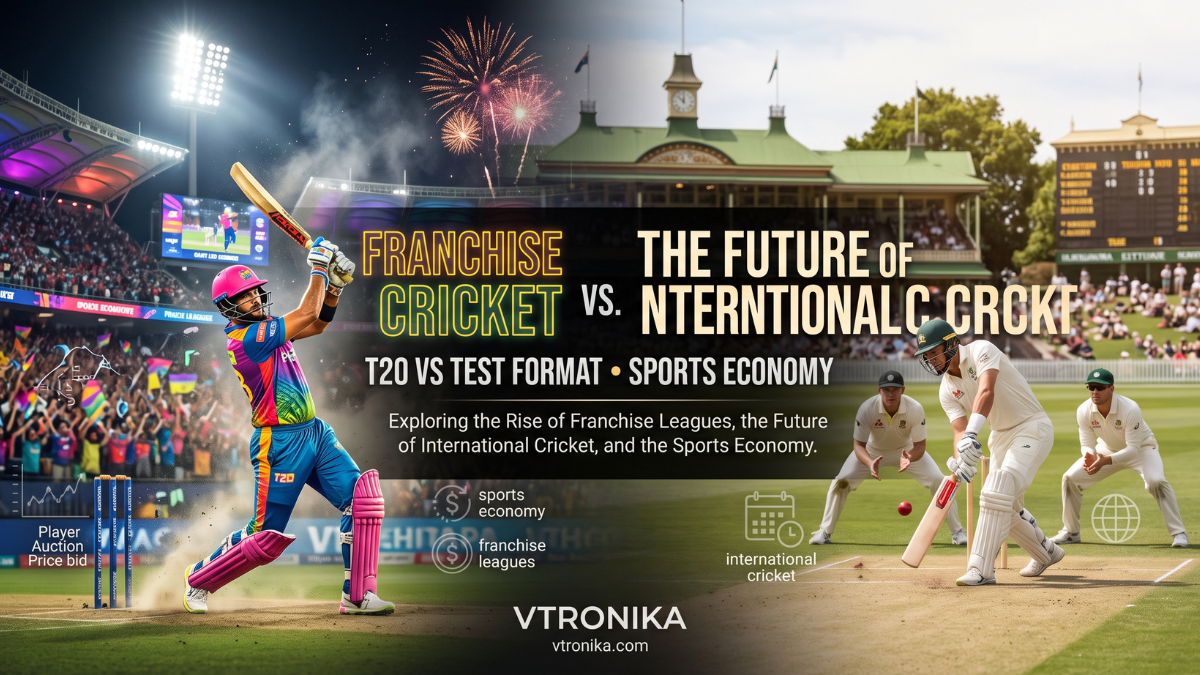
Primary Focus Keywords: Franchise Cricket Leagues, Future of International Cricket, T20 vs Test Format, Sports Economy
Target Audience: Cricket enthusiasts, sports business analysts, digital sports editors, and broad fans of the modern game.
Article 1: The Economics of Franchise Cricket: How Private Capital Reshaped Global Sport
SEO Metadata
- Focus Keyword: Franchise Cricket Leagues, Sports Economy
- Secondary Keywords: IPL valuation, private equity in sports, franchise model, broadcast rights
- Meta Description: Explore how franchise cricket leagues and private capital investments revolutionized the sports economy, altering athlete remuneration, team valuations, and media rights.
Introduction
The transformation of cricket from a legacy colonial sport governed strictly by national federations into a multibillion-dollar commercial juggernaut is one of the most remarkable chapters in modern sports business history. Driven largely by the franchise cricket ecosystem, private capital has fundamentally decoupled player employment from the traditional state or board-governed model.
1. The Multi-Billion Dollar Valuation Boom
The benchmark for franchise cricket economics remains the Indian Premier League (IPL), where franchise valuations have outpaced historical growth curves in traditional leagues like the NFL and Premier League. Media rights auctions generate billions per multi-year cycle, proving that broadcast exclusivity and streaming rights for live T20 cricket represent premium real estate in sports entertainment.
2. Multi-Club Ownership Models
Global conglomerates and franchise owners now own teams across multiple jurisdictions—from India and South Africa (SA20) to the Caribbean (CPL), the UAE (ILT20), and the United States (Major League Cricket). This multi-club strategy optimizes brand equity, unifies sponsorship deals, and allows year-round athlete retention under umbrella contracts.
3. The Impact on Grassroots & Emerging Markets
Private franchise investments create significant secondary economies:
- Development of modern sports science and training infrastructure.
- High-yield domestic employment for coaches, performance analysts, and venue operators.
- Global scouting networks identifying talent outside conventional club pathways.
Key Takeaway
Franchise cricket leagues are no longer supplementary tournaments; they are the financial backbone of the contemporary sports economy, forcing national boards to modernize their commercial structures or risk economic irrelevance.
Article 2: T20 vs Test Format: The Clash Between Commercial Thrills and Purist Heritage
SEO Metadata
- Focus Keyword: T20 vs Test Format
- Secondary Keywords: Longevity of Test cricket, T20 viewership, cricket formats, commercial viability
- Meta Description: An analytical breakdown of the T20 vs Test format debate, assessing audience consumption habits, advertising revenues, and the preservation of five-day cricket.
Introduction
The debate over T20 vs Test format is often framed as a zero-sum war between fleeting commercial entertainment and purist, multi-day endurance. However, understanding the divergence between these formats requires examining evolving human attention spans, broadcast scheduling demands, and the physical demands placed on modern athletes.
1. Viewer Demographics and Attention Economics
T20 matches fit neatly inside a three-and-a-half-hour broadcast window, mirroring the structure of European football and North American sports. This predictable duration appeals directly to primetime television slots and mobile-first streaming audiences. Conversely, Test cricket demands a five-day commitment, making sustained commercial viewership difficult outside marquee rivalries (e.g., The Ashes, Border-Gavaskar Trophy).
2. Advertising and Commercial Discrepancies
- T20: Generates intense advertising density with ad slots between every over, wicket, and strategic timeout.
- Test Matches: Commercial returns depend heavily on attendance at physical grounds and broadcast packages that frequently run at a deficit unless subsidized by bilateral T20 rights.
3. The Cultural and Technical Identity of the Game
While T20 rewards power hitting, tactical improvisation, and micro-moment execution, Test cricket tests psychological resilience, tactical nuance, and sustained physical execution across variable pitch conditions. Losing the red-ball format would strip cricket of its foundational technical craft.
Key Takeaway
Test cricket provides the historical pedigree and narrative gravity of the sport, but T20 generates the cash flow required to subsidize red-ball cricket’s operational costs.
Article 3: The Future of International Cricket in a Franchise-Dominated Era
SEO Metadata
- Focus Keyword: Future of International Cricket, Franchise Cricket Leagues
- Secondary Keywords: Bilateral series crisis, ICC Future Tours Programme, player agency, franchise supremacy
- Meta Description: What does the future of international cricket look like as franchise cricket leagues swallow calendar space? An analysis of bilateral series and player contracts.
Introduction
The Future Tours Programme (FTP) maintained by the International Cricket Council (ICC) faces unprecedented pressure. As domestic franchise leagues expand their competitive windows, the traditional rhythm of bilateral international fixtures—long the primary pillar of cricket—is confronting severe scheduling congestion and player fatigue.
1. The Shrinking Bilateral Calendar
Audiences and sponsors increasingly overlook low-stakes bilateral ODIs and T20Is that lack tournament context. Aside from ICC global events (World Cups, Champions Trophy, World Test Championship), regular bilateral tours struggle with stadium attendance and broadcast valuations.
2. Central Contracts vs. Franchise Autonomy
The balance of power has shifted toward top-tier athletes. Players regularly decline central national contracts in favor of lucrative, multi-league freelance careers. This dynamic reduces the availability of world-class stars for national duty, leading boards to select second-string lineups for international series.
3. Structural Solutions for Coexistence
To secure the future of international cricket, several strategic models are emerging:
- Dedicated Windows: Institutionalizing non-overlapping calendar windows for major franchise tournaments and international windows.
- Context-Driven Series: Tying all international matches to league tables or qualifying points for World Cups.
- Revenue Sharing: Establishing transfer-fee mechanics where franchise leagues financially compensate national boards for player development.
Key Takeaway
International cricket will not disappear, but its footprint will consolidate around high-stakes pinnacle events, leaving bilateral cricket to adapt or face steady downsizing.
Article 4: The Sports Economy of Modern Cricket: Broadcasting Rights and Digital Streaming Wars
SEO Metadata
- Focus Keyword: Sports Economy
- Secondary Keywords: Sports broadcasting, OTT streaming rights, cricket media revenue, digital ad-spend
- Meta Description: Dive into the sports economy of cricket, focusing on how linear TV and OTT streaming services drive astronomical valuations for live cricket broadcasting.
Introduction
Live sports programming represents the final moat of linear television and the most effective customer-acquisition engine for over-the-top (OTT) streaming platforms. Within this ecosystem, cricket is among the highest-yielding properties in global media rights, driving dramatic expansion across emerging digital markets.
1. The Splitting of Media Rights Packages
Broadcasting tenders now systematically unbundle linear television, digital streaming, and regional territory rights. This unbundling spurs aggressive bidding wars between legacy television conglomerates and deep-pocketed tech giants seeking to anchor subscriber growth on mobile devices.
2. Monetization Models: SVOD vs. AVOD
Streaming platforms utilize distinct commercial models to monetize audiences:
- SVOD (Subscription Video on Demand): Premium subscription tiers that capture high lifetime-value subscribers during tentpole tournaments.
- AVOD (Advertising-Based Video on Demand): Free-to-stream offerings aimed at mass-market penetration, monetized via programmatic advertising, interactive overlays, and sponsor integrations.
3. Second-Screen Experiences and Fan Engagement
The digital transition enables gamified viewer experiences, including real-time fantasy leagues, shoppable video interfaces, and multiple audio feeds tailored to regional dialects. These innovations expand advertising yield per active user.
Key Takeaway
Cricket’s financial engine is no longer ticket sales or traditional jersey branding; it is driven by digital delivery, hyper-targeted ad tech, and the fight for digital streaming dominance.
Article 5: The Rise of Major League Cricket and the Untapped North American Market
SEO Metadata
- Focus Keyword: Franchise Cricket Leagues, Sports Economy
- Secondary Keywords: Major League Cricket, USA cricket market, cricket in America, sports investment
- Meta Description: How Major League Cricket (MLC) and private investment aim to unlock the lucrative North American sports economy for franchise cricket.
Introduction
The United States represents the largest, most commercially sophisticated sports entertainment market in the world. With the emergence of Major League Cricket (MLC) and cricket’s inclusion in the Los Angeles 2028 Olympic Games, the sport is staging an aggressive, well-financed expansion into North America.
1. Capital Inflow from Tech and Silicon Valley
Unlike earlier attempts to popularize cricket in the US, MLC is backed by substantial venture capital, Silicon Valley executives, and established IPL franchise owners. Investments have prioritized purpose-built stadiums, training academies, and broadcast-quality production standards.
2. Leveraging Diaspora Demographics
The foundation of cricket’s North American expansion relies on a passionate, high-earning South Asian and Caribbean diaspora. By securing high-profile international marquee talent, MLC has instantly cultivated a paying consumer base for both gate receipts and streaming subscriptions.
3. Transitioning to Mainstream Audiences
To ensure long-term sustainability, American cricket must:
- Introduce cricket fundamentals into collegiate and youth sports systems.
- Adapt broadcasts to local sports viewing habits (advanced analytics, concise game recaps).
- Leverage the 2028 Olympics as a watershed brand awareness moment.
Key Takeaway
North America offers the global cricket economy an avenue to diversify its revenue away from single-region dependency, unlocking new corporate sponsorship opportunities.
Article 6: Player Burnout and Mental Health: The Human Cost of Year-Round Cricket
SEO Metadata
- Focus Keyword: Future of International Cricket, T20 vs Test Format
- Secondary Keywords: Player fatigue, sports science, year-round calendar, cricket workload management
- Meta Description: An examination of the physical demands and mental toll placed on modern cricketers navigating overlapping franchise commitments and national duties.
Introduction
The modern elite cricketer operates in an environment of uninterrupted competition. Where cricketers once enjoyed off-seasons to recuperate and rebuild physical conditioning, the rise of year-round franchise leagues alongside dense international schedules has created unprecedented risks of physical breakdown and psychological burnout.
1. The Physical Grind: Multi-Format Adaptations
Constantly transitioning between the explosive, high-impact demands of T20 bowling and the high-volume endurance of five-day Test matches strains the musculoskeletal system. Fast bowlers, in particular, face chronic stress fractures, soft-tissue tears, and shortened career spans.
2. Psychological Strain and Bio-Bubble Aftershocks
Continuous touring, rigid biosecurity in recent years, and intense digital media scrutiny leave players vulnerable to psychological fatigue. Elite players are increasingly taking indefinite leaves of absence to safeguard their mental well-being, highlighting the unsustainability of current touring commitments.
3. Workload Management vs. Financial Opportunity
Athletes possess narrow windows of peak earning potential. Expecting a player to decline an eight-week franchise contract worth multiples of their domestic annual retainer is unrealistic. Boards and players must establish transparent, data-driven workload thresholds.
Key Takeaway
Unless regulatory bodies standardize minimum mandatory recovery windows, the sport risks diluting the quality of play on the field due to chronic athlete attrition.
Article 7: How Two-Tier Test Cricket Could Save the Longest Format
SEO Metadata
- Focus Keyword: T20 vs Test Format, Future of International Cricket
- Secondary Keywords: Two-tier Test system, World Test Championship, Test cricket revival, associate nations
- Meta Description: Can a structured two-tier system with promotion and relegation revive competitive integrity and financial sustainability in Test cricket?
Introduction
The competitive disparity in Test cricket has widened. While the financially secure “Big Three” boards (India, Australia, England) routinely contest fiercely competitive, highly profitable five-match series, other nations struggle to fund two-match tours that regularly run at a financial loss. A formalized two-tier Test structure is frequently proposed as a long-term solution.
1. The Financial Deficit of Bilateral Tests
For boards outside the elite commercial tier, hosting a visiting Test team entails substantial operational expenditures—hotel accommodations, broadcast production, DRS tech infrastructure, and venue operations—that often exceed total advertising and ticket revenues.
2. The Case for Promotion and Relegation
A two-division structure would inject immediate sporting stakes into matches:
- Tier 1: Top 6–8 teams competing for the World Test Championship title.
- Tier 2: Emerging Test nations (Ireland, Afghanistan, Zimbabwe) and top Associate members (Scotland, Netherlands) competing for promotion.
- Every fixture carries direct implications for survival, eliminating dead-rubber matches.
3. Overcoming Governance Obstacles
The primary resistance to a two-tier model has historically stemmed from national boards fearing the commercial fallout of relegation. Mitigating this risk requires an ICC-administered central equalization fund to ensure relegated teams remain financially stable while competing in Tier 2.
Key Takeaway
A structured, competitive two-tier league is the most viable operational model to make Test cricket universally compelling and economically defensible for all full members.
Article 8: The Financial Divide: How the “Big Three” Hegemony Shapes the Sports Economy
SEO Metadata
- Focus Keyword: Sports Economy, Future of International Cricket
- Secondary Keywords: ICC revenue share, BCCI commercial power, cricket governance, financial inequality
- Meta Description: A critical analysis of cricket’s revenue distribution model, examining the concentration of wealth within the BCCI, ECB, and CA, and its broader systemic impacts.
Introduction
The global cricket economy is characterized by an unprecedented concentration of wealth. The Board of Control for Cricket in India (BCCI), alongside the England and Wales Cricket Board (ECB) and Cricket Australia (CA), wields disproportionate commercial and administrative power. This financial hierarchy directly influences international policy, scheduling, and systemic resource allocation.
1. The Mechanics of the ICC Revenue-Sharing Model
Under the ICC’s commercial distribution cycles, the BCCI receives the vast majority of central net surplus revenues, justified by India generating over 70–80% of global commercial value for the sport. However, this model leaves lower-ranked full members and associate nations with fractionally small operational budgets.
2. The Threat of a Monopolized Sport
When smaller boards face chronic fiscal deficits, their ability to fund domestic first-class competitions, maintain grass-roots facilities, and retain elite talent deteriorates. This dynamic creates a vicious cycle: diminished competitiveness leads to lower broadcast ratings, which triggers further declines in commercial revenue.
3. Rebalancing for Global Health
Sustainable sports ecosystems—such as the NFL and Premier League—utilize aggressive revenue equalization to safeguard competitive parity across all franchises. For cricket to expand globally, international distribution models must shift toward equity-based infrastructure funding rather than raw market-size extraction.
Key Takeaway
Long-term growth across the sports economy demands reinvesting central surpluses into vulnerable cricket territories rather than over-concentrating capital in already saturated markets.
Article 9: Domestic Leagues as Pathways: The Transformation of Talent Scouting and Development
SEO Metadata
- Focus Keyword: Franchise Cricket Leagues
- Secondary Keywords: Talent scouting, domestic cricket, PSL, BBL, data analytics in sports
- Meta Description: Discover how modern franchise leagues have revolutionized talent identification, transforming unknown street cricketers into international stars overnight.
Introduction
The traditional pathway to international cricket was long, rigid, and heavily reliant on hierarchical club cricket and provincial selection committees. Today, franchise cricket leagues have democratized talent discovery, utilizing algorithmic data analytics, high-speed camera tracking, and open trials to identify elite athletic profiles.
1. Compressing the Development Curve
Tournaments like the Pakistan Super League (PSL), Big Bash League (BBL), and Caribbean Premier League (CPL) expose young, uncapped players directly to extreme pressure: full stadiums, broadcast cameras, and elite international opposition. This exposure eliminates the historical psychological adjustment period once required when entering international cricket.
2. Data-Driven Scouting and Specialization
Modern franchises employ dedicated analytics departments that scan ball-tracking metrics to identify niche capabilities:
- Death-overs yorker execution under pressure.
- High-release spin delivery angles.
- Boundary-hitting proficiency against high-pace short balls. Athletes are no longer selected merely on aggregate averages, but on granular, situational execution rates.
3. Global Mobility for Fringe Talent
Cricketers who face selection bottlenecks within deep national systems (such as domestic players in India or South Africa) can now construct sustainable professional careers across the global franchise circuit without relying on national team selection.
Key Takeaway
Franchise leagues have replaced conventional selection committees as cricket’s primary talent incubators, prioritizing specialized athleticism and statistical efficiency.
Article 10: Cricket at the Olympics: LA28 and the Blueprint for True Global Expansion
SEO Metadata
- Focus Keyword: Future of International Cricket, Sports Economy, T20 vs Test Format
- Secondary Keywords: LA28 Olympic cricket, Olympic sports economy, globalization of cricket, IOC
- Meta Description: Assessing the transformative commercial and strategic implications of cricket’s inclusion in the Los Angeles 2028 Olympic Games.
Introduction
The decision by the International Olympic Committee (IOC) to include T20 cricket in the Los Angeles 2028 Olympic Games marks the most consequential strategic milestone for the sport’s global expansion in the modern era. Olympic status unlocks institutional state funding and media visibility that cricket boards could never generate independently.
1. Unlocking State-Level Sports Funding
In dozens of non-traditional cricket territories—across Continental Europe, East Asia, Latin America, and Africa—national sports ministries allocate funding, training facilities, and university scholarships strictly to Olympic-recognized disciplines. LA28 instantly activates government budgets for local cricket federations.
2. Diversifying the Commercial Narrative
Olympic participation provides:
- Access to global multi-sport brand partnerships and corporate sponsorships outside the Indian subcontinent.
- Enhanced gender parity, with men’s and women’s competitions featured alongside one another on equal footing.
- Entry into untapped broadcast markets across non-Commonwealth nations.
3. The Definitive Triumph of the T20 Format
The Olympic framework definitively cements the T20 format as cricket’s universal, global ambassador. The multi-day demands of Test cricket and the eight-hour operational length of ODIs make them non-viable for compressed, multi-sport Olympic schedules.
Key Takeaway
The LA 2028 Olympics will serve as the premier catalyst for transforming cricket from a regional Commonwealth pastime into a genuine, multi-continental sporting industry.