
Article 1: Cloud-Native Remote Production (REMI) — Decentralizing Live Match Broadcasting
Live sports broadcasting has historically been one of the most capital-intensive operations in media, requiring massive fleets of outside broadcast (OB) vans, complex satellite uplink transponders, and large on-site technical crews. The transition toward Remote Integration Models (REMI) and cloud-native production platforms has fundamentally restructured this economic and operational framework.
In a cloud-centric setup, camera feeds from the stadium are encoded locally and ingested over managed IP networks using resilient transport protocols such as Secure Reliable Transport (SRT) and Zixi. From there:
- Virtual Control Rooms: Switching, audio engineering, visual effects, and color grading occur in centralized cloud environments (e.g., AWS, Microsoft Azure) rather than on-site trucks.
- Decentralized Operators: Replay operators, directors, and graphics teams can collaborate in real time from home studios or regional headquarters thousands of miles away.
- Grassroots & Tier-2 Monetization: By eliminating the logistical costs of deploying physical crews, tier-two tournaments, regional collegiate circuits, and niche sports can broadcast multi-camera, broadcast-grade productions at a fraction of standard operational expenses.
Article 2: Ultra-Low Latency Streaming Protocols — Closing the Real-Time Broadcast Gap
For live sports, latency is the ultimate metric. Traditional HTTP live streaming architectures (such as legacy HLS or standard DASH) introduce latency windows between 15 and 45 seconds. In an era dominated by instant mobile push alerts, real-time micro-betting, and active social media feeds, viewing a play on a 30-second delay ruins fan immersion.
Broadcasters now deploy specialized low-latency delivery protocols to bridge the gap between traditional linear television and digital streaming:
| Protocol / Architecture | Average Glass-to-Glass Latency | Primary Operational Focus |
| Traditional HLS / DASH | 15 – 45 seconds | General on-demand video, non-interactive linear TV |
| Low-Latency HLS (LL-HLS) / Low-Latency DASH (LL-DASH) | 2 – 5 seconds | Standard mass-scale OTT sports streaming parity with satellite |
| WebSockets / WebRTC | Under 1 second (Sub-500ms) | Synchronized live sports betting, interactive polls, second-screen sync |
Achieving sub-second transmission parity allows sports platforms to integrate live wagering, interactive stadium reactions, and real-time community engagement without the risk of spoilers from adjacent digital channels.
Article 3: Optical Player Tracking and Computer Vision — The Rise of Real-Time Match Data Layers
Modern sports broadcasts no longer rely strictly on high-definition video; they present an augmented, data-rich analytical experience. Advanced computer vision engines and multi-camera optical tracking systems (such as Hawk-Eye, Second Spectrum, and Sportradar) continuously monitor every athlete and object on the field of play.
These tracking arrays sample pitch coordinates 30 to 60 times per second, extracting critical performance telemetry:
- Sprint velocity, total distance covered, and acceleration curves.
- Ball trajectory, rotational spin rate, and strike vectors.
- Spatial pitch coverage, passing lane probabilities, and defensive shape compactors.
This telemetry feeds directly into live broadcast engines, rendering augmented reality (AR) virtual pitch markers, dynamic player identification tags, and heatmaps on live television feeds with sub-frame accuracy, transforming technical tactical nuances into digestible narratives for viewers.
Article 4: Automated AI Highlight Generation and Near-Live Social Distribution
The modern sports consumer engages with sports content across multiple touchpoints simultaneously, with younger audiences consuming short-form match highlights before or instead of watching a full 90-minute or 4-hour broadcast. Capturing this fragmented attention span requires automating the video editorial workflow.
AI-driven video clipping platforms (such as WSC Sports) ingest real-time optical data, audio telemetry, and match event logs:
- Acoustic & Event Triggers: Generative algorithms identify audio decibel spikes from stadium crowds, referee whistles, commentator pitch shifts, and automated optical goal/wicket tags.
- Automated Cropping & Metadata Tagging: The engine immediately crops the action into vertical formats (9:16) for TikTok, Instagram Reels, and YouTube Shorts, while maintaining visual focal tracking on the ball and scoring player.
- Instant Multi-Platform Syndication: Fully rendered, captioned, and branded highlight clips are published across official apps, sponsor channels, and social networks within 30 seconds of on-field occurrence.
Automating these workflows accelerates organic audience growth and opens new sponsorship opportunities for instantaneous, near-live branded moments.
Article 5: The Interactive Second Screen — Gamification, Multi-Angle Streaming & Custom Audio
Passive consumption is steadily giving way to active viewer participation. Next-generation sports platforms empower fans to become their own broadcast directors by introducing customizable viewing portals accessible through smart TVs, tablets, and mobile devices.
Core companion features include:
- Customizable Camera Feeds: Viewers can switch on demand between tactical overhead cameras, isolated player-tracking angles (e.g., “Star Cam”), referee body cams, or 360-degree virtual reality box seats.
- Alternative Audio Commentary Tracks: Fans can toggle off standard commentary in favor of pure stadium acoustics, data-heavy statistical breakdowns, youth-oriented commentary teams, or localized regional language feeds.
- In-Stream Gamification: Real-time predictive trivia, instant audience polling (e.g., “Will this penalty kick be scored?”), and integrated digital leaderboards turn solitary home viewing into a shared community competition.
Giving fans direct control over their viewing experience extends average session durations and reduces subscriber churn on dedicated sports streaming hubs.
Article 6: Augmented Reality (AR) Graphics and Dynamic Virtual Advertising
Augmented Reality graphics have transitioned from basic visual overlays to core narrative and revenue-generating components of sports broadcasts. Modern rendering software integrates optical camera calibration with graphic engines (such as Unreal Engine) to blend virtual elements seamlessly into physical stadium spaces.
Beyond visual stats—like virtual first-down lines in football or strike-zone overlays in baseball—AR powers Dynamic Virtual Advertising:
- Perimeter Board Replacement: Digital advertising boards along pitch perimeters can display completely different sponsor brands to international viewers based on their geographic region, without altering the physical boards visible inside the stadium.
- Virtual Pitch-Side Branding: Digital ads can be keyed directly onto empty grass areas, center circles, or behind goal lines without disrupting the players or obscuring the action.
Virtual advertising unlocks localized revenue streams, allowing rights holders to sell the exact same pitch-side marketing asset to different regional sponsors worldwide.
Article 7: Direct-to-Consumer (D2C) OTT Sports Platforms — Redefining Media Rights
The historic sports business model relied heavily on selling exclusive multi-year broadcast rights to legacy linear cable networks. However, cord-cutting and changing consumer preferences have accelerated the adoption of Direct-to-Consumer (D2C) Over-The-Top (OTT) sports platforms run directly by leagues and franchises (e.g., NBA League Pass, F1 TV, NFL+).
Operating an owned digital streaming ecosystem offers fundamental advantages:
- First-Party Audience Ownership: Direct access to fan contact details, viewing histories, preferred devices, and purchasing patterns, which eliminates the data blind spots inherent to legacy cable syndication.
- Tiered Monetization: Platforms can offer flexible commercial packages, such as full-season passes, single-team passes, pay-per-view single-match access, or last-ten-minutes micro-transactions.
- Integrated Commerce: Direct integration with official merchandise storefronts and stadium ticketing portals allows platforms to serve contextual purchase prompts during emotional match milestones.
Owning the distribution pipeline protects sports organizations against fluctuations in third-party media rights markets and establishes a direct, year-round commercial relationship with fans.
Article 8: Server-Side Ad Insertion (SSAI) — Hyper-Targeted Ad Delivery in Live Sports
Monetizing high-concurrency live sporting events through programmatic digital advertising has historically caused major technical challenges. Client-Side Ad Insertion (CSAI) often results in buffering delays, ad-blocker drop-offs, and jarring frame drops when switching from live match video to ad creative.
Server-Side Ad Insertion (SSAI) solves this by “stitching” individual, targeted commercial breaks directly into the primary video stream at the cloud CDN level:
[Master Cloud Stream] + [Real-Time Ad Request Engine]
            │
            ▼
[Dynamic Stream Stitcher (SSAI)] ──> [Single Seamless Video Stream]
                                                    │
                                                    ▼
                                          [End-User Display]
                                  (No Buffering, Immune to Ad-Blockers)
With SSAI, the end-user’s player receives one uninterrupted video feed. Furthermore, because advertising selection occurs dynamically in the cloud based on user profile data, two viewers watching the exact same soccer final can receive distinct, localized commercials during halftime breaks. This maximizes dynamic ad inventory pricing (eCPM) while maintaining smooth playback.
Article 9: Connected Stadiums and In-Venue Digital Match Engagement
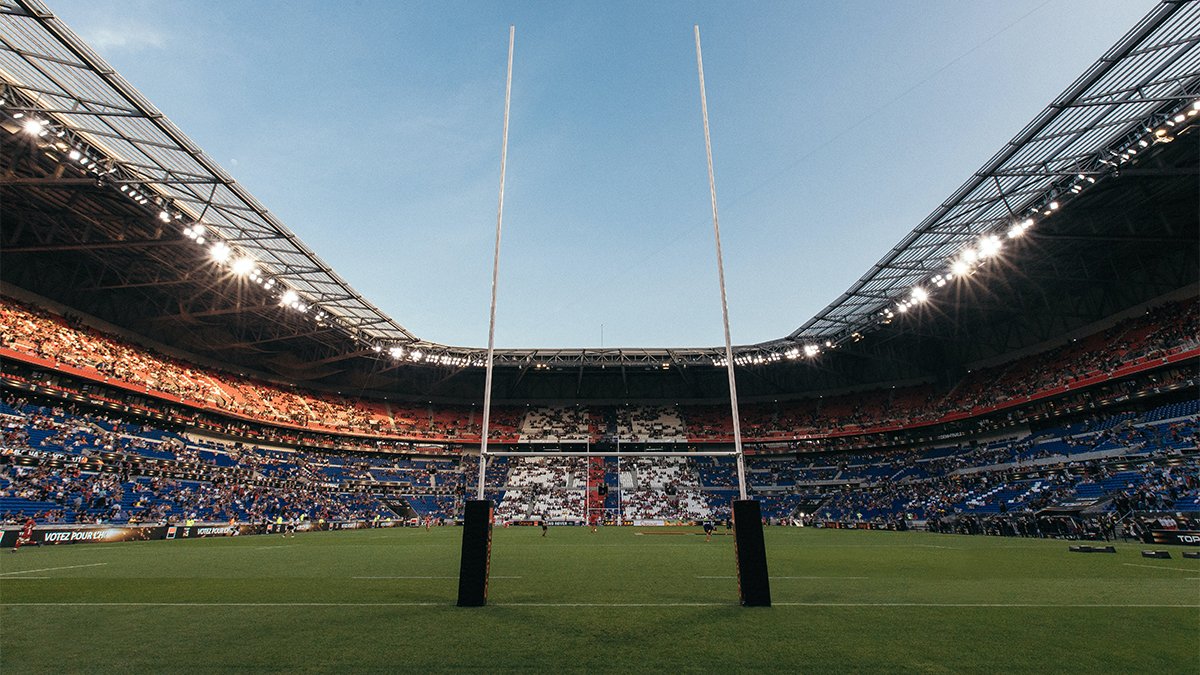
The transformation of sports match solutions extends beyond the home viewer into the physical stadium. Sports organizations are modernizing physical venues into connected arenas, integrating low-latency 5G cellular arrays, edge computing, and Internet of Things (IoT) sensors to elevate the match day experience for attendees.
Key connected stadium innovations include:
- In-Seat Ultra-Low Latency Replays: Fans in the stands can use official venue mobile apps to scrub through multi-angle instant replays and listen to ref audio feeds without venue network congestion.
- Wayfinding and Smart Concessions: Integrated apps manage digital queue times for concession stands, mobile food ordering delivered directly to seat numbers, and interactive navigation maps guiding attendees toward less congested exits.
- Biometric Frictionless Ticketing: Facial recognition gates and mobile NFC passes speed up turnstile entry times, reducing concourse bottlenecks and enhancing venue security.
Modernizing physical infrastructure ensures in-person match attendance delivers convenience and interactive engagement that rivals home viewing.
Article 10: AI-Powered Officiating and Match Decision Support Systems
Technology plays an increasingly central role in fair match officiating, dispute resolution, and regulatory oversight across professional sports leagues. Modern officiating support platforms use automated computer vision and ball-tracking models to verify rules compliance in high-stakes scenarios.
Key technologies reshaping match arbitration include:
- Semi-Automated Offside Technology (SAOT): Deploys dedicated limb-tracking camera rigs and ball-embedded IMU sensors to identify offside positions within seconds, providing 3D spatial models to video match officials without requiring manual line drawing.
- Automated Line Calling: Used widely across professional tennis and cricket, eliminating human perceptual error in determining whether high-velocity balls land in or out of bounds.
- Real-Time Biomechanical Review: Multi-angle 4K high-frame-rate capture provides instant visual confirmation for contact sports officiating, assisting in concussion protocols, foul reviews, and contentious scoring decisions.