
Article 1: The Predictive Atelier — How Generative AI Replaced the Creative Guessing Game
Design houses traditionally relied on months of instinct, mood boards, and Paris showroom feedback to anticipate consumer desire. By 2027, the predictive atelier operates on continuous machine intelligence. Artificial intelligence platforms scan global visual telemetry—mining high-velocity image streams from TikTok, street-style imagery from Seoul to São Paulo, micro-community aesthetics, and real-time search spikes. Instead of reacting to trends twelve months after inception, luxury creative directors utilize neural pattern recognition to anticipate shifts in consumer psychology, silhouette preferences, and color vibrations.
This data-driven methodology eliminates speculative overproduction. Algorithms simulate how a particular drape or textile weight resonates across different regional demographics before fabric shears ever touch raw silk. Far from stifling human genius, generative design suites act as creative co-pilots, outputting thousands of sculptural jacket iterations, lapel geometries, and complex knitwear patterns within seconds. The 2027 runway is not designed by an algorithm alone; it is conceived by visionary designers directing machine models to produce silhouettes that human intuition alone could not mathematically render.
Article 2: The Phygital Imperative — Digital Twins and the Dual-Wardrobe Standard
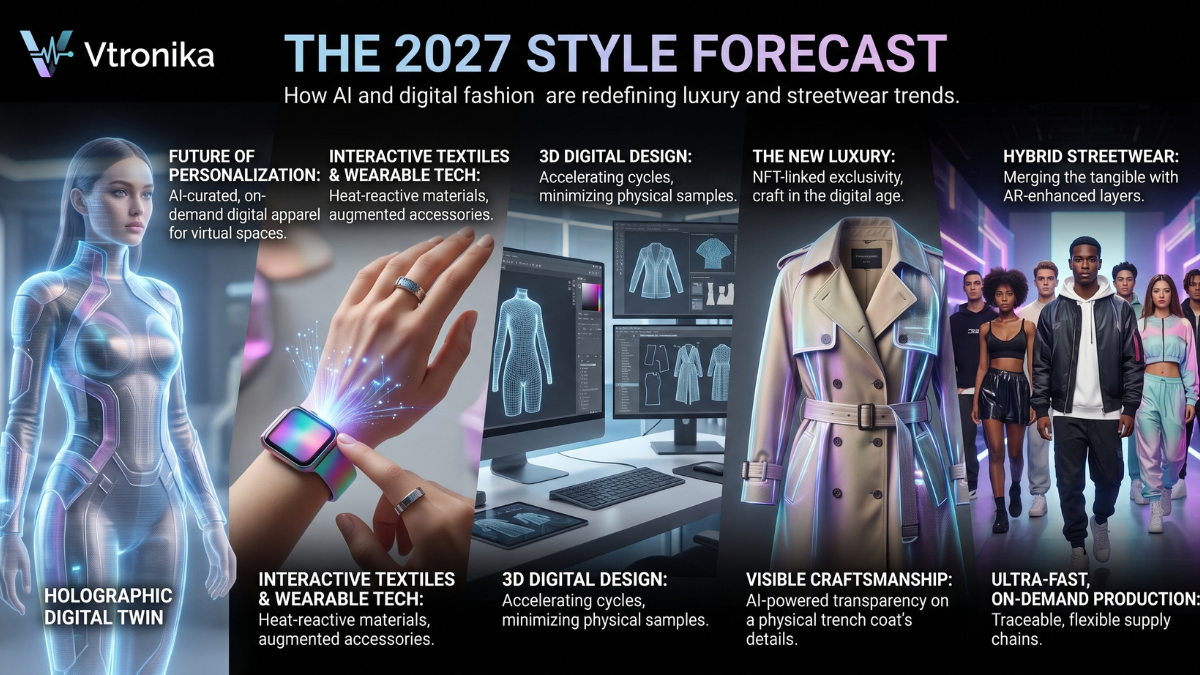
The boundary separating physical apparel from digital assets has dissolved. In 2027, purchasing a luxury streetwear drop or haute couture collector’s piece automatically mints an encrypted “Digital Twin.” Embedded with invisible near-field communication (NFC) chips and tied to decentralized digital passports, physical garments seamlessly authenticate their provenance while unlocking real-time virtual counterparts.
Owners wear their physical heavy-gauge distressed denim or structured trench coat in urban transit, while their verified 3D digital duplicate is worn across virtual spaces, augmented reality social calls, and spatial computing environments. This dual-utility model completely changes luxury valuation metrics. Resale markets no longer trade solely in physical deadstock condition; garments carrying verified digital twins, complete with on-chain wear history and limited virtual skins, command unprecedented premiums among next-generation collectors.
Article 3: Hyper-Customized Streetwear — The Death of Static Mass Production
Streetwear originated as a graphic expression of subculture, rebellion, and community identity. By 2027, the traditional model of dropping 5,000 identical graphic hoodies has become obsolete. Streetwear labels are adopting AI-powered procedural generation engines, allowing customers to co-create garments within defined brand style guidelines.
A consumer selects a base oversized silhouette, sets narrative parameters—such as retro-futurist typography, localized architectural graphics, or distorted graffiti textures—and the brand’s proprietary generative engine prints a 1-of-1 production file. Micro-factories equipped with digital textile printers and automated laser cutting assemble the garment on demand, delivering a truly unique bespoke piece within 72 hours. Scarcity is no longer manufactured through artificial supply limits; it is intrinsic to the bespoke individuality of every cut.
Article 4: Augmented Fitting Rooms and the End of Sizing Inaccuracy
Virtual try-on has transitioned from primitive phone camera filters into hyper-accurate volumetric simulation. Using advanced mobile LiDAR and millimeter-accurate computer vision, 2027 consumers project high-fidelity digital replicas of garments directly onto their live body meshes. Physics engines calculate fabric weight, tensile drape, shear resistance, and stretch behavior in real time, accurately displaying whether a tailored wool coat will pull across the shoulder blades or fall cleanly.
For high-end luxury e-commerce and premium streetwear distributors, this technological breakthrough has solved the industry’s most persistent margin drain: return rates. Shoppers no longer order multiple sizes with the intention of returning two. Instead, brands leverage fit-prediction algorithms to recommend exact custom alterations prior to shipment, bridging the gap between bespoke atelier tailoring and scalable digital commerce.
Article 5: The “Renaissance of Real” — Handcraft’s Premium Over Synthetic Perfection
As synthetic imagery, hyper-rendered digital garments, and algorithmically perfect designs saturate everyday media, luxury is experiencing a fierce counter-movement: the Renaissance of Real. By 2027, extreme machine precision has made perfection cheap. Consequently, the ultimate status symbol has shifted toward visible, unapologetic human imperfection.
Luxury streetwear collectors are actively seeking out raw-edge tailoring, visible hand-repaired Sashiko stitching, irregular hand-loomed fibers, and distressed natural dyes that machines cannot replicate with authentic randomness. Leading fashion houses balance this tension by pairing pristine, AI-optimized silhouettes with raw, artisanal handcraft. The value proposition of luxury has been redefined: machines provide the structural architecture, but human hands provide the emotional soul.
Article 6: Dynamic Textiles and “Cute Tech” — When Streetwear Becomes Hardware
Wearable technology has discarded its clumsy silicone-and-plastic heritage. In 2027, smart technology is deeply woven into luxury street fashion through conductive threads, micro-scale thermochromic polymers, and ambient interfaces. Garments are no longer passive textiles; they interact dynamically with the wearer’s environment and biological signals.
Puffer jackets and technical parkas utilize phase-change materials that adjust their thermal insulation based on biometric heart rate and atmospheric drops. Streetwear accessories showcase the “Cute Tech” aesthetic—compact audio devices, discreet health-tracking jewelry, and micro-displays styled as nostalgic charms or high-gloss hardware. Streetwear is no longer just apparel; it serves as a tactile, modular interface for everyday digital life.
Article 7: Zero-Waste Prototyping and the Autonomous Supply Chain
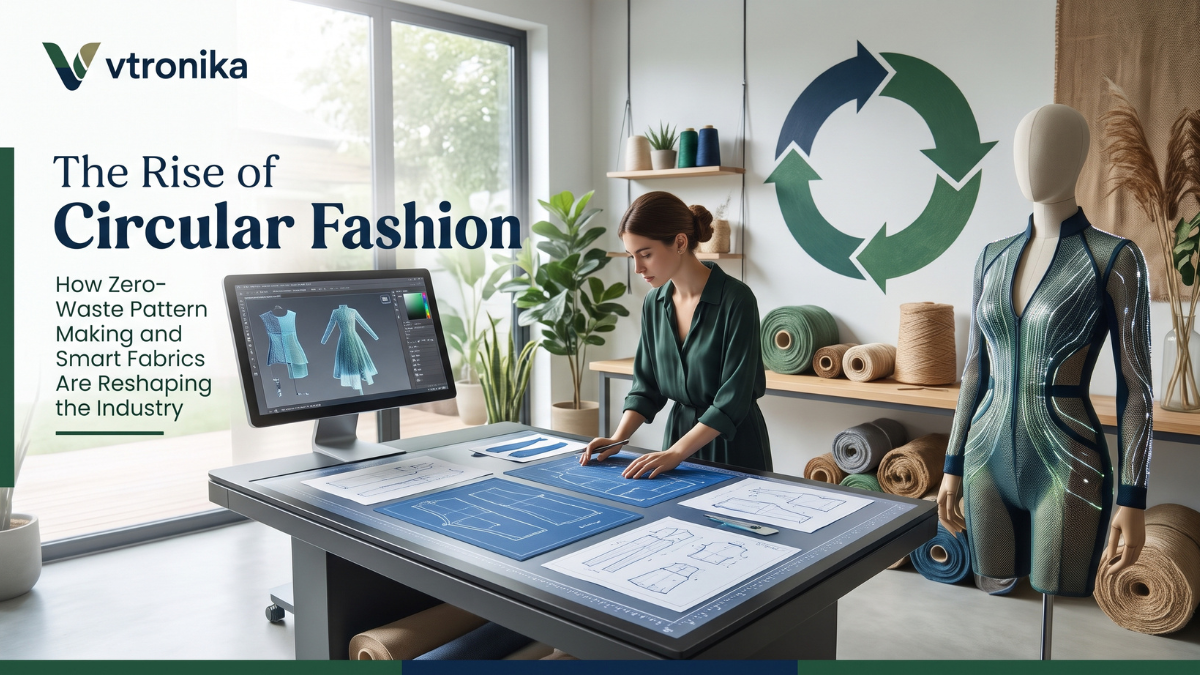
Environmental scrutiny has forced luxury and streetwear to overhaul their supply models, with artificial intelligence serving as the primary operational engine. Historically, the sample-making phase generated tons of discarded prototypes, fabric cutoffs, and international air-freight emissions. In 2027, luxury houses develop collections through 3D photorealistic prototyping environments.
Garment drape, dynamic movement, and stress points are fully tested on digital avatars before a single yard of fabric is woven. When physical manufacturing begins, AI nesting algorithms optimize pattern placement on textile rolls to reduce scrap waste to near zero. Digital product passports track every raw material from regenerative farm to retail floor, giving conscious consumers full transparency regarding carbon footprints, labor conditions, and material recycling pathways.
Article 8: The Virtual Runway and Spatial Haute Couture
The runway experience has evolved from a closed, invitation-only theater in Milan or New York into a borderless, spatial spectacle. While physical fashion weeks persist for industry tastemakers, luxury houses simultaneously broadcast synchronized immersive experiences via extended reality (XR) and spatial headsets.
Viewers across Tokyo, London, and Lahore experience the same front-row atmosphere, watching hyper-real avatars parade through digitally impossible environments—underwater architectural ruins, zero-gravity surrealist landscapes, and light-refracting kinetic sculptures. These virtual showcases allow designers to present runway collections unconstrained by physical physics, blending garments that float, dissolve, or radiate shifting color spectrums with commercially viable physical pieces sold instantly through direct-to-avatar integrations.
Article 9: Algorithmic Street Subcultures and the High-Low Fusion
Streetwear’s historic lifeblood was the physical street corner, the skate park, and the underground music venue. In 2027, subcultures form within niche algorithmic communities, Discord collectives, and decentralized gaming ecosystems. These digital subcultures pioneer distinct micro-aesthetics—ranging from neo-gothic cyber-wear to hyper-pastoral retro-futurism—which are identified and adopted by luxury fashion houses within weeks.
This rapid exchange fuels an elevated high-low fashion syntax. Consumers comfortably pair custom virtual sneakers with hand-tailored bespoke wool trousers, or combine mass-market vintage basics with hyper-limited digital wearables. High fashion and streetwear no longer exist on a vertical hierarchy; they operate as an interconnected cultural loop where street credibility and institutional luxury influence one another in real time.
Article 10: Creative Authorship, IP Rights, and the Co-Creation Economy
The emergence of AI-driven co-creation in fashion has ignited unprecedented legal and ethical debates around intellectual property. In 2027, the central battleground for luxury brands is protecting signature design DNAs—such as iconic monogram patterns, proprietary silhouettes, and recognizable hardware—from unauthorized generative cloning.
To defend their creative heritage, heritage houses register proprietary algorithmic style models, training internal neural networks exclusively on their proprietary archives. Simultaneously, forward-thinking streetwear labels are establishing community royalty frameworks: when a user-prompted custom variation of a brand’s sneaker goes viral and enters limited physical production, smart contracts automatically disburse royalties back to the creator. The designer-consumer dynamic has ceased being a one-way broadcast; it is now an interactive creative collaboration.