Article 1: The Artemis Architecture: Establishing a Permanent Lunar Foothold
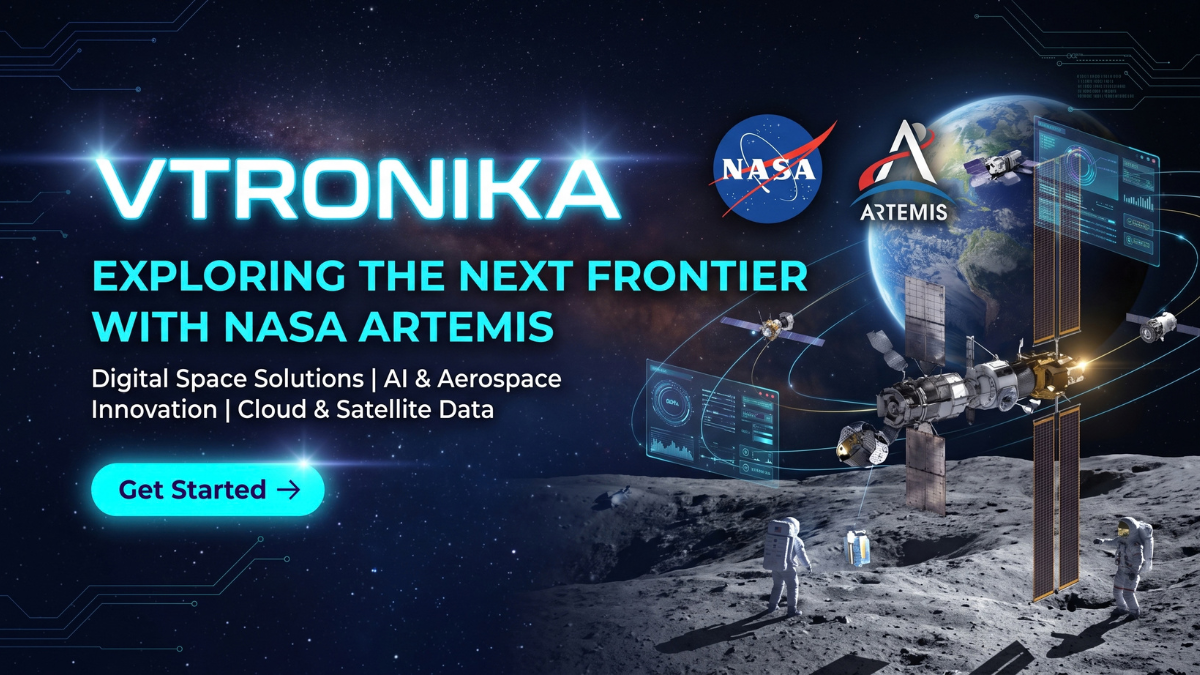
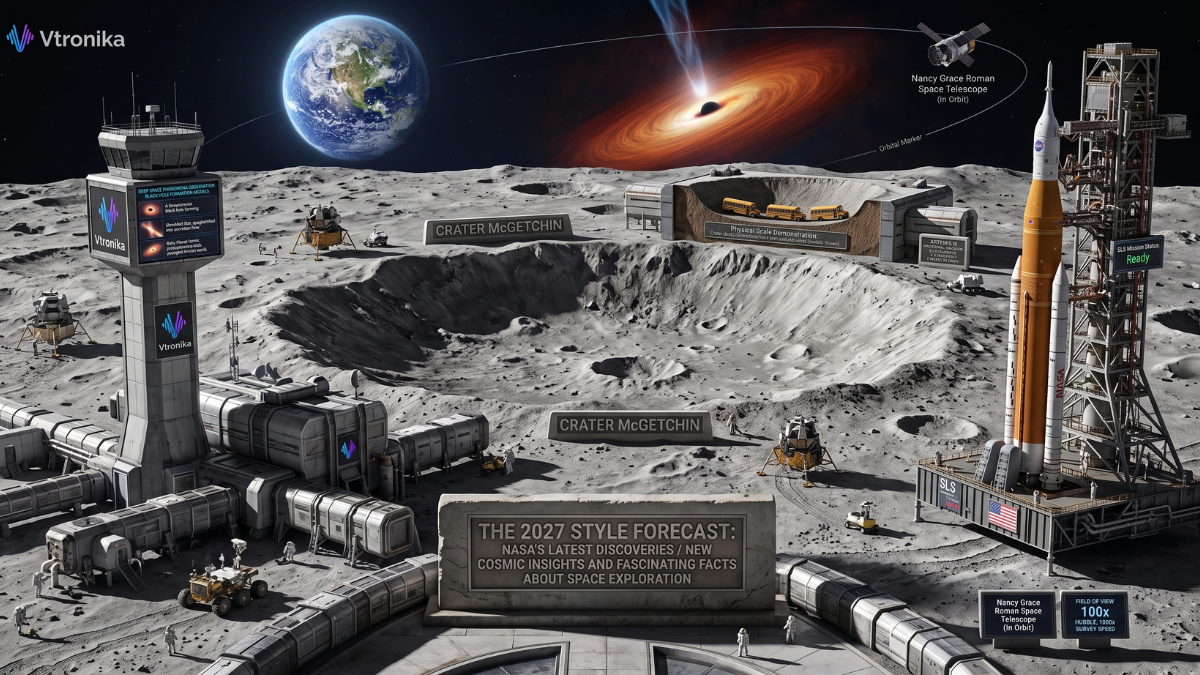
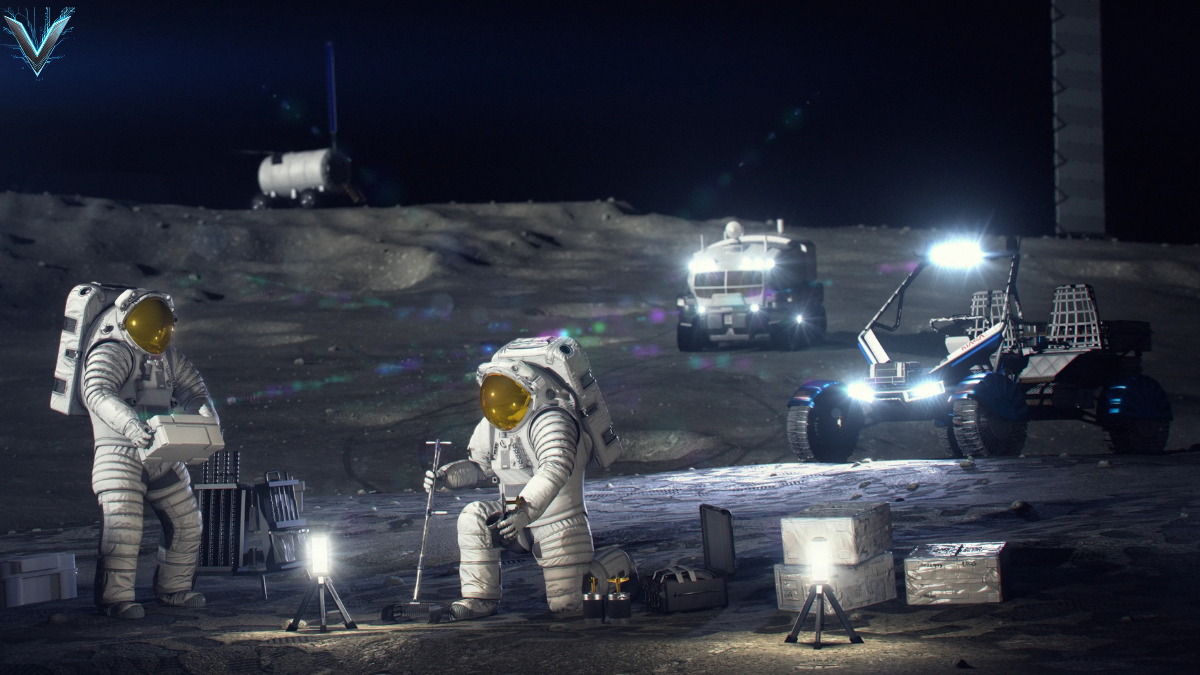
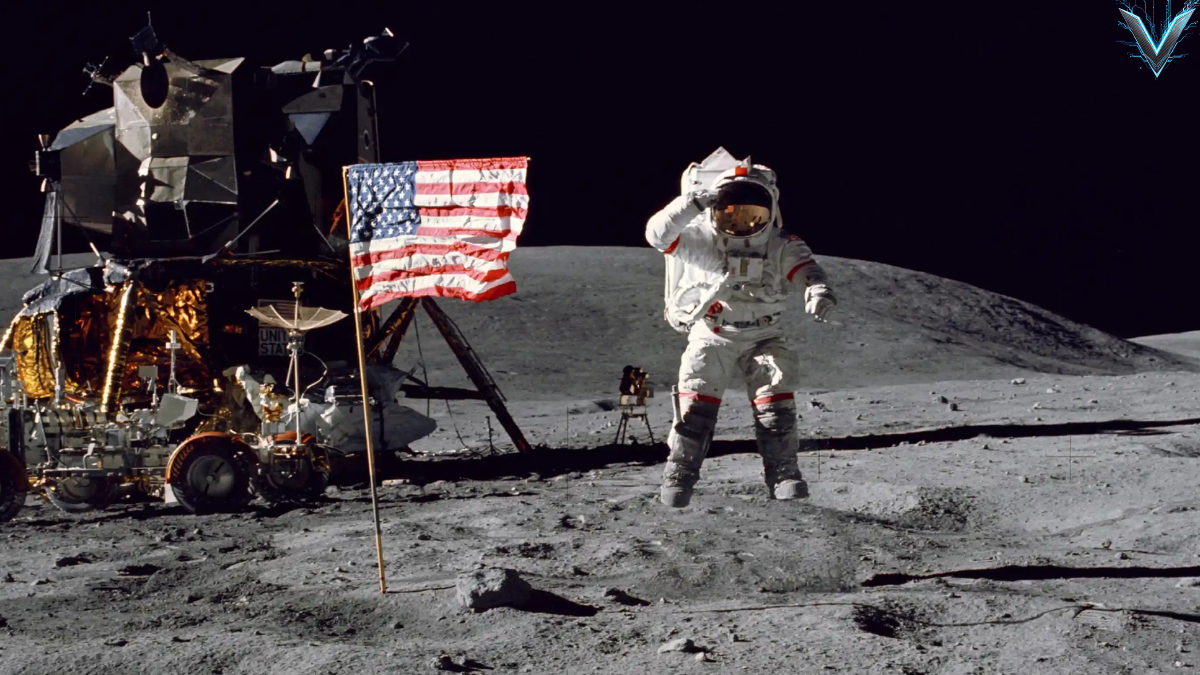
Fifty years after the Apollo program completed its final lunar touchdown, NASA’s Artemis campaign is systematically executing humanity’s permanent return to the Moon. Apollo was an expeditionary triumph of geopolitical prestige; Artemis is a permanent infrastructure initiative. Central to this architecture is the Space Launch System (SLS), the Orion spacecraft, and commercial deep-space transport systems engineered to access the Moon’s resource-rich South Pole.
The strategic focus on the lunar South Pole is driven by geology. Deep impact craters such as Shackleton lie in permanent shadow, acting as cryogenic cold traps that have preserved billions of tons of water ice for eons. Through In-Situ Resource Utilization (ISRU), this frozen ice will not only hydrate human crews but will be split electrochemically into liquid hydrogen and liquid oxygen:
$$\text{2 H}_2\text{O} \xrightarrow{\text{Electrolysis}} \text{2 H}_2\text{ (Rocket Fuel)} + \text{O}_2\text{ (Breathing Air \& Oxidizer)}$$
By transforming the Moon into an off-world refueling hub, NASA and its international partners are laying down the launchpad for deep-space transit, turning Earth’s natural satellite from a distant monument into a staging base for crewed journeys to Mars.
Article 2: The Red Planet Horizon: Robotic Precursors and the Human Mars Blueprint
Mars represents the frontier of human exploration. Long before human boots leave footprints in Martian dust, an armada of robotic precursors has methodically characterized the planet’s atmospheric chemistry, mineralogy, and subsurface hazards. The Perseverance rover, operating within the river delta sediments of Jezero Crater, serves as the scientific advance guard.
Perseverance has drilled, sealed, and cached pristine rock and regolith cores designed to be returned to Earth via the international Mars Sample Return (MSR) campaign. Simultaneously, onboard technology demonstrators have proven the feasibility of survival mechanics:
- MOXIE (Mars Oxygen ISRU Experiment): Extracted ambient carbon dioxide from the thin Martian atmosphere and electrochemically converted it into breathable oxygen.
- Ingenuity Helicopter: Proved controlled aerodynamic flight is achievable in an atmospheric density less than 1% of Earth’s, pioneering airborne scouting for future crewed traverses.
The transition to human transit requires overcoming extreme biological hurdles, including high-dose galactic cosmic radiation (GCR) and zero-gravity musculoskeletal atrophy. The lessons learned from robotic sample extraction and atmospheric cracking form the operating manual for the first astronauts who will inhabit the Martian surface.
Article 3: Peering into the Cosmic Dawn: The James Webb Space Telescope’s Revolution
Orbiting the Second Sun-Earth Lagrange Point (L2) 1.5 million kilometers from Earth, the James Webb Space Telescope (JWST) has rewritten astronomical textbooks by providing unprecedented views into the deep infrared universe. Because the expansion of spacetime stretches ancient ultraviolet and visible light into infrared wavelengths—a phenomenon termed cosmological redshift—JWST acts as a cosmic time machine.
JWST’s 6.5-meter beryllium-gold primary mirror and cryogenically cooled instrumentation (NIRCam, NIRSpec, and MIRI) have observed early galaxies formed just a few hundred million years following the Big Bang. These observations challenge prior cosmological models regarding how quickly massive black holes and galactic structures assembled in the infant universe.
Beyond cosmological origins, JWST is analyzing the atmospheric chemistry of transiting exoplanets. By performing transmission spectroscopy on distant worlds, the observatory detects water vapor, carbon dioxide, methane, and sulfur compounds, cataloging planetary biosignatures and bringing humanity closer to answering whether biological life exists beyond our solar system.
Article 4: The Wide-Angle Universe: The Nancy Grace Roman Space Telescope
While the Hubble Space Telescope acts as a high-magnification telephoto lens and JWST delivers ultra-deep infrared focus, the Nancy Grace Roman Space Telescope brings expansive survey capabilities to deep-space astronomy.
Roman features a 2.4-meter primary mirror equipped with a Wide Field Instrument that captures a field of view 100 times larger than Hubble’s at comparable optical resolution. This wide-angle view enables large-scale surveys of cosmic structures:
| Metric / Instrument | Hubble Space Telescope | Nancy Grace Roman Space Telescope |
| Field of View | ~202 arcseconds | ~0.28 square degrees (100× wider view) |
| Primary Scientific Focus | Targeted deep-field imaging and spectroscopy | Wide-area cosmological surveys, Dark Matter & Dark Energy |
| Exoplanet Tech | Transit detection and radial velocity follow-up | Advanced starlight-suppression Coronagraph Instrument |
| Primary Orbit | Low Earth Orbit (~540 km) | Sun-Earth Lagrange Point 2 (L2) |
Roman is designed to map the spatial distribution of hundreds of millions of galaxies, helping astrophysicists trace how dark matter acts as a gravitational skeleton and measuring the accelerating expansion driven by dark energy. Furthermore, Roman’s Coronagraph Instrument actively blocks out parent star glare, allowing direct imaging of mature, Jupiter-like gas giants in nearby stellar systems.
Article 5: Planetary Defense: Protecting Earth via Kinetic Deflection
For the first time in planetary history, Earth possesses the technological capacity to avoid an impact-driven mass extinction event. The threat posed by Near-Earth Objects (NEOs)—asteroids and comets whose orbits bring them close to Earth—was addressed operationally by NASA’s Double Asteroid Redirection Test (DART) mission.
[NEO Threat Vector Identified] ──> [Autonomous Kinetic Impactor Target Lock]
                                                 │
                                                 ▼
[Hypervelocity Impact (DART at ~6 km/s)] ──> Transfers Linear Momentum
                                                 │
                                                 ▼
[Orbital Period Alteration (Confirmed)] ──> Deflects Future Impact Trajectory
In September 2022, the 570-kilogram DART probe intentionally collided with Dimorphos, a small moonlet asteroid orbiting the larger asteroid Didymos, at roughly 22,500 kilometers per hour. The kinetic impact transferred momentum, blowing thousands of metric tons of rock debris into space and shortening Dimorphos’s orbital period by 33 minutes—exceeding NASA’s target threshold by more than twenty-five times.
Supported by the upcoming NEO Surveyor space telescope, planetary defense has shifted from science fiction into an active, data-driven domain of planetary safety.
Article 6: Terrestrial Spin-offs: How Deep Space Engineering Powers Daily Life
The technological investments made by NASA do not stay confined to orbit. Solving the challenges of space exploration drives useful innovations across civil society, public health, and consumer engineering.
Spaceflight Engineering Challenge                  Everyday Terrestrial Application
┌───────────────────────────────────────────┐      ┌──────────────────────────────────────────────┐
│ Miniaturize spacecraft camera optics      │ ───> │ CMOS image sensors in every modern phone     │
├───────────────────────────────────────────┤      ├──────────────────────────────────────────────┤
│ Purify and recycle water on space stations│ ───> │ Microbial filters for disaster-zone water    │
├───────────────────────────────────────────┤      ├──────────────────────────────────────────────┤
│ Protect astronauts from launch shock loads│ ───> │ Memory foam cushioning in helmets & beds     │
├───────────────────────────────────────────┤      ├──────────────────────────────────────────────┤
│ Monitor astronaut biometrics wirelessly   │ ───> │ Continuous wearable ECG & health telemetry   │
└───────────────────────────────────────────┘      └──────────────────────────────────────────────┘
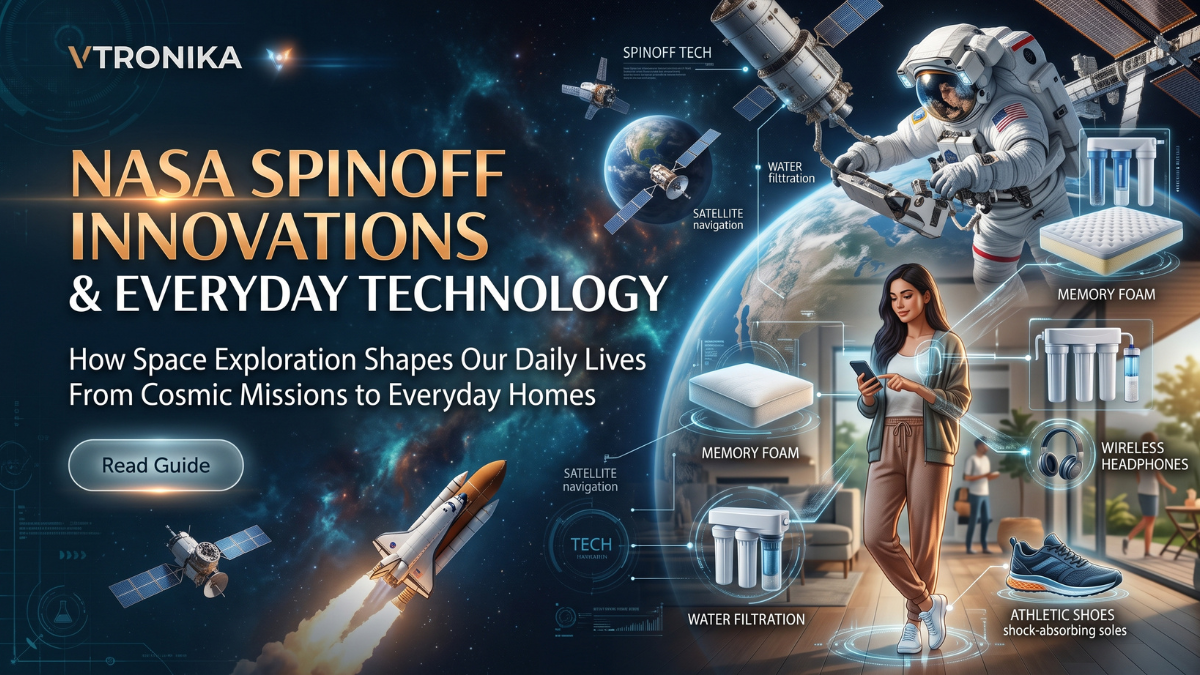
Modern digital photography relies on Complementary Metal-Oxide-Semiconductor (CMOS) active-pixel sensors, developed at NASA’s Jet Propulsion Laboratory to produce small, low-power cameras for interplanetary probes.
Similarly, kidney dialysis machines, infrared ear thermometers, structural aircraft de-icing systems, fire-resistant textiles, and lightweight prosthetic limbs all trace their origins to NASA engineering programs. Space exploration operates as a research engine whose discoveries ripple through the modern economy.
Article 7: The Microgravity Laboratory: Medical and Materials Breakthroughs on the ISS
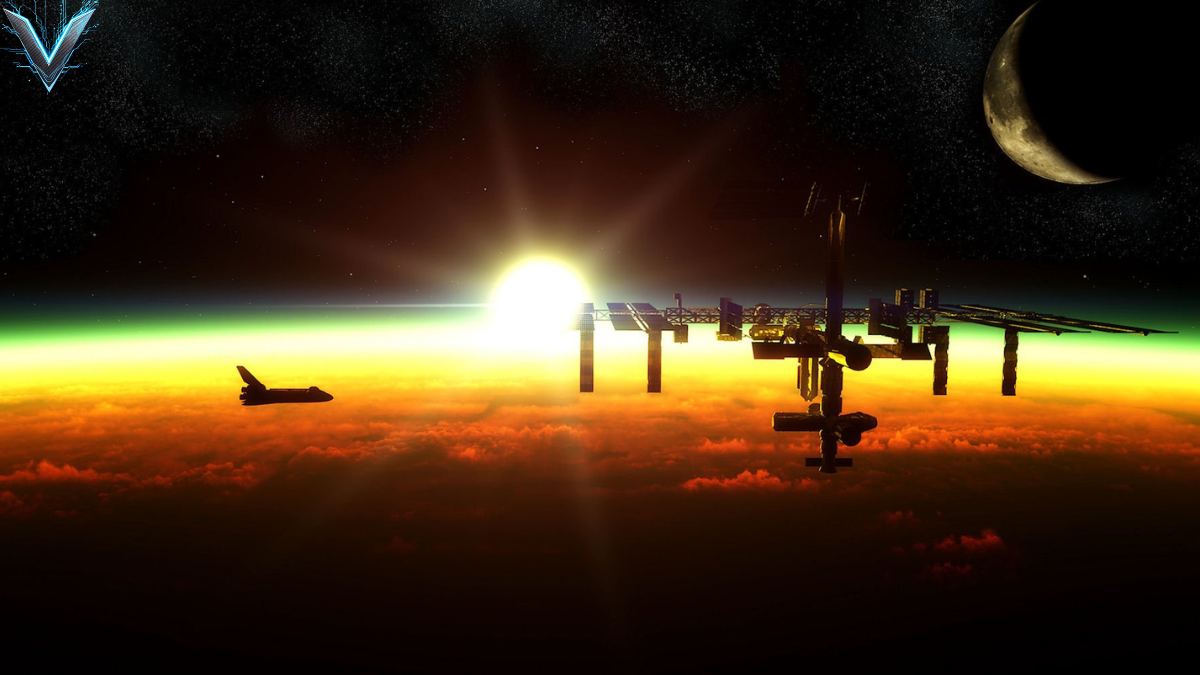
The unique environment of Low Earth Orbit (LEO) eliminates the physical mask of gravity, uncovering novel physical and biological behaviors. Aboard the International Space Station (ISS) and upcoming commercial LEO destinations, microgravity enables scientific experiments impossible on Earth:
- Protein Macromolecular Crystallization: In microgravity, the absence of buoyancy-driven convection and sedimentation allows protein crystals to grow larger and with fewer structural defects. This gives pharmaceutical researchers precise three-dimensional structural models to design targeted cancer therapies, vaccines, and antiviral treatments.
- Tissue Engineering and 3D Bioprinting: Terrestrial 3D organ printing struggles with gravitational collapse, requiring synthetic chemical scaffolding to support cellular layers. In microgravity, bio-printed capillary networks and human cardiac tissues maintain their shape naturally while culturing, pointing toward laboratory-grown transplant organs.
- Advanced Metallurgy & Fiber Optics: Manufacturing ZBLAN (zirconium-barium-lanthanum-aluminum-sodium) optical fibers in microgravity prevents microscopic crystallite formation. The resulting ultra-clear glass transmits light with far less signal attenuation than traditional terrestrial silica fibers, offering breakthroughs for global high-speed communications.
Article 8: Orbiting Sentinels: How Earth Observation Combats Climate Disruption
NASA’s fleet of Earth-observing satellites looks inward, treating our planet as an interconnected physical system. Through missions like Landsat, GRACE-FO, PACE, and the joint NISAR radar mission, space technology provides foundational data for global environmental science:
$$\text{Cosmic Earth Observation} \longrightarrow \text{Atmospheric, Oceanic, Cryospheric Tracking} \longrightarrow \text{Actionable Climate Policy}$$
- Oceanic Ecosystems & Aerosols (PACE): The Plankton, Aerosol, Cloud, ocean Ecosystem satellite tracks the distribution of marine phytoplankton and atmospheric aerosols, showing how ocean ecology interacts with global carbon cycling.
- Gravitational Groundwater Tracking (GRACE-FO): By measuring tiny changes in Earth’s localized gravitational field, the Gravity Recovery and Climate Experiment satellites map deep underground aquifer depletion, glacial mass balance losses in Greenland and Antarctica, and widespread shifts in hydrological basins.
- Deformation Mapping (NISAR): Utilizing dual-frequency synthetic aperture radar, NISAR tracks millimeter-scale shifts across Earth’s land surfaces, monitoring tectonic fault strains, volcanic magma inflation, coastal wetland loss, and structural levee stability.
Without space-based Earth observation, monitoring global deforestation patterns, predicting extreme meteorological events, and understanding climate dynamics would be virtually impossible.
Article 9: Commercial Synergy: NASA, Commercial Spaceflight, and the New Orbital Economy
The modern space landscape is characterized by a structural partnership between government space agencies and commercial aerospace firms. Through initiatives like the Commercial Orbital Transportation Services (COTS) and Commercial Crew Program (CCP), NASA transitioned from purchasing custom government vehicles to procuring commercial transport services, fundamentally lowering launch economics.
Traditional Cost-Plus Procurement (Apollo / Shuttle Era):
Government owns designs ──> High development expenses ──> Single-use hardware ──> High cost-per-kg to LEO

Commercial Fixed-Price Paradigm (Modern Era):
Agency buys seats/cargo ──> Commercial firms own IP ──> Rapid reuse architectures ──> Lower cost-per-kg
By leveraging competition and orbital hardware reusability—pioneered by vehicles like SpaceX’s Falcon 9, Falcon Heavy, and Starship, alongside systems developed by Blue Origin and Rocket Lab—the cost of delivering payload mass to Low Earth Orbit has dropped dramatically.
This drop in launch costs has enabled large orbital satellite constellations, rapid Earth sensing, and new commercial space station architectures. NASA focuses its resources on deep-space exploration, while commercial industry expands access across low Earth orbit.
Article 10: The Next Frontiers: Europa Clipper, Ocean Worlds, and the Search for Life
The search for extraterrestrial life has expanded beyond the dry surfaces of Mars to the icy moons of the outer solar system. These “Ocean Worlds” harbor vast, liquid saltwater oceans beneath thick planetary ice crusts, warmed by continuous gravitational tidal friction:
- Europa (Moon of Jupiter): Holds a global subsurface ocean containing more liquid water than all of Earth’s oceans combined, in direct contact with a rocky mantle that likely supports hydrothermal vent systems.
- Enceladus (Moon of Saturn): Actively erupts cryovolcanic geysers into space, venting water vapor, organic molecules, and silica nanoparticles directly from its interior ocean into Saturn’s E-ring.
[Ocean World Cross-Section Architecture]
Surface Ice Shell (10–30 km thick, shield against cosmic radiation)
               │
               ▼
Liquid Saltwater Ocean (Chemically enriched by rock core interaction)
               │
               ▼
Hydrothermal Vent Chimneys (Chemosynthetic energy source independent of sunlight)
The Europa Clipper mission is built to assess this habitability. Carrying ice-penetrating radar, high-resolution thermal imaging, and mass spectrometers, the spacecraft will perform dozens of low-altitude flybys through Jupiter’s radiation belts.
By analyzing surface composition, ice shell thickness, and the chemistry of vented materials, Clipper seeks to determine whether Europa possesses the three essential ingredients for biological life: liquid water, essential chemical building blocks (carbon, hydrogen, nitrogen, oxygen, phosphorus, sulfur), and a sustained chemical energy source.
Cosmic discovery continues to transform our understanding of the universe, proving that as we reach outward toward distant worlds, we continually develop the tools, perspectives, and technologies that shape life here on Earth.