


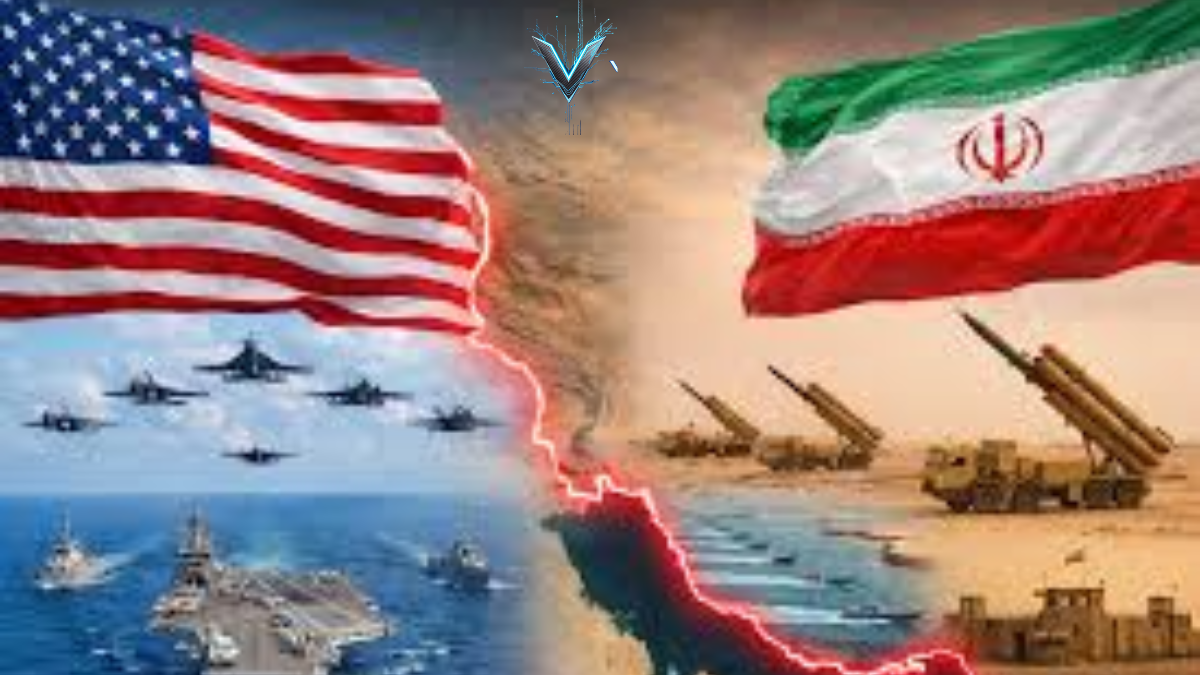
Following the outbreak of regional instability after the Israel–Hamas war in October 2023, Iranian-backed militias sharply escalated attacks on United States military bases and personnel stationed in Iraq and Syria. These armed groups, many operating under the umbrella of the “Islamic Resistance in Iraq,” launched more than 170 drone, rocket, and missile attacks against U.S. facilities, creating one of the most dangerous periods for American troops in the Middle East in recent years. The attacks targeted bases such as Ain al-Asad Airbase in Iraq, Al-Tanf Garrison in Syria, and facilities near Erbil and Baghdad, where U.S. and coalition forces were stationed as part of counterterrorism operations against ISIS. Militias involved included Kataib Hezbollah, Harakat al-Nujaba, and other factions aligned with Iran’s Islamic Revolutionary Guard Corps (IRGC). Their operations were presented as retaliation against U.S. support for Israel and American military presence in the region.
The attacks varied in scale and sophistication. Some involved short-range rockets fired from improvised launch sites, while others used one-way attack drones capable of bypassing air-defense systems. American troops suffered injuries, including traumatic brain injuries from explosions and impacts caused by intercepted missiles. Although many attacks were successfully defended against by U.S. air-defense systems, the continuous barrage created operational pressure on American forces and raised fears of a wider regional war. Intelligence assessments indicated that Iranian advisers and logistical networks played a role in supporting militia capabilities, though Tehran publicly denied direct involvement.
The United States responded with a series of targeted retaliatory strikes against militia infrastructure in Iraq and Syria. U.S. fighter aircraft struck weapons depots, drone storage facilities, command centers, and training compounds associated with Iranian-backed groups. The Pentagon stated that the strikes were designed to degrade militia operational capacity and deter future attacks while avoiding broader escalation with Iran itself. In several operations, precision-guided munitions were used to hit remote facilities near Abu Kamal in Syria and Jurf al-Sakhar in Iraq, areas known for militia activity and weapons smuggling routes connected to Iran. American officials emphasized that the retaliatory operations were defensive and intended to protect U.S. personnel rather than initiate a larger conflict.
One of the most significant turning points occurred after a deadly drone attack on a U.S. outpost known as Tower 22 near the Jordan-Syria border in January 2024. The strike killed three American service members and wounded dozens more, becoming the deadliest attack on U.S. forces in the region in years. In response, the Biden administration authorized large-scale airstrikes against dozens of militia-linked targets across Iraq and Syria. B-1 bombers, fighter jets, and naval assets participated in the operation, hitting command nodes, intelligence centers, rocket launch sites, and ammunition facilities. U.S. officials described the campaign as a clear signal that attacks on American troops would carry serious consequences.
The escalation deepened concerns among regional governments. Iraq faced internal political pressure as some factions demanded the removal of U.S. troops from Iraqi territory, arguing that the American military presence invited conflict. At the same time, Iraqi security forces relied on U.S. intelligence and training support in the ongoing fight against ISIS remnants. Syria remained another flashpoint, particularly in eastern regions where U.S. forces partnered with Kurdish-led Syrian Democratic Forces against extremist groups. The repeated exchanges between militias and the United States increased fears that miscalculation could trigger direct confrontation between Washington and Tehran.
Iranian-backed militias framed their campaign as part of a broader “Axis of Resistance” strategy, linking events in Iraq and Syria to conflicts in Gaza, Lebanon, and the Red Sea. The groups used propaganda videos, public statements, and social media messaging to portray themselves as defenders against Western influence in the Middle East. Their attacks demonstrated growing drone warfare capabilities and reflected a shift toward asymmetric tactics designed to challenge technologically superior military forces. Analysts noted that these militias increasingly relied on coordinated regional pressure rather than isolated local operations.
The United States strengthened force protection measures throughout the crisis. Additional air-defense systems, surveillance assets, and military personnel were deployed to the region. American commanders coordinated closely with coalition partners to monitor militia movements and intercept incoming threats. Despite these measures, the frequency of attacks highlighted the persistent vulnerability of dispersed military installations in unstable environments. The Pentagon repeatedly warned that it would continue responding whenever American lives were threatened.
Humanitarian and political consequences also emerged from the cycle of attacks and retaliatory strikes. Civilians living near militia-controlled zones feared becoming caught between armed factions and U.S. military responses. Infrastructure damage in parts of Syria and Iraq disrupted local communities already affected by years of war and economic hardship. Diplomatic channels involving Iraq, regional Arab states, and international actors attempted to reduce tensions, but mistrust between the United States and Iranian-aligned groups remained extremely high.
Military analysts described the conflict as an example of modern proxy warfare, where state-aligned nonstate actors engage powerful military forces without direct conventional confrontation. Iranian-backed militias benefited from regional networks, ideological alliances, and access to increasingly advanced weapons systems. The United States, meanwhile, sought to balance deterrence with restraint, attempting to prevent escalation into a direct war with Iran while maintaining regional security commitments.
The confrontation demonstrated how rapidly regional conflicts can spread across borders and involve multiple actors with competing agendas. What began as local militia harassment evolved into a sustained security crisis involving drones, missile strikes, intelligence operations, and strategic retaliation. The events reshaped security discussions across the Middle East and highlighted the growing role of proxy militias in regional geopolitics. Even after major retaliatory operations, tensions continued, with policymakers warning that the underlying drivers of instability — regional rivalries, armed militias, foreign intervention, and unresolved political conflicts — remained unresolved





5pst1s