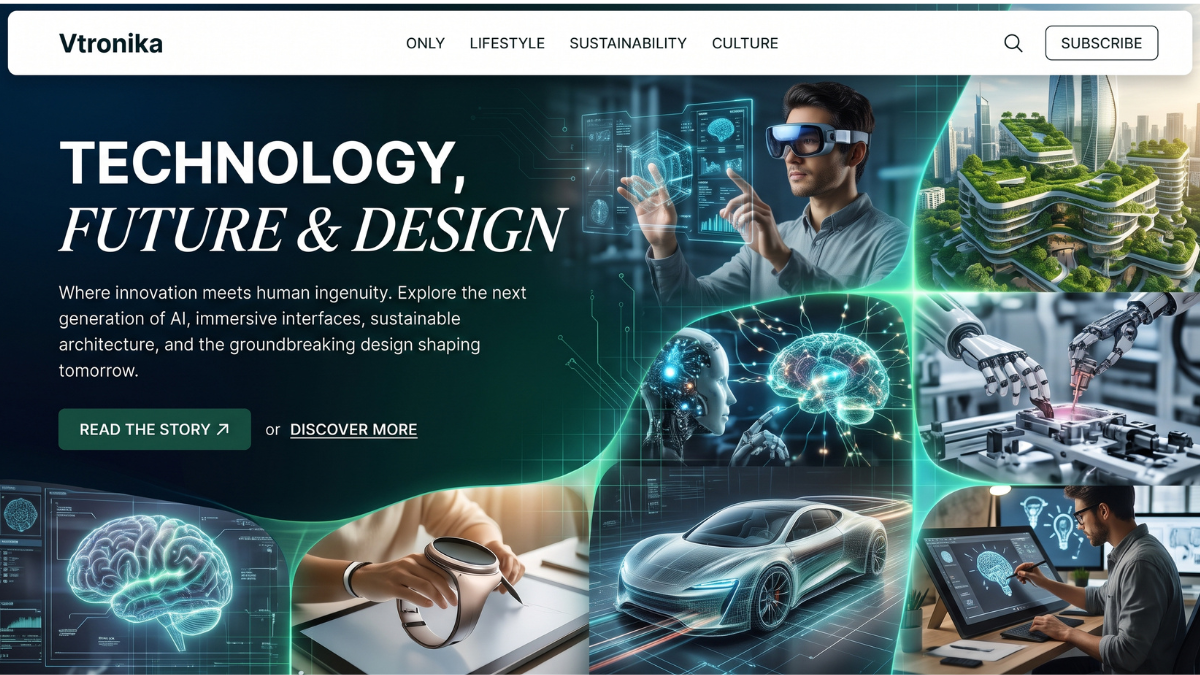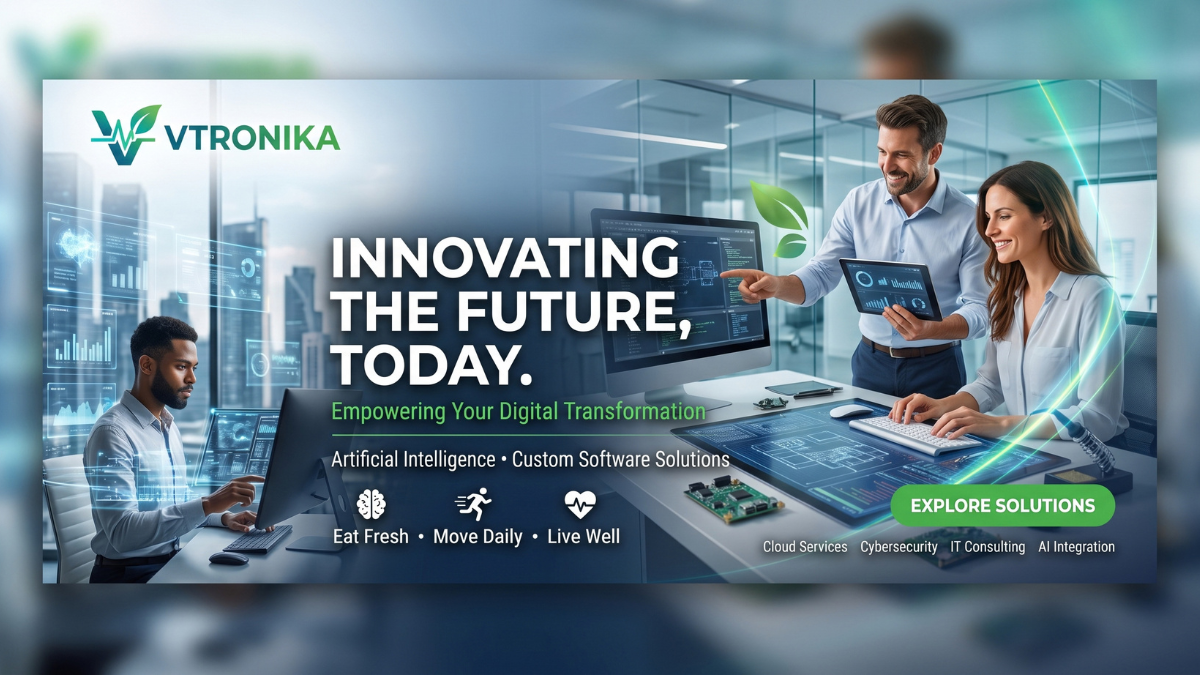
Main Headline: INNOVATING THE FUTURE, TODAY. (replaces “LIVE YOUR HEALTHIEST LIFE”)
Subheadline: Empowering Your Digital Transformation (replaces “Empowering Your Wellness Journey”)
Key Points: Artificial Intelligence • Custom Software • Cloud Solutions (replaces “Eat Fresh • Move Daily • Live Well”)
Button: EXPLORE SOLUTIONS (replaces “GET STARTED”)
Footer: Cloud Computing, Cybersecurity, AI Solutions, IT Consulting. (replaces wellness topics)
Article 1: Defining the Blueprint: What Digital Transformation Truly Means Today Digital transformation is frequently misunderstood as merely upgrading software or moving files to the cloud. In reality, it is a fundamental reimagining of how a business operates and delivers value to its customers. Innovating the future today requires a cultural shift that embraces continuous change, agile methodologies, and cross-departmental collaboration. By dismantling traditional silos, organizations can create a cohesive digital ecosystem where technology serves as the backbone for operational efficiency. Empowering your digital transformation means looking beyond the immediate technological trends and building a resilient, adaptable framework that aligns with your core business objectives, ensuring that every digital initiative directly contributes to long-term growth and market relevance.
Article 2: Artificial Intelligence: The Catalyst for Automated Intelligent Operations Artificial intelligence is no longer a fringe experiment; it is the central engine driving modern enterprise solutions. From machine learning algorithms that predict consumer behavior to automated intelligent systems that streamline supply chain logistics, AI is actively transforming ideas into digital reality. Empowering your business with AI allows you to automate repetitive tasks, freeing up human capital for high-level strategic thinking. Whether applied to automated trading algorithms that execute transactions in milliseconds or customer service chatbots that resolve issues instantly, integrating AI into your digital transformation strategy ensures unparalleled speed, accuracy, and scalability in a highly competitive digital economy.
Article 3: Cloud Computing: Building a Scalable and Agile Infrastructure The foundation of any successful digital transformation is a robust, flexible infrastructure. Cloud computing provides the agility necessary to scale operations instantly without the heavy burden of maintaining physical servers. Moving to a cloud-based environment empowers businesses to deploy enterprise solutions globally, ensuring seamless access to data and applications from anywhere in the world. This decentralized approach not only reduces IT overhead but also fosters better collaboration among remote teams. By leveraging the cloud, companies can rapidly test new digital products, adapt to market shifts in real-time, and guarantee business continuity even in the face of unexpected disruptions.
Article 4: Transforming Ideas Into Digital Reality: The Power of Prototyping Innovation thrives on the ability to move swiftly from concept to execution. Digital transformation empowers organizations to transform abstract ideas into tangible digital realities through rapid prototyping and agile development. Utilizing modern tech frameworks allows teams to build, test, and iterate on minimum viable products (MVPs) in a fraction of the time it took a decade ago. This iterative process heavily relies on continuous user feedback, ensuring that the final digital product actually solves a market need. By establishing a culture that encourages experimentation and tolerates fast failures, businesses can continuously push the boundaries of what is possible in the tech space.
Article 5: Data-Driven Scaling: Turning Analytics into Actionable Strategy In the digital age, data is the most valuable currency. However, collecting massive amounts of data is useless without the analytics engines required to interpret it. Empowering your digital transformation requires implementing advanced data analytics platforms that break down complex metrics into clear, actionable business intelligence. By analyzing user behavior, market trends, and operational bottlenecks, executives can make precise, informed decisions that drive business growth. Scaling a digital business relies on this predictive modeling—anticipating customer needs before they arise and optimizing resource allocation to maximize return on investment.
Article 6: The Customer-Centric Digital Model: Redefining User Experience Today’s consumers expect seamless, intuitive, and highly personalized digital interactions. A successful digital transformation places the customer experience (UX) at the absolute center of its strategy. This means mapping out every digital touchpoint—from the first website visit to post-purchase support—and removing any friction. Empowering your brand requires utilizing data to tailor recommendations, streamline checkout processes, and provide omnichannel support. When a company uses technology to anticipate user needs and deliver flawlessly designed digital interfaces, it builds deep brand loyalty and stands out in a saturated digital marketplace.
Article 7: Securing the Future: Cybersecurity as a Pillar of Transformation As businesses scale digitally, their exposure to cyber threats expands exponentially. Digital transformation cannot be empowered without a deeply integrated cybersecurity strategy. Treating security as an afterthought can lead to devastating data breaches that destroy customer trust and incur massive financial losses. Modern enterprise solutions must incorporate zero-trust architectures, end-to-end encryption, and AI-driven threat detection systems that identify vulnerabilities before they are exploited. By prioritizing digital security from the ground up, organizations safeguard their intellectual property and ensure that their rapid technological growth rests on a safe, impenetrable foundation.
Article 8: Enterprise Automation: Streamlining Complex Workflows The modern enterprise is a complex web of interconnected departments, and inefficiencies in one area can bottleneck the entire company. Robotic Process Automation (RPA) and intelligent workflow software are critical tools for empowering digital transformation. By automating routine administrative tasks—such as data entry, invoicing, and compliance reporting—businesses can drastically reduce human error and operational costs. This level of enterprise automation creates a frictionless internal environment, allowing teams to focus on creative problem-solving and strategic business scaling rather than being bogged down by manual, repetitive processes.
Article 9: Leadership in the Digital Age: Driving the Cultural Shift No digital transformation can succeed without visionary leadership. Implementing new technology is the easy part; managing the human transition is the true challenge. Empowering a digital-first organization requires leaders who champion continuous learning and actively work to reduce employee resistance to change. Management must clearly communicate the “why” behind the digital shift, providing comprehensive training and upskilling opportunities. When leadership fosters a culture of tech-fluency and digital curiosity, employees become active participants in the transformation process, accelerating the adoption of new enterprise solutions across the board.
Article 10: Future-Proofing Your Business: Preparing for the Next Decade Digital transformation is not a one-time project with a definitive end date; it is a permanent state of adaptation. Innovating the future today means constantly scanning the horizon for emerging technologies—such as Web3, spatial computing, and advanced quantum algorithms. To keep your digital business scaling securely into 2027 and beyond, you must build an infrastructure that can easily integrate tomorrow’s innovations. By maintaining a forward-looking strategy, prioritizing scalable enterprise tech, and staying deeply connected to global tech trends, your organization will not just survive the future—it will actively define it.