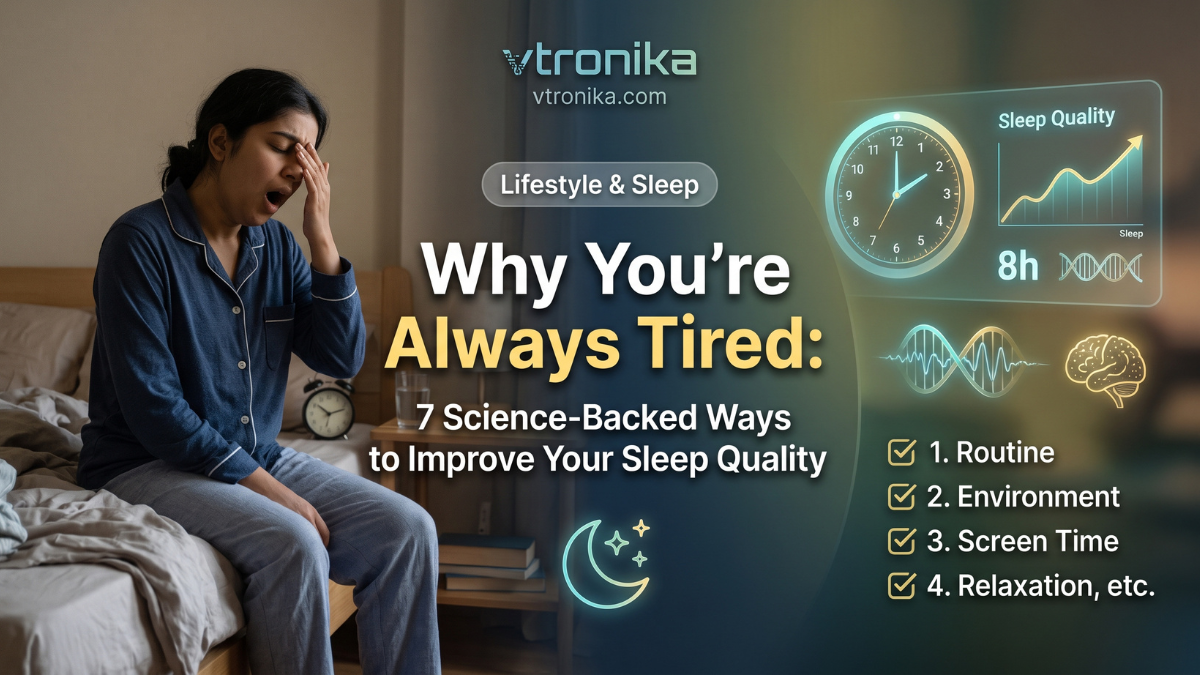
Article 1: The Circadian Architecture — How Your Master Clock Governs Energy and Fatigue
The Neurological Engine of Wakefulness
Your daily cycle of alertness and exhaustion is dictated by the suprachiasmatic nucleus (SCN), a structure containing roughly 20,000 neurons situated directly inside the hypothalamus. The SCN acts as the body’s master biological clock, orchestrating thousands of peripheral clocks embedded within your liver, skeletal muscle, heart, and adipose tissues. These clocks rely on genetic feedback loops (principally governed by CLOCK and BMAL1 genes) that operate on an approximate 24.2-hour cycle.
When your daily schedule desynchronizes from this internal pacemaker—a state known as circadian misalignment or “social jetlag”—your organs receive conflicting operational signals. Your brain might attempt to initiate deep sleep while your pancreas is still metabolizing dinner, leading directly to chronic morning fatigue, brain fog, and elevated systemic inflammation.
Practical Implementation
- Anchor Wake Time Over Bedtime: Set a fixed wake-up time seven days a week, regardless of when you turn off the lights. The wake-up time acts as the primary anchor for resetting your circadian gene expression.
- Eliminate the Weekend Drift: Keep weekend wake times within 30 to 45 minutes of your weekday routine. Sleeping in by two or three hours on Sunday shifts your biological clock westward by several time zones, triggering acute “Monday morning grogginess.”
- Avoid Hitting the Snooze Button: Snoozing fragments the final, highly restorative Rapid Eye Movement (REM) stage of sleep and releases excess sleep inertia hormones, worsening mental unresponsiveness for hours.
Article 2: Morning Photobiology — Harnessing Early Light to Set Nighttime Melatonin
The Retinal Signal Pathway
The human eye is not just an image-forming organ; it is a primary neuroendocrine sensor. Specialized cells in the inner retina, termed intrinsically photosensitive retinal ganglion cells (ipRGCs), contain a unique photopigment called melanopsin. Melanopsin is selectively sensitive to blue-wavelength photons (approximately 460–480 nm).
When daylight enters the eye in the morning, ipRGCs transmit direct electrical impulses via the retinohypothalamic tract to the SCN. This interaction accomplishes two critical tasks: it rapidly halts the production of melatonin (the darkness hormone) while triggering a healthy morning cortisol awakening response (CAR). More importantly, this morning pulse sets a biological countdown timer that commands the pineal gland to release melatonin roughly 14 to 16 hours later.
Practical Implementation
- Get Direct Outdoor Lux: Step outside within 30 to 60 minutes of waking. On a clear morning, outdoor ambient light delivers 10,000 to 50,000 lux; by contrast, typical indoor home lighting rarely exceeds 300 to 500 lux, which is insufficient to trigger the melanopsin reset.
- Remove Optical Obstacles: Stand outside without sunglasses or corrective lenses that filter out UV/blue light. Do not view sunlight through window glass, as modern double-pane low-E glass blocks significant portions of the circadian-stimulating blue spectrum.
- Extend Exposure on Overcast Days: On sunny days, 10 to 15 minutes of exposure is adequate; on overcast, cloudy mornings, increase outdoor exposure to 25 to 35 minutes to achieve the required photon dose.
Article 3: The Biochemistry of Sleep Pressure — Adenosine, ATP, and the Caffeine Trap
Adenosine Accumulation and Receptor Dynamics
Throughout your waking hours, your brain continuously breaks down adenosine triphosphate (ATP) to power neural signaling and cognitive operations. As phosphate bonds are cleaved, free adenosine molecules accumulate in the basal forebrain and bind to specific A1 and A2A adenosine receptors. The more adenosine binds to these neural receptors, the heavier your “homeostatic sleep pressure” becomes.
Caffeine functions as an antagonist: its molecular structure closely mimics adenosine, allowing it to fit into and plug these receptors without activating them. While caffeine successfully masks subjective sensations of fatigue, the production of underlying adenosine does not stop. Once the liver metabolizes the caffeine, the backed-up reservoir of adenosine floods the newly opened receptors simultaneously, causing a severe energy crash.
ATP Breakdown ──> Free Adenosine Builds Up ──> Heavy Sleep Pressure
                         │
                 [ Afternoon Caffeine ]
                         │
              Receptors Blocked (Fatigue Masked)
                         │
            Caffeine Clears ──> Adenosine Floods In (Severe Crash)
Practical Implementation
- Respect the Metabolic Half-Life: Caffeine has an average half-life of 5 to 7 hours and a quarter-life of up to 12 hours. Consuming 200 mg of caffeine at 3:00 PM means up to 50 mg remains active in your neural pathways at 3:00 AM, measurably suppressing restorative slow-wave deep sleep.
- Enforce a Strict 10-Hour Curfew: Terminate all caffeine consumption at least 8 to 10 hours before your targeted bedtime (typically between 12:00 PM and 1:30 PM).
- Delay Morning Intake by 90 Minutes: Wait 60 to 90 minutes after waking up before consuming your first cup of coffee. This allows your natural morning cortisol spike to clear residual adenosine naturally, preventing the common mid-afternoon energy drop.
Article 4: Evening Blue Light and Digital Hygiene — Shielding the Pineal Gland
The Mechanism of Light-Induced Phase Delays
In ancestral environments, sunset signaled the end of short-wavelength blue light exposure, leaving only the low-lux, warm red/amber glow of firelight. Modern flat-panel displays, smartphones, and domestic white LEDs emit concentrated peaks in the 450 nm spectrum. When this high-frequency light hits retinal ipRGCs after dusk, it sends a false daylight signal to the hypothalamus.
Research indicates that nighttime exposure to portable screens suppresses circulating melatonin concentrations by up to 50% and delays the melatonin onset curve by more than 90 minutes. This causes sleep-onset insomnia and diminishes the duration of Stage 3 slow-wave sleep.
------------------------------------------------------------------------
Light Exposure Type      | Lux Output       | Melatonin Impact
------------------------------------------------------------------------
Natural Midday Sun       | 10,000–50,000 lx | Suppresses (Healthy)
Standard Office LED      | 400–600 lx       | Suppresses
Smart Phone Screen (10") | 50–150 lx        | Delays Onset (Unhealthy at Night)
Candlelight / Low Amber  | < 5–10 lx        | Zero Meaningful Suppression
------------------------------------------------------------------------
Practical Implementation
- Enforce a Digital Blackout 60 Minutes Before Bed: Power down smartphones, laptops, and televisions at least one hour before turning in. If devices must be used, engage native system color shifts (such as Night Shift or f.lux) set to the warmest amber profile.
- Shift to Low-Elevation Ambient Lighting: Eliminate harsh, ceiling-mounted overhead lights after 8:00 PM. Switch to floor lamps or table lights positioned below eye level fitted with warm, incandescent or amber LED bulbs (under 2,200 Kelvin).
- Wear Certified Blue-Blocking Glasses: If late-night screen exposure is unavoidable due to shift work or study requirements, wear amber-tinted lenses validated to block 95% to 100% of wavelengths between 400 nm and 500 nm.
Article 5: Bedroom Thermoregulation — The Physiology of Core Temperature Drops
Vasodilation and the Thermal Transition to Deep Sleep
To enter deep sleep, your body must decrease its core internal temperature by approximately 1°C (1.5°F to 2°F). This cooling is not passive; it is an active physiological process driven by distal vasodilation. Blood vessels in your extremities (hands, feet, and face) expand, allowing blood to flow away from the metabolic core to the periphery, where heat radiates outward into the ambient environment.
If your bedroom ambient environment is too warm, humid, or poorly ventilated, thermal resistance prevents this radiant cooling. As a result, your sympathetic nervous system stays elevated, your resting heart rate increases, and you experience frequent micro-arousals during slow-wave stages.
Practical Implementation
- Set the Thermostat to 16°C–19°C (60°F–67°F): This ambient range allows natural thermoregulation beneath a standard blanket without shivering or overheating.
- Utilize the “Warm Bath” Paradox: Take a warm shower or bath 90 minutes before bed. While this raises skin temperature temporarily, it rapidly dilates peripheral blood vessels. Once you step out of the bath into a cooler room, heat radiates away from your body quickly, driving down core temperature and promoting sleepiness.
- Choose Breathable, Natural Bedding: Discard synthetic polyester or non-breathable memory foam layers that trap moisture and body heat. Use natural long-staple cotton, linen, or bamboo fabrics that facilitate evaporative cooling throughout the night.
Article 6: Nocturnal Metabolism — Dinner Timing, Glycemic Swings, and Acid Reflux
Gastrointestinal Circadian Clocks and Digestion
Your digestive tract maintains its own peripheral circadian rhythm: gastric motility slows, pancreatic enzyme secretion drops, and insulin sensitivity decreases substantially as the evening progresses. Ingesting large, energy-dense meals rich in simple sugars or saturated fats late at night forces a sluggish digestive apparatus to handle heavy nutrient processing while lying flat.
This digestive workload raises core body temperature and forces the cardiovascular system to pump elevated volumes of blood to the splanchnic circulation, preventing the heart rate dip required for restorative sleep. Furthermore, late meals weaken lower esophageal sphincter pressure, causing sub-clinical nighttime acid reflux that fragments sleep continuity.
Practical Implementation
- Close the Eating Window 3 Hours Prior to Bed: Allow your stomach sufficient time to empty its contents into the small intestine before lying down flat, reducing reflux risk and core thermal output.
- Prioritize Low-Glycemic Evening Meals: High-sugar, refined carbohydrate dinners trigger rapid insulin spikes followed by nocturnal hypoglycemic drops. These blood sugar drops trigger compensatory surges of adrenaline and cortisol at 2:00 or 3:00 AM, waking you up abruptly.
- Structure Your Evening Macros: Opt for clean protein sources paired with complex, fiber-rich carbohydrates and magnesium-dense vegetables (e.g., leafy greens, wild salmon, sweet potatoes) which support natural serotonin and melatonin production.
Article 7: The Sedation Fallacy — How Alcohol Destroys Sleep Architecture
Why Sedation Is Not the Same as Natural Sleep
Alcohol is one of the most widely misunderstood sleep disruptors. Because ethanol acts as a central nervous system depressant by agonizing GABA (gamma-aminobutyric acid) receptors, it accelerates sleep onset, leading many to misinterpret it as a sleep aid. However, alcohol induces sedation, not restorative biological sleep.
As the liver metabolizes ethanol into acetaldehyde and acetate across the night, it triggers a strong autonomic rebound effect. Parasympathetic tone collapses, resting heart rate spikes by 10 to 20 beats per minute, heart rate variability (HRV) plummets, and REM sleep is almost entirely blocked during the first half of the night.
------------------------------------------------------------------------
Metric                   | Normal Physiological Sleep | Sleep After Alcohol Intake
------------------------------------------------------------------------
Heart Rate Variability   | Elevated (High Recovery)  | Depressed (Sympathetic Stress)
Resting Heart Rate       | Drops 10–15% Below Baseline| Spikes Above Baseline
REM Sleep Stages         | 20–25% of Total Architecture| Suppressed / Heavily Fragmented
Micro-Arousals / Waking  | Minimal / Undetected      | Frequent in Second Half of Night
------------------------------------------------------------------------
Practical Implementation
- Maintain a 3- to 4-Hour Buffer: If consuming alcohol, finish your last drink at least 3 to 4 hours before bedtime. This gives your hepatic enzymes time to clear the majority of circulating ethanol before sleep cycles begin.
- Hydrate and Replenish Electrolytes: Drink water alongside electrolytes (magnesium, sodium, potassium) to offset ethanol’s diuretic properties, which cause nocturnal bathroom trips and disrupt sleep.
- Limit High-Dosage Intake: Restrict intake to one standard unit of alcohol on evenings when next-day cognitive clarity and restorative rest are required.
Article 8: Autonomic Down-Regulation — Shifting Out of Chronic Fight-or-Flight
Sympathetic Overdrive and Sleep-Onset Insomnia
Many individuals lie down physically exhausted yet find themselves cognitively wired, unable to quiet racing thoughts. This state is driven by chronic sympathetic nervous system dominance (the “fight-or-flight” response) fueled by elevated baseline cortisol and noradrenaline.
Entering Stage 1 sleep requires your autonomic balance to shift toward the parasympathetic nervous system (the “rest-and-digest” branch). When your vagal nerve tone is depressed, your baroreceptors fail to lower systemic blood pressure, preventing the central nervous system from transitioning into slow-wave delta oscillations.
Practical Implementation
- Engage the Physiological Sigh: Take two quick inhalations through your nose (one deep breath followed immediately by a sharp top-off sip of air), then execute a prolonged, unforced mouth exhalation lasting 6 to 8 seconds. Performing this sequence 3 to 5 times stimulates pulmonary stretch receptors that slow your heart rate via vagal nerve stimulation.
- Implement the 4-7-8 Breathing Cadence: Inhale through the nose for 4 seconds, hold the breath for 7 seconds, and exhale smoothly through the mouth for 8 seconds. The extended exhalation acts as a natural brake on sympathetic drive.
- Write Down Cognitive Offload Notes: Spend 5 minutes before bed writing down an exhaustive list of tomorrow’s obligations, tasks, and unresolved worries. Transferring internal concerns to paper reduces pre-sleep cognitive arousal and rumination.
Article 9: Optimizing Sleep Ergonomics — Mattress Geometry, Spine Alignment, and Airway Patency
Biomechanical Support and Nocturnal Oxygenation
Physical sleep quality depends heavily on spinal ergonomics and unobstructed airway passages. An unsuitable mattress—whether excessively rigid or sagging—forces the cervical and lumbar spine into unnatural lateral bending. This triggers localized muscle guarding, reduces microcirculation to soft tissues, and causes frequent involuntary tossing and turning to alleviate pressure points.
Furthermore, poor head and neck positioning can compress the pharyngeal airway, precipitating heavy snoring, upper airway resistance syndrome (UARS), or obstructive sleep apnea (OSA), all of which repeatedly deplete blood oxygen saturation throughout the night.
Practical Implementation
- Maintain Neutral Cervical Spine Alignment:
- Side Sleepers: Use a contoured pillow with sufficient loft to fill the exact gap between the outer shoulder and the side of the neck, keeping the cervical vertebrae horizontal. Place a slim pillow between your knees to prevent hip twisting.
- Back Sleepers: Use a lower-profile pillow that supports the natural inward curve of the neck without pitching the chin downward toward the chest.
- Stomach Sleepers: Avoid stomach sleeping where possible; it forces the cervical spine into extreme rotation for hours, straining facet joints and compressing breathing passages.
- Evaluate Mattress Support Lifespans: Replace standard mattresses every 7 to 10 years. If your mattress exhibits visible indentations or you wake up with morning lower-back stiffness that resolves after moving around, your sleep surface is no longer providing adequate spinal support.
- Ensure Nasal Airway Patency: If you struggle with chronic mouth-breathing or nasal congestion at night, use over-the-counter nasal dilator strips or saline rinses to clear nasal passages, encouraging restorative nasal breathing.
Article 10: Chronic Sleep Deficits — The Science of Glymphatic Clearance and Recovery
How the Glymphatic System Cleanses the Brain During Slow-Wave Sleep
In 2012, neuroscientists discovered the glymphatic system, a brain-wide waste clearance network. During deep, non-REM slow-wave sleep, glial cells (astrocytes) shrink by up to 60%, dramatically expanding the interstitial space within brain tissue. This allows cerebrospinal fluid (CSF) to mix with interstitial fluid and flush through neural pathways, sweeping away neurotoxic metabolic byproducts, including amyloid-beta, hyperphosphorylated tau, and metabolic waste accumulated throughout the day.
When sleep is truncated or fragmented, this cleansing cycle is aborted. Over time, persistent micro-deficits accumulate into an enduring neurological debt, impairing memory consolidation, dampening emotional regulation, and generating chronic physical exhaustion.
       [ Wakefulness / Active Metabolism ]
   Brain accumulates amyloid-beta, tau, & metabolic waste.
                         │
        [ Deep Non-REM Slow-Wave Sleep ]
   Astrocytes shrink by 60% ──> Interstitial space expands.
                         │
        [ Glymphatic Clearance Activated ]
   CSF sweeps through neural tissue, clearing metabolic debris.
                         │
     [ Wake Restored, Clear-Headed & Alert ]
Practical Implementation
- Track 90-Minute Sleep Cycles: Human sleep operates in approximately 90-minute ultradian cycles transitioning through light sleep, deep slow-wave sleep, and REM sleep. Aim for sleep totals that align with these natural cycles (e.g., 7.5 hours for 5 cycles, or 9 hours for 6 cycles) rather than arbitrary intervals like 6.5 or 7.2 hours, which can cause you to wake up mid-cycle during deep sleep.
- Prioritize Sleep Continuity Over Rebound Weekends: Lost slow-wave sleep cannot be fully recovered by sleeping for 11 hours on a Sunday. Chronic sleep deprivation permanently damages neural synapses; focus on maintaining nightly consistency rather than relying on weekend catch-up sessions.
- Conduct a Routine Sleep Hygiene Audit: Review your habits quarterly. If chronic fatigue persists despite implementing consistent schedules, morning daylight exposure, cooler bedroom temperatures, and clean nutrition, consult a physician or sleep specialist for an overnight polysomnography study to rule out underlying clinical disorders such as obstructive sleep apnea or restless legs syndrome.