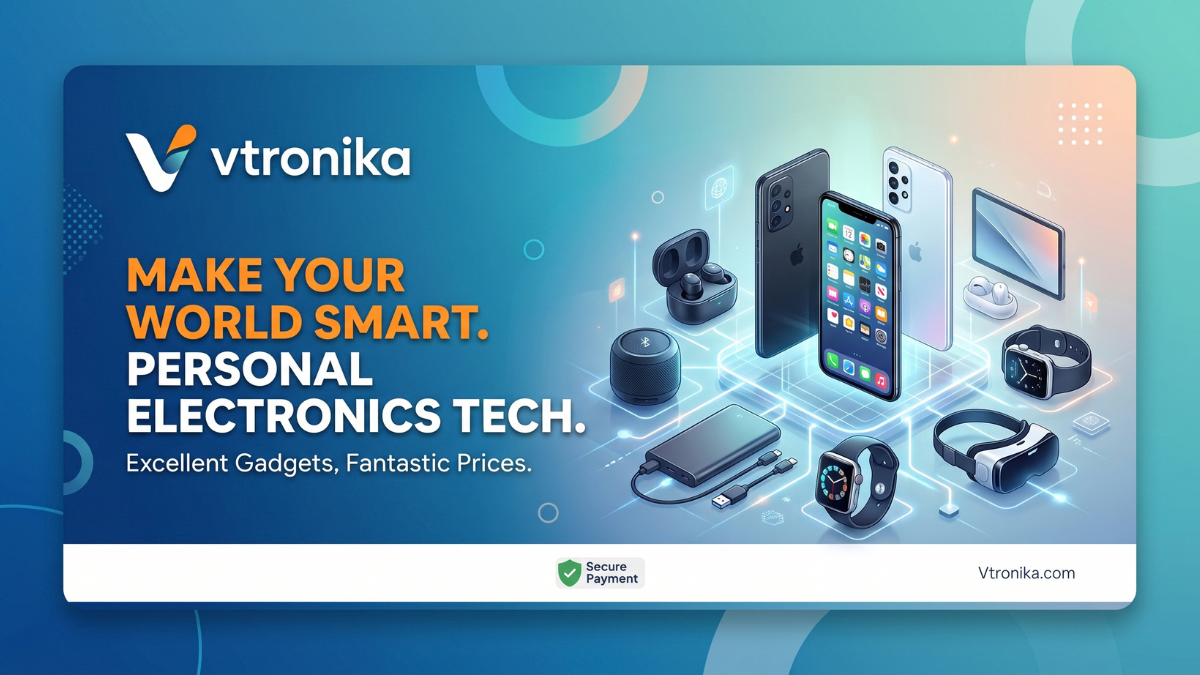
1. The Pocket Command Center: How Next-Gen Smartphones Anchor Modern Life
Smartphones have ceased to be simple communication handsets; they are the foundational nucleus of our digital and physical environments. Equipped with neural processing units (NPUs), modern handsets manage identity verification, banking, contactless payments, environmental sensing, and personal media production at workstation-grade standards.
Beyond core hardware, smartphones serve as the primary bridge to cross-device intelligence. Through local on-device machine learning, they synthesize calendar schedules, location context, and travel logistics into automated daily routines. Whether functioning as an encrypted digital car key, an automated household controller, or a high-bandwidth connectivity hub, the smartphone remains the central anchor through which personal smart technology radiates outward.
2. Proactive Health and Biometrics: The Evolution of Smart Wearables
The wearable technology landscape has shifted from passive step counting to medical-grade, continuous physiological surveillance. Devices such as smartwatches, continuous glucose monitors (CGMs), and biometric smart rings collect high-density data on blood oxygen saturation, heart rate variability (HRV), skin temperature, and electrocardiograms (ECG).
This continuous biofeedback shifts the healthcare paradigm from reactive treatment to proactive risk prevention. Advanced algorithms spot early indicators of atrial fibrillation, sleep apnea, sudden illness onset, and chronic systemic stress days before clinical symptoms surface. By consolidating raw biometrics into readable recovery scores, wearables empower users to adjust athletic strain, work hours, and sleep routines based on empirical biological data.
3. Acoustic Intelligence: Smart Audio, Hearables, and Spatial Reality
Audio tech has transitioned from passive sound delivery to responsive acoustic processing. Modern hearables combine ultra-low-latency Bluetooth chips, hybrid active noise cancellation (ANC), and beamforming microphone arrays to actively isolate users from intrusive acoustic environments while enhancing situational awareness when needed.
The real innovation lies in spatial audio with dynamic head tracking, which mimics three-dimensional physical sound stages for media and virtual meetings. Furthermore, hearing health features—including automated audiogram testing, real-time speech amplification in noisy rooms, and conversational voice isolation—turn modern wireless earbuds into discreet, non-stigmatized over-the-counter hearing enhancers.
4. Smarter Living Spaces: Personal Tech as the Controller for Home Automation
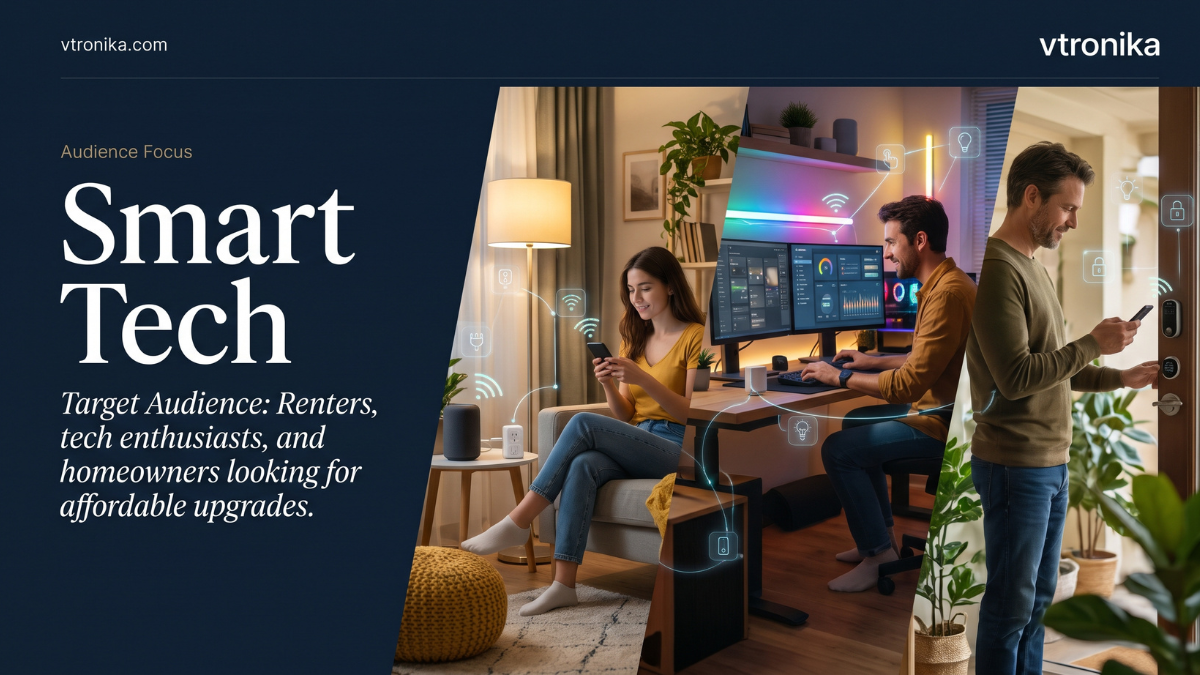
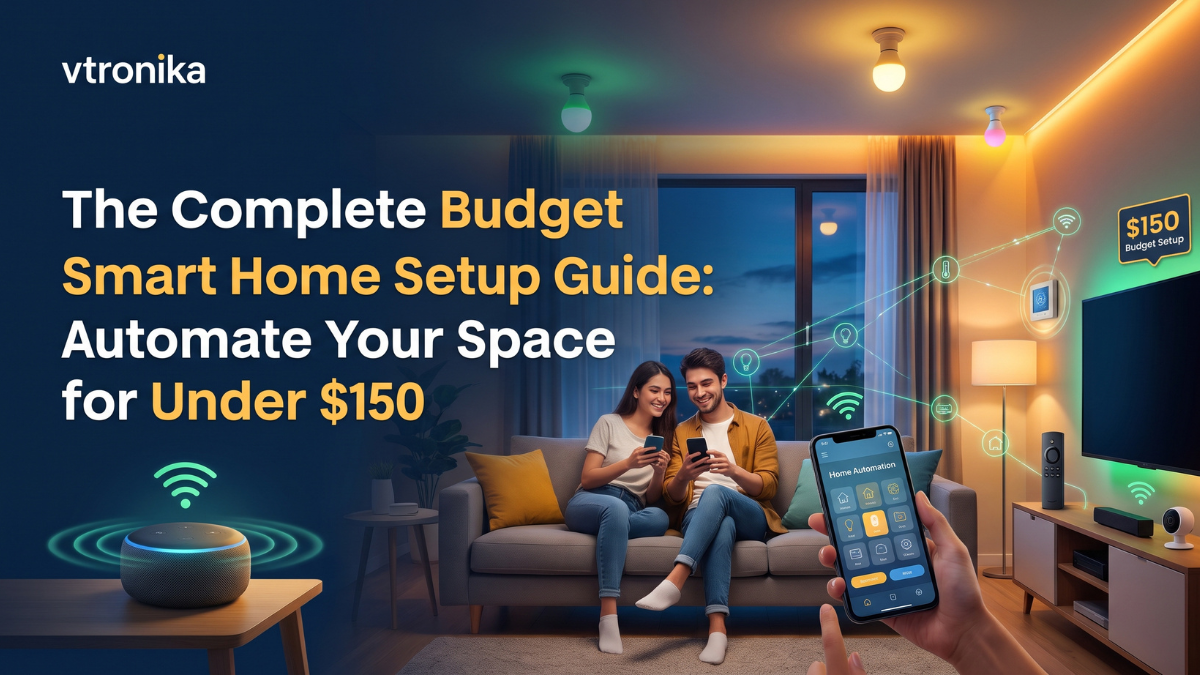
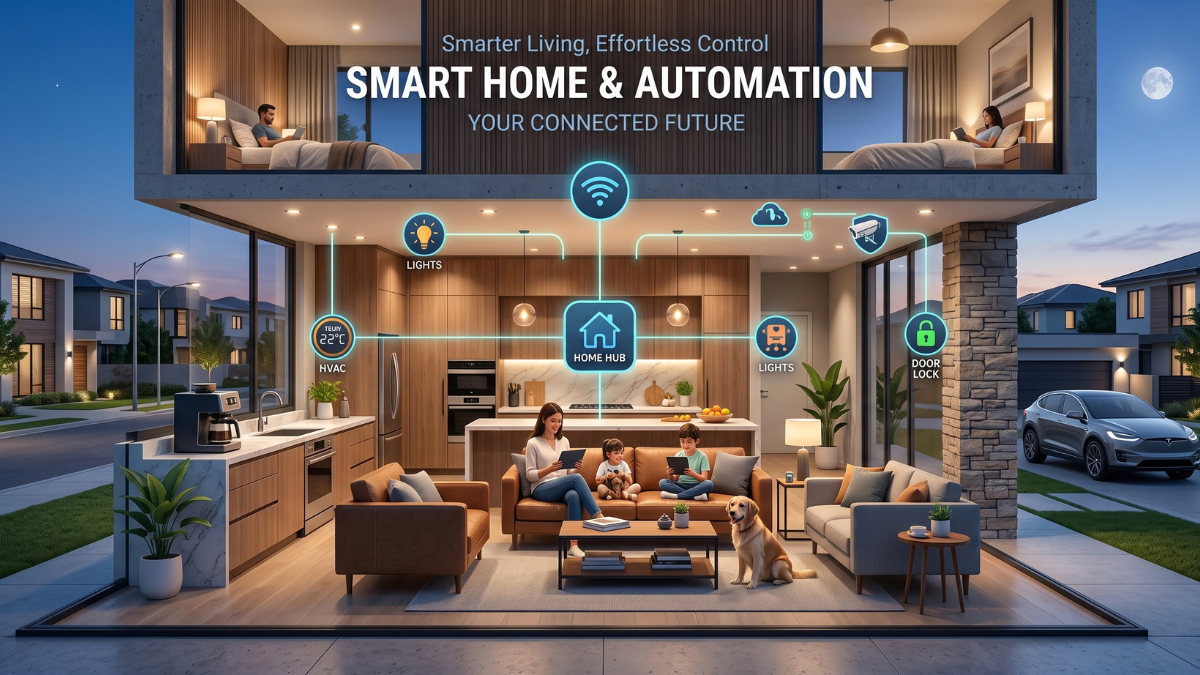
Personal devices act as the primary interface for smart home ecosystems, transforming how households manage security, climate, and energy consumption. Unified standards like Matter and Thread enable smartphones, tablets, and wearable voice assistants to control multi-brand smart locks, ambient lighting, robotic vacuums, and HVAC units without platform lock-in.
True intelligence in home tech is shifting from manual voice triggers toward autonomous context detection. Using geofencing, ambient light sensors, and occupancy detectors, the home anticipates user needs: automatically dimming lights at bedtime, optimizing heating when an occupant leaves the office, and arming defense systems when wearable sensors confirm the resident is asleep.
5. Wearable Displays and Ambient Computing: Smart Glasses and XR Hardware
Smart glasses and extended reality (XR) headsets represent the next phase of human-computer interaction, moving information away from isolated glass screens directly into the user’s line of sight. By blending micro-OLED displays with waveguide optics, modern lightweight smart frames overlay turn-by-turn navigation, real-time message transcripts, and hands-free notifications onto the physical world.
In tandem, enterprise and prosumer mixed-reality headsets utilize high-resolution passthrough video to create infinite spatial virtual monitors, replacing traditional multi-screen desktop desks. As onboard computer vision advances, these displays contextualize the immediate environment—translating foreign text on road signs, identifying objects, and delivering assembly instructions overlaid onto physical machinery.
6. The Intelligent Workspace: Ultra-Portable Computing and AI Workstations
The hybrid work era demands personal computing hardware that blends light portability with heavy computational muscle. The latest ultrabooks, convertibles, and hybrid tablets rely on power-efficient system-on-chip (SoC) architectures that deliver multi-day battery life alongside high-throughput parallel compute blocks tailored for local generative AI processing.
These laptops operate as adaptive workstations: dynamically shifting power between processing cores, cooling hardware, and display refresh rates depending on workload strain. Built-in neural engines manage real-time camera tracking, gaze correction, real-time audio noise suppression, and local natural-language summarization without needing an active cloud connection, ensuring personal productivity remains uninterrupted across travel and remote settings.
7. Powering the Smart Ecosystem: Battery Chemistry, GaN, and Wireless Harvesting
The proliferation of high-performance personal electronics is only viable due to simultaneous leaps in energy density and power delivery architectures. Gallium Nitride (GaN) semiconductor technology has replaced legacy silicon chargers, shrinking power bricks to pocketable proportions while delivering 65W to 240W of dynamic charging capacity across multiple devices simultaneously.
On the mobility front, solid-state battery research and silicon-anode chemistries are extending device lifespans and reducing charge times to minutes rather than hours. Concurrently, ambient RF and indoor photovoltaic harvesting allow ultra-low-power sensors—such as asset tags, remote controls, and smart clothing sensors—to function indefinitely without requiring single-use battery replacements or tethered wall charging.
8. Fortifying the Perimeter: Security, Encryption, and Data Privacy in Personal Tech
As personal electronic devices harvest continuous streams of biometrics, location coordinates, and private correspondence, they inevitably become high-value targets for digital exploitation. Safeguarding this data requires deep hardware-level security, including dedicated on-chip secure enclaves, biometric authentication chips, and tamper-resistant storage modules.
The modern paradigm prioritizes zero-trust local computation. Rather than shipping sensitive voice recordings, health diagnostics, and browsing histories to centralized cloud servers, modern operating systems lean heavily on federated learning and edge computation. This keeps identity documents, payment tokens, and cryptographic keys confined strictly to the physical device in the owner’s pocket.
9. Micro-Mobility and Personal Transport: Connected E-Bikes and Commuter Tech
The smart personal ecosystem extends naturally into modern personal transit. Connected electric bikes, lightweight e-scooters, and smart commuting gear integrate GPS tracking, anti-theft sensors, and cellular telematics directly into vehicle frames.
Riders interact with these transit platforms through handlebar-mounted digital cockpits or linked smartwatch interfaces, monitoring battery temperature, remaining motor range, and optimized regenerative braking curves. Built-in rear radar systems alert riders to approaching vehicles from behind, while smart helmets with integrated bone-conduction audio and accelerometer-driven emergency crash notification systems dramatically elevate road safety.
10. The Horizon of Ambient Intelligence: Invisible and Implantable Tech
The ultimate trajectory of personal electronics is not larger or more numerous screens, but the complete disappearance of visible hardware into ambient computing and bio-integrated materials. Smart fabrics with interwoven conductive fibers, electronic skin patches, and non-invasive neural interface bands read micro-gestures and biological signals with zero physical friction.
In this horizon, smart environments respond automatically to human presence through ultra-wideband (UWB) spatial tracking and passive millimeter-wave sensing, rendering manual input obsolete. As computing power shrinks onto flexible substrates and microscopic chips, technology transitions from an external tool we hold and look at into an ambient, context-aware layer woven seamlessly into our everyday lives.