

1. Harnessing Artificial Intelligence and Machine Learning for Predictive Growth
- Integrating artificial intelligence and machine learning into your core digital operations empowers your business to transition from reactive problem-solving to proactive, predictive decision-making.
- Advanced algorithms analyze vast streams of customer data in real time, allowing organizations to forecast purchasing behavior, automate inventory management, and personalize marketing campaigns with pinpoint accuracy.
- By embedding smart automation into daily workflows, companies drastically reduce operational overhead, minimize human error, and free up critical capital to invest in high-level strategic innovation.
2. Architecting Seamless Omnichannel Customer Experiences
- Modern consumers expect a unified, frictionless brand experience across every touchpoint, whether they are interacting via your mobile app, social media storefront, physical location, or desktop website.
- Building a cohesive omnichannel strategy requires synchronizing your inventory data, customer service history, and communication channels so that users enjoy uninterrupted continuity wherever they choose to engage.
- Prioritizing this level of accessibility and convenience transforms casual browsers into loyal brand advocates, significantly increasing customer lifetime value and long-term brand retention.
3. Transitioning to Zero-Trust Cybersecurity and Data Privacy
- As digital operations expand, protecting your corporate assets and customer information from sophisticated cyber threats has become an absolute prerequisite for maintaining market trust.
- Implementing a zero-trust architecture ensures that every user and device attempting to access your network is continuously verified, drastically minimizing the risk of unauthorized data breaches.
- Furthermore, transparent data privacy compliance builds consumer confidence, positioning your digital business as a secure, ethical, and responsible leader in your respective industry.
4. Modernizing Cloud Infrastructure for Ultimate Scalability
- Relying on rigid, legacy on-premise servers can severely bottleneck your growth, making the migration to flexible, cloud-native infrastructure essential for modern enterprise agility.
- Cloud environments allow your engineering teams to scale computing resources dynamically up or down based on sudden traffic spikes, seasonal demand, or new product launches without incurring massive hardware costs.
- This high degree of adaptability ensures that your digital platform remains lightning-fast, highly available, and resilient against unexpected system outages or technical disruptions.
5. Data-Driven Decision Making and Advanced Business Intelligence
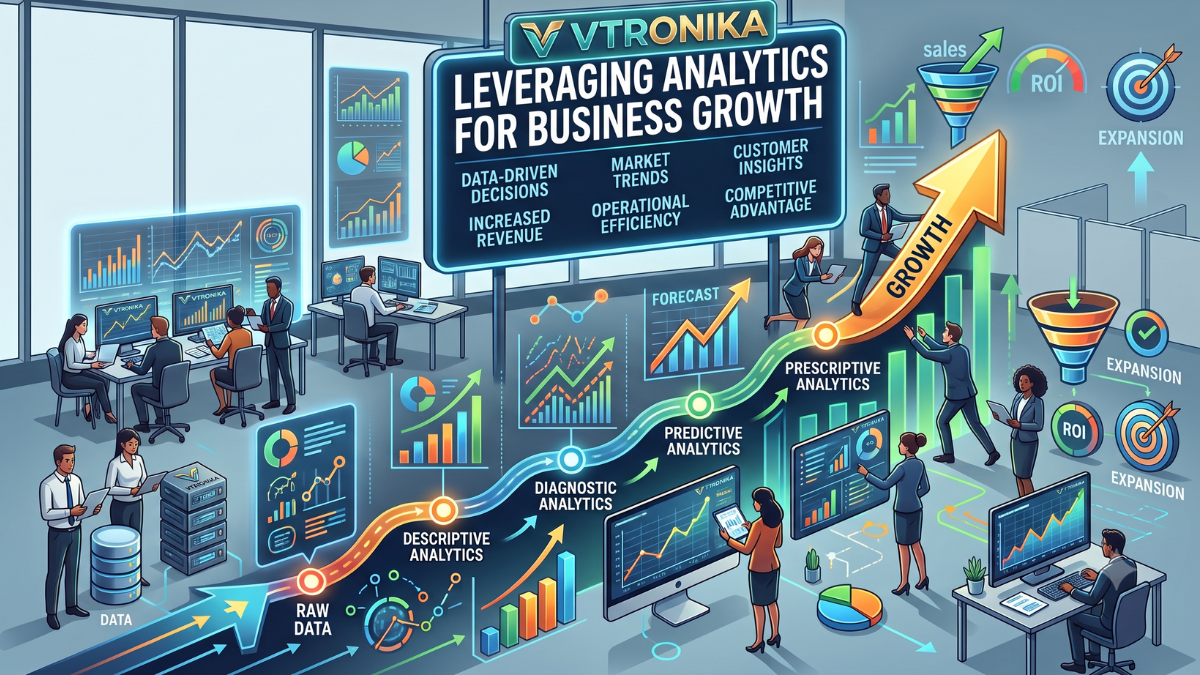
- Gut feelings and guesswork are no longer sufficient in a competitive digital marketplace; sustainable business growth requires a culture deeply rooted in rigorous data analytics and intelligence.
- Deploying robust business intelligence dashboards gives executives clear visibility into key performance indicators, conversion funnels, customer acquisition costs, and employee productivity metrics.
- By turning raw, unstructured data into actionable insights, leaders can allocate marketing budgets more efficiently, identify emerging market opportunities early, and pivot business strategies with absolute confidence.
6. Hyper-Personalization Strategies in Digital Marketing
- Generic mass-marketing campaigns are rapidly losing effectiveness, paving the way for hyper-personalized digital experiences that treat every customer as an individual audience of one.
- Utilizing granular behavioral data and machine learning segmentation enables your marketing team to deliver tailored product recommendations, dynamic email content, and customized user interfaces.
- This tailored approach drastically boosts click-through rates, reduces cart abandonment, and fosters a deeper emotional connection between the consumer and your digital brand.
7. Optimizing Conversion Rates Through UX and UI Excellence
- Your website and digital applications serve as your primary storefronts, meaning that user experience and interface design directly dictate your bottom-line revenue potential.
- Streamlining navigation, minimizing page load speeds, implementing intuitive checkout flows, and removing unnecessary friction points significantly enhances overall user satisfaction.
- Continuous A/B testing and user feedback integration allow your product teams to refine design elements systematically, turning high website traffic into high-volume sales conversions.
8. Cultivating Agile Leadership and Digital-First Culture
- Technology alone cannot elevate a digital business; true transformation requires a cultural shift toward agility, cross-functional collaboration, and continuous continuous learning within your workforce.
- Empowering employees to embrace emerging digital tools, experiment with new ideas, and adapt quickly to shifting market dynamics creates a resilient, future-proof organization.
- Leadership teams must champion transparency, encourage open communication, and remove bureaucratic silos to ensure that the entire company moves in sync toward common growth goals.
9. Leveraging Content Marketing and Organic Authority
- Building long-term digital authority relies heavily on producing high-value, educational, and engaging content that addresses your target audience’s core pain points and questions.
- A robust search engine optimization strategy combined with insightful thought leadership articles, podcasts, and video resources helps position your brand as an indispensable industry resource.
- This inbound approach drives sustainable, cost-effective organic traffic to your digital properties, reducing your heavy reliance on paid advertising while building enduring trust with consumers.
10. Future-Proofing Through Strategic Tech Partnerships and APIs
- Trying to build every single digital capability in-house can drain resources and slow down time-to-market, making strategic software integrations and API partnerships vital for success.
- Leveraging best-in-class third-party software-as-a-service solutions for payments, logistics, customer relationship management, and analytics allows your business to innovate rapidly.
- By creating a modular, API-driven tech stack, your enterprise can easily plug in new technologies, adapt to changing consumer habits, and maintain a permanent competitive edge.