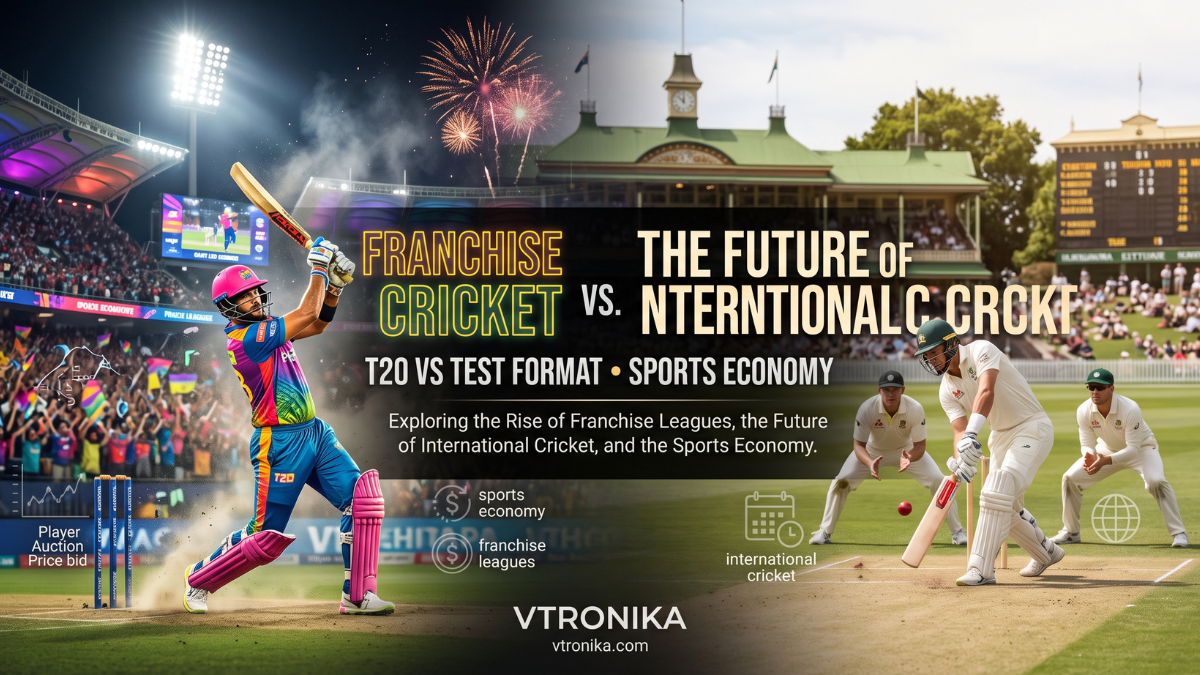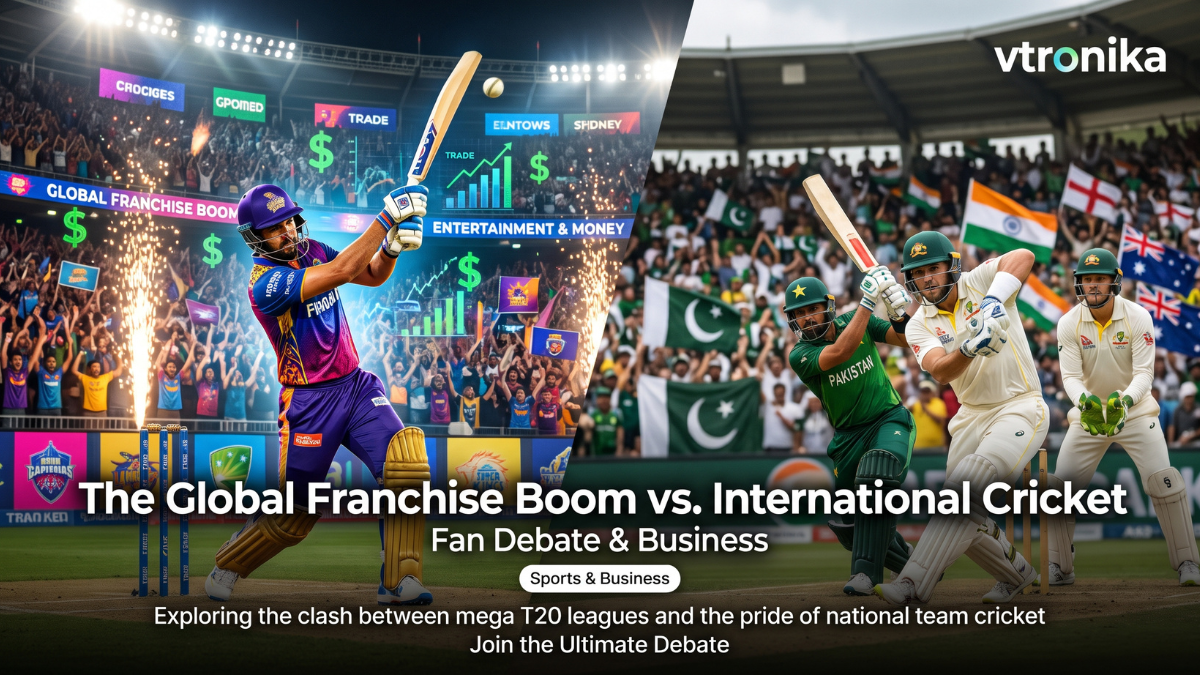
Article 1: The Commercial Explosion — How Private Capital Rewrote Cricket’s Balance Sheet
For more than a century, cricket’s economic engine was governed exclusively by sovereign national boards and the International Cricket Council (ICC). Revenue flowed primarily from bilateral test series, gate receipts, and sporadic world tournaments. The arrival and rapid expansion of the Indian Premier League (IPL)—followed by leagues like the Pakistan Super League (PSL), Big Bash League (BBL), SA20, and Major League Cricket (MLC)—fundamentally dismantled that state-monopoly model in favor of free-market venture capitalism.
Private equity consortiums, tech conglomerates, and multi-club corporate conglomerates have injected unprecedented liquidity into the sport. Broadcast valuations have reached record per-match values, turning domestic franchise windows into the most lucrative real estate in sports broadcasting. As commercial capital concentrates in private domestic leagues, the sport’s financial center of gravity has shifted from national boards to private boardroom executives.
- Broadcast Value Density: T20 leagues generating higher broadcast revenue per match than standard bilateral series.
- Private Equity Influx: Global investment groups acquiring stakes across multiple continental tournaments.
- The Decoupling of Cricket Economy: Boards relying increasingly on franchise sanctioning fees and league dividends rather than gate receipts.
Article 2: The Player Labor Revolution — The Rise of the Freelance Cricketer
The financial scale of franchise cricket has altered the labor dynamics of professional sport. Historically, representing one’s national team was the sole path to financial security and sporting glory. Today, a top-tier white-ball specialist can earn more in an eight-week franchise tournament than across three years of central national contract duties.
This disparity has given birth to the globe-trotting freelance cricketer. Elite athletes increasingly reject or surrender central national contracts to maintain complete control over their playing schedules and commercial rights. Players navigate a continuous year-round circuit—from the IPL in India to the Hundred in the UK, the CPL in the Caribbean, the SA20 in South Africa, and MLC in the United States—treating international selection as an option rather than an obligation.
- Contractual Autonomy: High-profile players opting out of national board contracts to preserve franchise flexibility.
- Short-Format Specialization: Early retirements from multi-day Test and 50-over formats to prolong lucrative T20 careers.
- Global Labor Mobility: Athletes functioning as independent contractors across six or more international franchises annually.
Article 3: The Slow Death of Bilateral Cricket — Contextless Tours vs. Event Tournaments
Outside of flagship rivalry contests—such as The Ashes or India versus Pakistan—standard bilateral tours are enduring a severe identity and viewership crisis. Three-match One-Day International (ODI) series and reciprocal T20I tours frequently play out in half-empty stadiums with declining television ratings, primarily because they lack overarching competitive stakes or seasonal narratives.
In contrast, franchise tournaments offer built-in dramatic context: city pride, league standings, playoff brackets, and title glory compressed into a compact calendar window. Unless bilateral tours are directly tethered to meaningful championship points tables or World Cup qualification stakes, national boards often stage them at a financial loss, competing unsuccessfully against prime-time domestic league entertainment.
- The Context Vacuum: Routine bilateral fixtures lacking clear narrative consequences beyond incremental ICC ranking changes.
- Audience Attention Deficits: Contemporary viewers preferring high-stakes playoff races over standalone three-match series.
- Logistical Cost Pressures: Hosting non-marquee bilateral tours becoming a net financial drain for smaller cricket nations.
Article 4: The 50-Over Identity Crisis — Caught Between Tradition and Speed
The One-Day International (ODI) format, which drove cricket’s commercial explosion from the 1980s through the 2000s, is caught in a strategic squeeze. Spanning approximately eight hours, the 50-over game lacks the compact, three-hour speed of T20s while missing the deep tactical nuances and endurance tests inherent in red-ball Test cricket.
Apart from quadrennial ICC ODI World Cups, regular bilateral ODIs suffer from flagging attendance and dwindling broadcast interest. Cricket administrators and broadcast executives openly debate whether the format requires structural reduction—such as shortening matches to 40 overs—or whether bilateral 50-over cricket will eventually be phased out entirely, preserving the format exclusively for global tournament windows.
- Mid-Innings Stagnation: Modern audiences struggling to remain engaged during defensive middle overs (15 to 40).
- Broadcast Real Estate Conflicts: Television networks favoring rapid, predictable three-hour T20 broadcast slots over all-day commitments.
- World Cup Exclusivity: Proposals to preserve the 50-over format strictly for the flagship quadrennial ODI World Cup.
Article 5: Test Cricket Under Siege — The Widening Two-Tier Divide
Test cricket remains the undisputed benchmark of athletic stamina, mental fortitude, and tactical depth for players and traditionalists alike. Yet, red-ball cricket is increasingly maintained by an exclusive oligopoly: India, England, and Australia. These three boards possess the domestic broadcasting rights and domestic liquidity required to subsidize expensive, five-day test matches.
For smaller full-member nations like South Africa, the West Indies, and New Zealand, hosting a home Test series often incurs significant financial debt due to production and venue costs that gate receipts and broadcast revenue cannot offset. This financial reality leads to compromised squad selections, where smaller boards dispatch reserve-grade Test sides abroad while their elite stars fulfill contractual obligations in overseas T20 leagues.
- The Cost-of-Hosting Deficit: High production, DRS, and venue operating costs exceeding broadcast revenues for smaller nations.
- Second-String Test Squads: Depleted national test teams fielding inexperienced rosters during overseas franchise clashes.
- The Big-Three Hegemony: A structural split where only three wealthy nations maintain regular four- and five-match Test series.
Article 6: The Multi-Club Corporate Model — Cross-Border Franchise Conglomerates
The global franchise boom is no longer an archipelago of isolated regional competitions; it has consolidated into integrated, cross-border corporate networks. Major franchise ownership groups (most notably owners from the IPL) have established satellite teams across SA20, the Caribbean Premier League, ILT20 in the UAE, and Major League Cricket in the United States.
This consolidation mirrors the multi-club ownership models seen in European football (such as City Football Group). Players now sign comprehensive, year-round agreements directly with a parent brand, representing the same corporate identity across four different continents and distinct domestic tournaments. This shifts primary athlete loyalty from the national shirt toward a commercial corporate franchise network.
- Brand Cross-Pollination: Operating global franchise umbrellas that share scouting databases, performance analytics, and branding.
- 12-Month Corporate Contracts: Franchises offering continuous annual retainers that supersede national board central contracts.
- Corporate Hegemony: A handful of private conglomerates controlling top-tier player availability across international borders.
Article 7: The Fan Loyalty Fracture — Tribal Nationalism vs. City Franchises
The psychological relationship between cricket supporters and their teams is undergoing an intergenerational reset. For older demographics, emotional investment was forged in pure national tribalism: patriotic pride, national anthems, and iconic multi-nation tournaments. The modern fan experience, however, is heavily influenced by digital community culture and city-based franchise branding.
Younger supporters frequently demonstrate greater day-to-day engagement with their franchise clubs than their national sides. Social media fan bases organize around franchise identities, engaging in debates over player auctions, retention brackets, and tactical trade windows with the same passion historically reserved for Test series. This dynamic has decentralized cricket fandom, making personal style, player followings, and regional club allegiances central to the spectator experience.
- The Cult of the Individual: Fans demonstrating primary loyalty to individual star athletes across whichever league jersey they wear.
- City-Centric Identity: Cultivating regional fan bases and community identity through targeted digital campaigns and team anthems.
- De-escalation of National Pressure: Franchise cricket offering high-stakes sporting drama without the geopolitical baggage of international clashes.
Article 8: Grassroots Economics — Are T20 Billions Reaching Development Pipelines?
While headline revenues in franchise cricket break records each auction cycle, a fundamental structural question persists: is this private capital trickling down to fund grassroots pathways, school systems, and rural facilities? In traditional cricket governance, national boards reinvested international broadcast windfalls into domestic multi-day tournaments and academy infrastructure.
In contrast, private franchise owners operate for-profit enterprises focused primarily on immediate squad performance, corporate sponsorships, and brand valuation. While some franchises build elite talent-scouting academies, the foundational costs of ground maintenance, age-group coaching, and umpire training across entire nations remain largely on the shoulders of underfunded domestic boards, creating an economic imbalance between wealth generation and youth development.
- The Development Subsidization Gap: Private leagues harvesting top-tier talent nurtured at the expense of national boards.
- First-Class Cricket Strains: Historic domestic tournaments (such as the Ranji Trophy, Sheffield Shield, and Quaid-e-Azam Trophy) seeing lower compensation and attention.
- Franchise Scouting vs. Systemic Academies: Commercial talent searches prioritizing power hitting and mystery spin over multi-day red-ball foundations.
Article 9: The Broadcast Rights Realignment — Tech Giants and Fractional Viewership
The explosion of global franchise cricket has run parallel to the transition from linear cable television to subscription-based streaming platforms and digital networks. Media giants and streaming services acquire franchise rights to secure high engagement, daily active users, and advertising integration within prime-time evening entertainment windows.
This digital migration favors the three-hour T20 format, which fits comfortably into modern on-demand consumer lifestyles. Interactive second-screen experiences, instant digital highlight clips, multi-angle camera selections, and real-time social betting integrations thrive within fast-paced franchise broadcasts. By contrast, traditional all-day international broadcasts struggle to command comparable digital advertising premiums from mobile-first demographics.
- Streaming-First Rights Valuations: Digital broadcast streaming packages commanding equal or greater value than traditional terrestrial broadcast rights.
- Interactive Engagement Tech: Real-time user polls, ball-by-ball predictions, and customizable viewing feeds built for mobile consumers.
- Short-Form Content Synergy: High-volume boundary counts and wicket celebrations generating millions of algorithmic video impressions across social platforms.
Article 10: The Coexistence Blueprint — Ring-Fenced Windows and Regulatory Reform
Cricket’s leadership faces an urgent mandate: engineer a sustainable regulatory framework where private commercial leagues and international competition coexist without destroying each other. Unchecked expansion risks turning international fixtures into sporadic exhibitions, while suppressing franchise growth ignores consumer demand and market realities.
The path forward requires proactive governance from the ICC and national boards. Potential structural solutions include ring-fencing clear global windows—such as dedicated periods for the IPL, PSL, and SA20—alongside protected international windows for World Test Championship cycles and ICC tournaments. Additionally, implementing standardized transfer fees when franchises sign centrally developed players can ensure wealth flows back into regional grassroots systems, safeguarding the sport’s long-term health.
- Ring-Fenced Global Windows: Establishing formal calendar breaks where bilateral cricket pauses completely for major franchise leagues.
- Franchise-to-Board Transfer Tariffs: Mandatory compensation payments routed directly to national boards when contracted players appear in overseas leagues.
- League Caps per Athlete: Regulatory limits restricting how many independent domestic franchise competitions a player can join annually.