Article 1: Laying the Digital Foundation — Validating Models and Market Fit
Transitioning from an abstract business concept to a scalable online enterprise begins with rigorous market validation. Before committing capital to brand assets, infrastructure, or inventory, founders must verify quantifiable consumer demand. Modern digital validation relies on testing hypotheses through landing page waitlists, audience pre-orders, and targeted search intent analysis.
A viable digital business model generally aligns with one of four core architectures: direct-to-consumer (D2C) e-commerce, software-as-a-service (SaaS), productized professional services, or digital marketplace curation. Establishing a durable competitive moat requires pinpointing a narrow initial niche where existing market incumbents deliver substandard experiences. Securing genuine market fit early protects capital, limits operational friction, and provides a clear blueprint for subsequent expansion.
Article 2: Architecting a High-Performance Digital Flagship
An enterprise website or mobile application functions as the central operating hub of an online brand. Treating digital storefronts merely as aesthetic brochures overlooks their primary function: frictionless conversion. The technical framework underneath a web presence dictates user experience, search visibility, and transaction reliability.
Building a resilient digital flagship requires:
- Platform Selection: Aligning technical requirements with modern architectures—such as headless CMS setups, Shopify Plus for scalable retail, or custom React/Next.js frameworks for interactive web apps.
- Speed and Core Web Vitals: Minimizing script bloat, implementing modern image compression (AVIF/WebP), and leveraging global content delivery networks (CDNs) to maintain sub-two-second load times.
- Conversion Rate Optimization (CRO): Structuring visual hierarchies, streamlining checkout steps, eliminating unnecessary form fields, and ensuring intuitive mobile navigation.
A high-converting website serves as the anchor for all downstream marketing efforts, maximizing the return on every visitor acquired.
Article 3: Organic Discovery — Modern Search Engine Optimization & Information Architecture
Search Engine Optimization (SEO) represents the most durable, equity-building traffic acquisition channel available to digital enterprises. However, legacy keyword-stuffing tactics have been replaced by contextual search intent, technical crawlability, and authoritative topical coverage.
Winning search visibility requires building deep content clusters around core commercial themes rather than publishing disconnected blog entries. Technical health—encompassing clean URL hierarchies, structured schema markups, and internal linking networks—ensures search crawlers accurately index site architecture. Simultaneously, establishing high-authority brand mentions and reputable editorial backlinks signals trustworthiness. By positioning your platform as the comprehensive answer to sector-specific queries, organic discovery yields sustained inbound customer volume without perpetual ad spend.
Article 4: Performance Marketing — Scalable Acquisition via Paid Advertising
While organic channels build long-term equity, paid acquisition provides immediate reach and verifiable market feedback. Navigating modern performance marketing demands a balanced multi-channel approach across intent-based search platforms and algorithmic visual discovery networks.
| Platform Category | Core Channels | Strategic Focus | Primary Metrics |
| Search Intent | Google Search, Bing Ads | Capturing high-intent users actively searching for immediate solutions | CPC, Impression Share, Cost Per Acquisition (CPA) |
| Algorithmic Paid Social | Meta (IG/FB), TikTok, YouTube | Generating demand through visual storytelling and emotional hooks | CPM, Thumb-Stop Rate, Click-Through Rate (CTR) |
| B2B Professional Networks | LinkedIn Ads, Industry Newsletters | Account-based marketing (ABM) and targeting decision-makers by industry role | Lead-to-Close Ratio, Pipeline Value, Customer Acquisition Cost (CAC) |
| Retargeting & Retention | Google Display, Dynamic Social Catalogs | Re-engaging abandoners across touchpoints to capture delayed conversions | Return On Ad Spend (ROAS), Conversion Lift |
A disciplined performance marketing strategy prevents cash-flow depletion by systematically eliminating underperforming creatives and doubling budget allocations exclusively behind verified winners.
Article 5: Content Marketing and Brand Authority in the Creator Economy
Modern consumers prioritize transparency, authentic expertise, and clear brand identity over generic commercial messaging. A comprehensive digital solution requires an active content engine that informs, entertains, and educates prospects before asking for a transaction.
Authority-building content manifests through detailed case studies, founder-led insights, original industry research, and dynamic video content across platforms like YouTube and LinkedIn. By consistently solving micro-problems for an audience through editorial publishing, a business transitions from a generic vendor into a trusted industry standard. This trust compresses sales cycles, boosts referral volume, and reduces dependence on price-discount strategies during customer acquisition.
Article 6: Social Commerce and Omnichannel Community Engagement
Social networks are no longer merely traffic drivers; they have evolved into fully native shopping and customer support environments. Scaling modern brands necessitates building integrated community touchpoints where audience engagement directly connects to point-of-sale functionality.
Deploying an effective social commerce framework involves:
- Platform Alignment: Focusing exclusively on platforms where the primary target demographic congregates (e.g., Pinterest for interior design, TikTok for consumer products, LinkedIn for enterprise workflows).
- In-App Purchasing: Enabling native storefronts like TikTok Shop, Instagram Checkout, and YouTube Shopping to reduce drop-off caused by external browser redirects.
- Proactive Community Management: Treating public comment sections, direct messages, and brand mentions as immediate customer relationship pipelines to convert casual browsers into brand advocates.
Unifying social interaction with frictionless transaction gateways creates an agile, responsive brand identity.
Article 7: Lifecycle Marketing — Retention, LTV Expansion, and Email Automation
Customer acquisition cost (CAC) often offsets first-order profitability across competitive sectors. Long-term commercial margins are predominantly realized after the initial purchase, making retention and customer lifetime value (LTV) optimization critical.
Lifecycle marketing relies on automated trigger sequences across email and SMS that nurture relationships across every stage of the customer journey:
- Onboarding & Welcome Workflows: Indoctrinating new subscribers with brand values, expectations, and targeted first-purchase incentives.
- Behavioral Triggers: Recovering lost revenue via automated cart abandonment, browse abandonment, and price-drop alerts.
- Post-Purchase Nurturing: Delivering operational updates, usage instructions, cross-sell recommendations, and review requests at calculated intervals.
- Win-Back Workflows: Automatically identifying lapsed accounts and offering re-engagement campaigns to reactivate past purchasers.
Prioritizing retention lowers blended acquisition costs and builds steady, predictable cash reserves.
Article 8: Operational Automation and Technology Stacks for Scale
As sales volume expands, operational bottlenecks inevitably threaten fulfillment quality, customer happiness, and team productivity. Scaling requires replacing manual administrative routines with unified software integrations.
Centralizing operations around a core Customer Relationship Management (CRM) system ensures sales pipelines, order records, and support interactions remain synchronized. Automated ticketing hubs (such as Zendesk or Gorgias) coupled with AI-driven triage resolve high-frequency support questions instantly, reserving human oversight for high-tier inquiries. Furthermore, linking inventory, accounting, and supply chain logistics through automated middleware (like Zapier, Make, or custom REST APIs) prevents stock discrepancies and operational delays.
Article 9: Data-Driven Decision Making — Analytics and Attribution
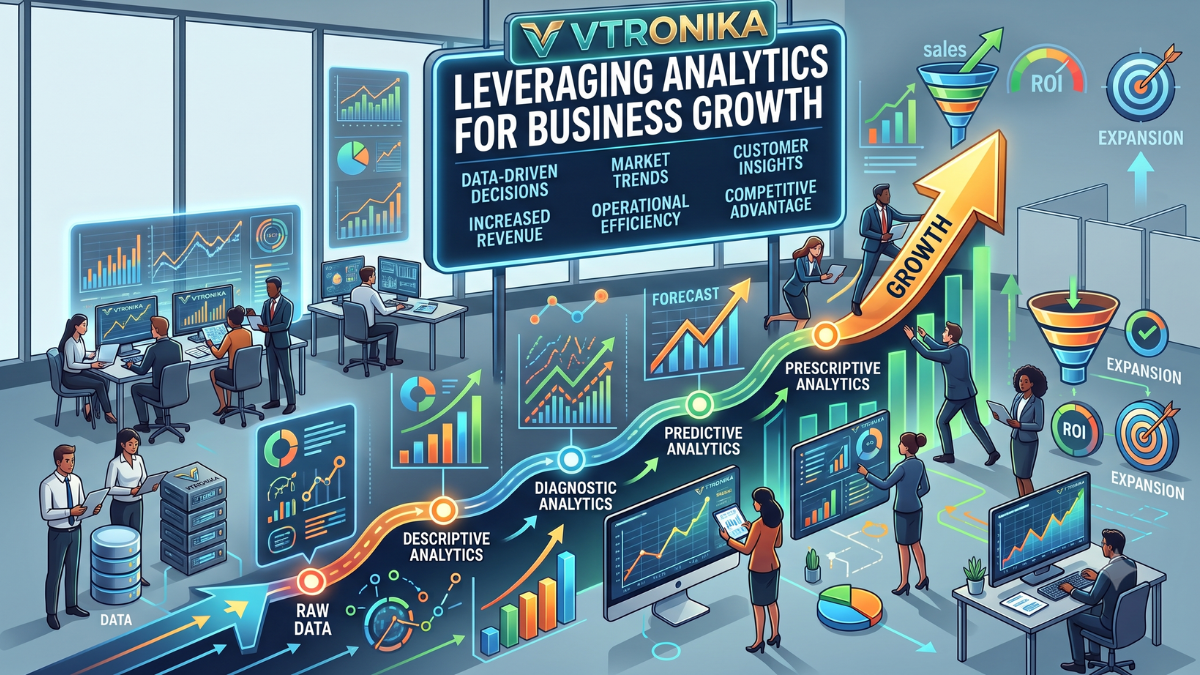
Operating an online business without granular analytics is akin to flying an aircraft without navigation instruments. Scaling requires shifting corporate discussions from intuition-driven hunches to empirical, data-backed insights.
A complete digital measurement ecosystem monitors performance across three key dimensions:
- Financial Health: Tracking unit economics, gross margins, Customer Lifetime Value to Customer Acquisition Cost (LTV:CAC) ratios, and operational cash runway.
- Behavioral Funnel Data: Analyzing on-site navigation paths, heatmaps, drop-off stages in the checkout funnel, and page-by-page bounce rates.
- Marketing Attribution: Utilizing multi-touch attribution models, server-side tracking (Conversions API), and post-purchase surveys to determine which channels truly ignite customer discovery versus which merely capture the final click.
Objective metrics provide the clarity needed to invest confidently in high-yield channels while cutting unproductive initiatives.
Article 10: Global Expansion, Localization, and Future-Proofing
The ultimate phase of online scaling involves expanding beyond domestic borders into international markets. The internet enables global commerce, but true scale requires adapting to local nuances rather than simply translating website text.
International expansion demands multi-currency checkout options, localized payment gateway integrations (such as iDEAL in the Netherlands or UPI in India), and localized logistics fulfillment hubs to ensure fast shipping. Additionally, future-proofing an enterprise involves monitoring regulatory frameworks—including international data privacy laws (GDPR, CCPA) and regional consumer safety standards. By constructing a secure, adaptable infrastructure that respects localized market preferences, an online business cements its position as an enduring, globally recognized brand.