Article 1: The Launch and Activation of the Nancy Grace Roman Space Telescope
In late August 2026, NASA successfully launched the highly anticipated Nancy Grace Roman Space Telescope, marking a monumental milestone in cosmic observation. As it journeys toward its final destination a million miles away at the second Lagrange point (L2), engineers have already achieved a critical step by powering up its massive 300-megapixel Wide Field Instrument (WFI). This infrared camera is designed to capture enormous swaths of the cosmos, providing a view larger than the apparent size of a full moon in a single shot while maintaining the sharp detail associated with the Hubble Space Telescope. With its detectors cooling to an operating temperature of minus 300 degrees Fahrenheit, the Roman telescope is preparing to map billions of galaxies, discover over 100,000 distant exoplanets, and probe the profound mysteries of dark matter and dark energy, with its first science images expected by early 2027.
Article 2: James Webb Detects Water Near Our Galaxy’s Supermassive Black Hole
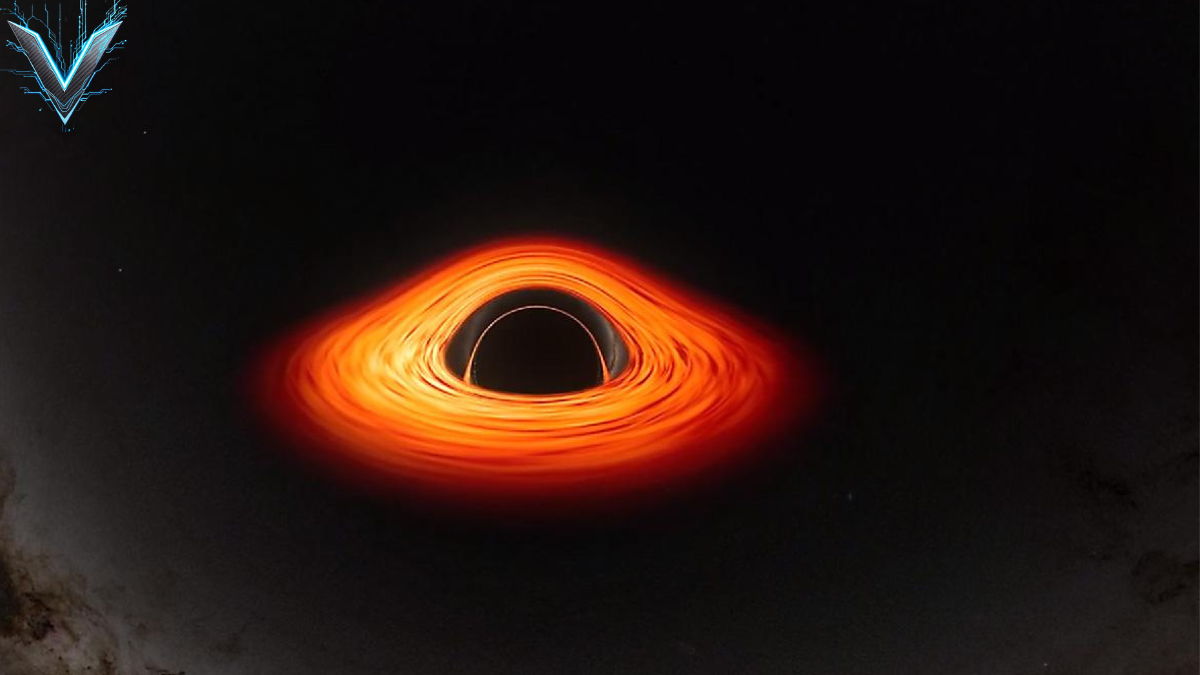
The James Webb Space Telescope (JWST) continues to peer through cosmic dust to reveal the hidden dynamics of our universe. In recent observations from September 2026, Webb detected the presence of water near Sagittarius A*, the supermassive black hole positioned at the very center of our Milky Way galaxy. This environment is known for its intense gravitational forces and extreme radiation, making the discovery of water an intriguing puzzle for astrophysicists. By mapping the chemical signatures near the black hole, researchers can better understand the turbulent conditions, the accretion of matter, and the strange, highly energetic environment that exists at the heart of our galactic home.
Article 3: Unveiling a Hidden Giant in the Beta Pictoris System
Using the advanced spectroscopic capabilities of the James Webb Space Telescope, astronomers recently discovered a giant exoplanet, named Beta Pictoris d, hiding within one of the most intensely studied planetary systems. Located just 63 light-years from Earth, this young, 23-million-year-old system features a distinctive debris disk. By analyzing a barcode-like pattern of carbon monoxide absorption lines, scientists identified the planet, which is estimated to be at least twice the mass of Jupiter. Webb’s Mid-Infrared Instrument (MIRI) later confirmed the presence of water vapor and methane in the planet’s atmosphere. This discovery helps explain the sharp inner edge of the system’s debris disk, showcasing Webb’s unparalleled ability to study the interactions between newborn planets and cosmic dust.
Article 4: The Anticipated Return of Supernova Athena
A stellar explosion, known as Supernova Athena, was first discovered by the James Webb Space Telescope in 2025 and is predicted to reappear in our skies by early March 2027. Because light from this supernova travels along multiple paths around a massive foreground galaxy cluster known as MACS J0417, the same explosion can be seen at different times, separated by months or years. This phenomenon, called gravitational lensing, magnifies the distant object and bends its light. NASA’s Hubble Space Telescope is actively tracking these reappearances, and by precisely measuring the timing of Athena’s return, astronomers can map the mass of the lensing galaxy cluster and refine our measurements of the universe’s expansion rate.
Article 5: A Mid-Infrared Chemical Fingerprint of an Interstellar Visitor
In a groundbreaking achievement for astrochemistry, the James Webb Space Telescope collected the first-ever mid-infrared chemical fingerprint of an interstellar object during a revisit observation in June 2026. Interstellar objects, which originate from outside our solar system and briefly pass through our cosmic neighborhood, are incredibly difficult to study due to their immense speed and faintness. By capturing this mid-infrared spectrum, scientists can directly analyze the chemical composition of materials forged in distant alien star systems, providing unprecedented data on how planetary building blocks vary across different regions of the Milky Way galaxy.
Article 6: Hubble’s Enduring Legacy and Surprising Planetary Phenomena
Even after more than 36 years in space, the Hubble Space Telescope remains at the forefront of astronomical discovery, working in tandem with newer observatories. Recently, Hubble turned its gaze toward our own solar system, tracking a massive, evolving, 10-sided atmospheric wave—a decagon—encircling the south pole of Saturn. Beyond our immediate neighborhood, Hubble’s visible and ultraviolet capabilities also allowed astronomers to spot a highly unusual, out-of-sync galaxy that defies standard models of galactic evolution. These observations prove that Hubble is still uncovering dynamic, shifting phenomena, maintaining a demand for observing time that is seven times higher than what is available annually.
Article 7: Preparing for Artemis II and Lunar South Pole Exploration
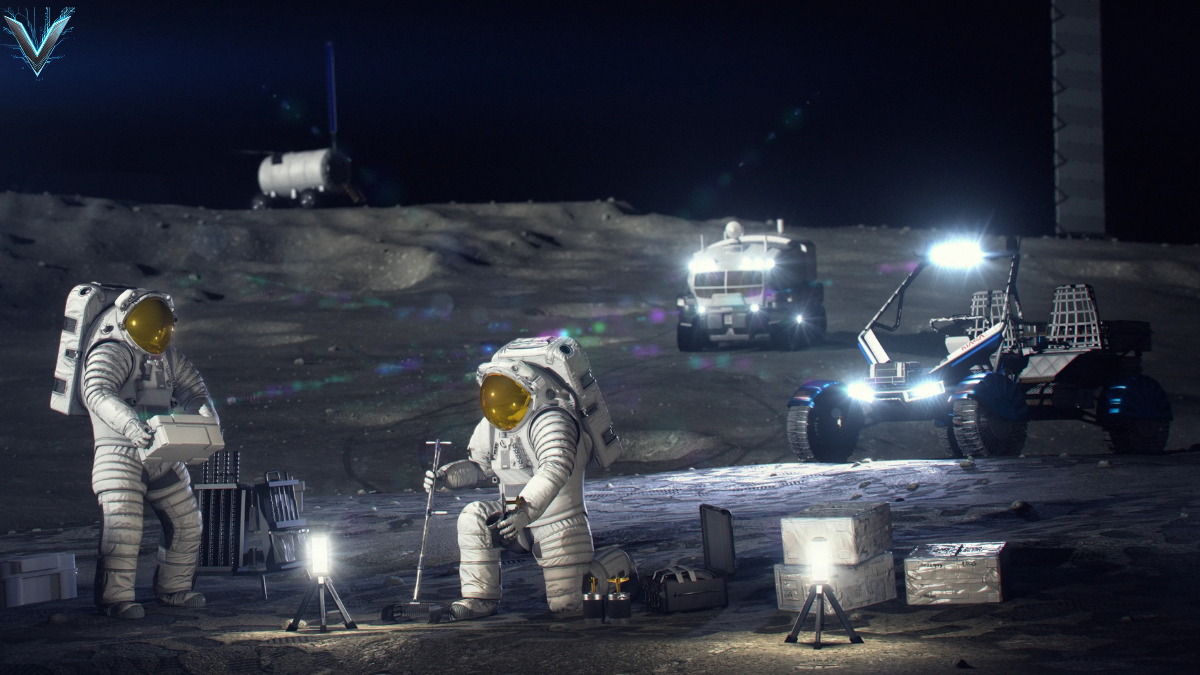
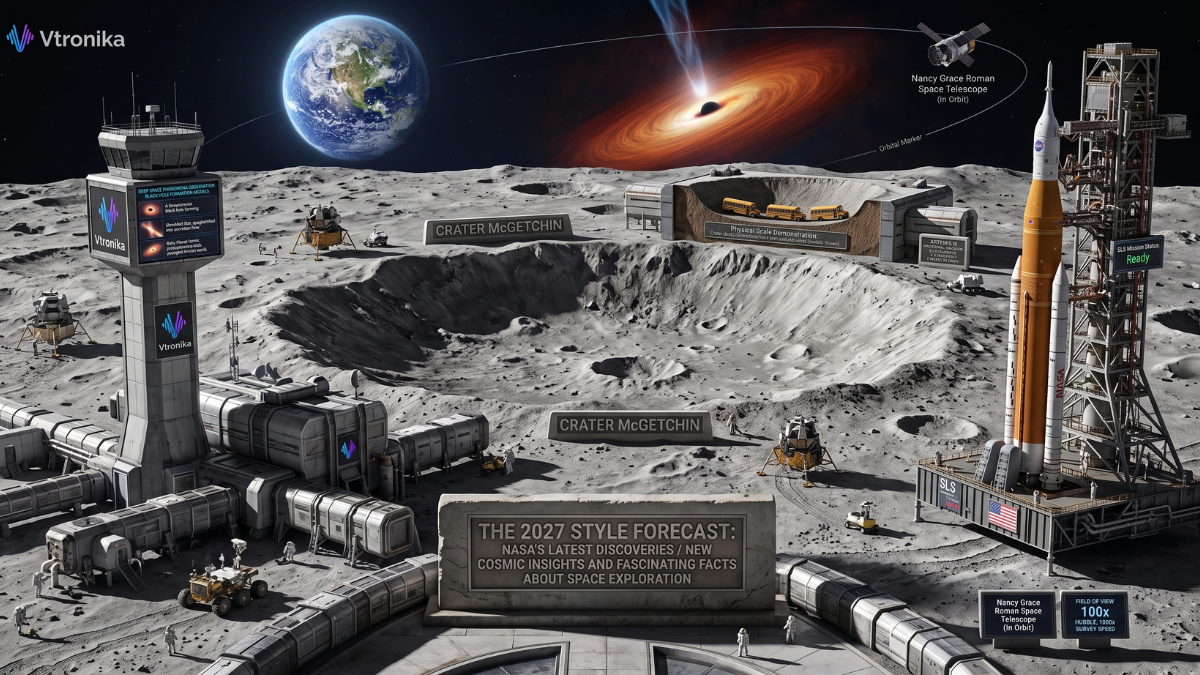
While robotic observatories peer into deep space, NASA is actively laying the groundwork for a new era of human spaceflight through the ambitious Artemis program. Preparations are intensifying for the Artemis II mission, which will launch four astronauts on a ten-day journey to fly around the Moon and return to Earth, marking the first crewed lunar mission since Apollo 17 in 1972. Concurrently, robotic orbiters are mapping the lunar South Pole to support future infrastructure. In a striking recent discovery, a NASA Moon orbiter identified a massive, “once-in-a-century” fresh impact crater on the lunar surface, providing valuable data on the current rate of meteoroid impacts in the Earth-Moon system.
Article 8: Capturing Extreme Stellar Interactions with XRISM
To understand the violent lifecycle of stars, NASA, in collaboration with JAXA, launched the X-Ray Imaging and Spectroscopy Mission (XRISM). This powerful observatory is designed to study the most extreme, high-energy events in the universe. Recently, XRISM captured a fascinating and turbulent stellar interaction involving a dense pulsar actively gathering the stellar wind emitted by its massive companion star. By observing the X-rays generated when this material is violently accelerated and heated by the pulsar’s intense gravity, scientists can unravel the complex physics governing dead stars and the energetic outflows that shape the evolution of galaxies.
Article 9: The StarBurst Rideshare Mission and Neutron Star Mergers
To further investigate cataclysmic cosmic occurrences, NASA has selected SpaceX to launch the StarBurst rideshare mission. This innovative project will deploy a specialized small satellite designed specifically to investigate the origins of short gamma-ray bursts, which are among the most luminous and energetic explosions in the universe. These bursts are typically triggered by the catastrophic mergers of neutron stars—incredibly dense remnants of collapsed giant stars. By rapidly detecting and analyzing these high-energy flashes, the StarBurst mission will help astrophysicists understand how heavy elements, such as gold and platinum, are forged during these violent cosmic collisions.
Article 10: Ancient Impacts and Cosmic Connections to Earth
Space exploration is not solely about looking outward; it also involves using orbital technology to understand our own planet’s deep history. By utilizing advanced data from the Landsat satellite network, researchers have been examining ancient, hypervelocity meteor craters scattered across Earth’s surface. These orbital observations allow geologists to map the scars of violent impacts that shaped our planet’s evolutionary history. By comparing these terrestrial impact zones with the fresh craters observed on the Moon, scientists are building a comprehensive timeline of the solar system’s chaotic past, demonstrating how the multi-faceted approach of modern space exploration connects the deepest secrets of the universe directly to our home planet.