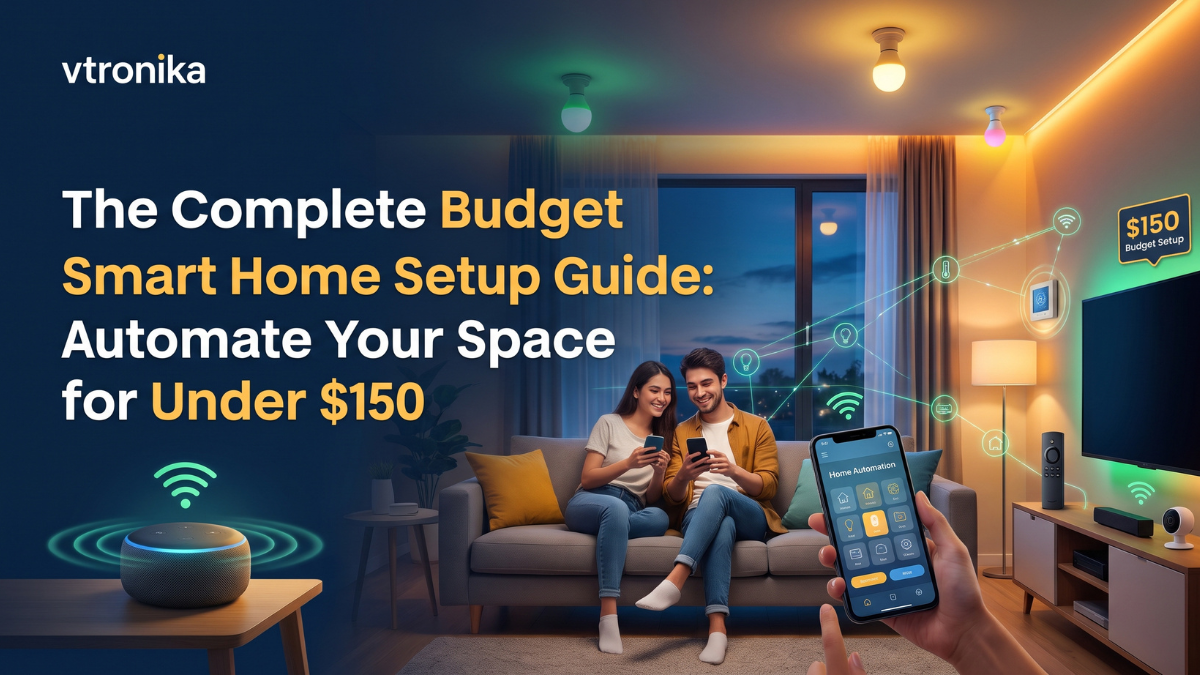
1. The Foundation: Choosing Your Smart Hub
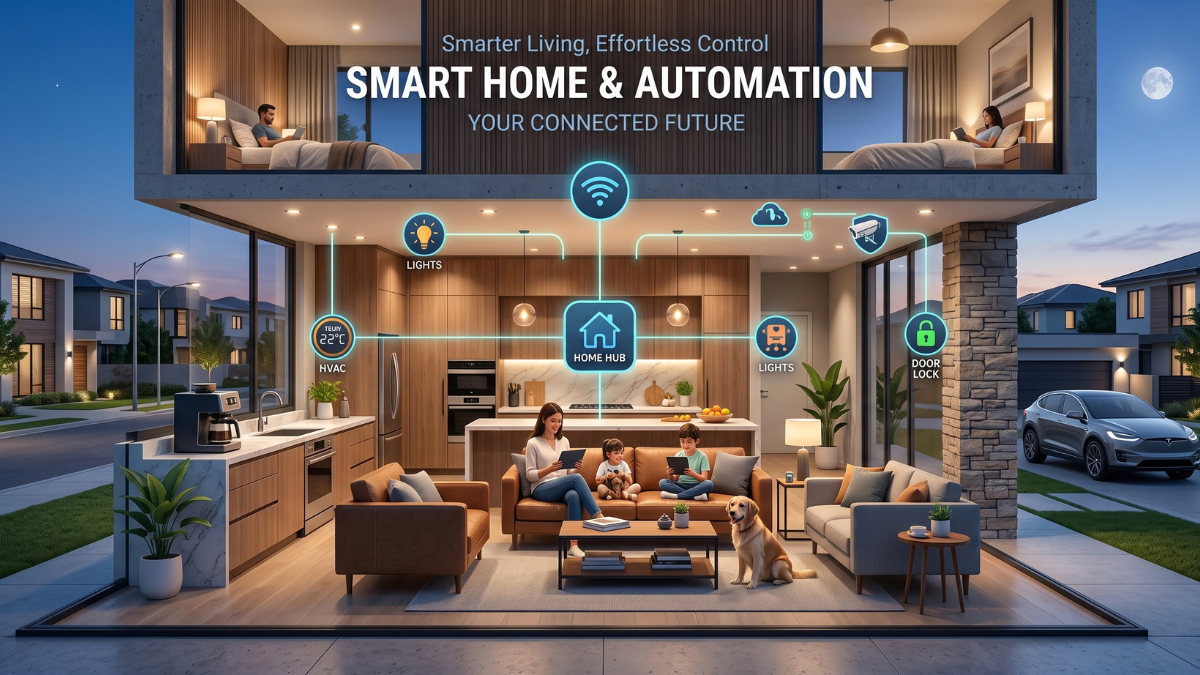
The brain of any budget smart home is the central hub, and thankfully, you do not need an expensive, dedicated processor to get started. Entry-level smart speakers, such as the Amazon Echo Dot or the Google Nest Mini, typically retail for around $40 to $50 and serve as the perfect command center. These small, unobtrusive devices connect directly to your home Wi-Fi and allow you to control every other gadget in your house using simple voice commands. By choosing one ecosystem (either Alexa or Google Assistant), you ensure that all your future budget purchases will communicate flawlessly with one another.
2. Let There Be Light: Smart Bulbs and Ambiance
Lighting is often the first and most impactful step in home automation. For under $30, you can purchase a four-pack of Wi-Fi-enabled smart LED bulbs from reliable budget brands like Wyze or Sengled. These bulbs screw into your existing standard light fixtures and do not require a separate, expensive bridge to function. Once connected, you can adjust the brightness, change the color temperature from a cool daylight white to a warm evening amber, and set automatic schedules so you never have to walk into a dark house again.
3. The Magic of Smart Plugs: Upgrading Dumb Appliances
You don’t need to throw away your standard appliances to make them smart; you simply need a smart plug. A multi-pack of budget smart plugs costs roughly $25 and acts as a digital gatekeeper between your wall outlet and your device. By plugging in an older coffee maker, a box fan, or a decorative reading lamp, you instantly gain the ability to turn that device on or off using your smartphone. This is the most cost-effective way to bring legacy electronics into your modern, automated ecosystem.
4. Automating Your Morning Routine
The true power of a smart home lies not just in remote control, but in automation. Using the free companion app for your smart speaker, you can create a customized “Morning Routine.” For example, you can program the system so that when you say, “Good morning,” the smart speaker reads you the daily news and weather, the smart plug starts brewing your coffee, and the smart bulbs in your bedroom slowly fade up to simulate a natural sunrise. This seamless synchronization costs absolutely nothing extra to set up once you have the basic hardware.
5. Essential Security: Budget-Friendly Indoor Cameras
Home security used to be an expensive luxury, but today, you can add a high-definition indoor smart camera to your setup for about $25 to $35. Brands like Blink and Wyze offer compact cameras that plug directly into the wall and connect to your Wi-Fi. These cameras provide crisp 1080p video, two-way audio so you can speak to pets or family members, and motion-detection alerts that instantly send a notification to your phone if someone enters your home while you are at work.
6. Peace of Mind: Door and Window Sensors
To round out your budget security system, magnetic contact sensors are incredibly affordable, often costing less than $15 for a pair. These small, battery-operated devices stick onto your doors or ground-floor windows. If a window is opened while the system is armed, the sensor breaks the magnetic connection and triggers an alert. You can also integrate these into your routines—for example, setting the smart bulb in the hallway to turn on automatically whenever the front door is opened after sunset.
7. Maximizing Energy Efficiency and Cost Savings
A $150 smart home investment can actually pay for itself over time through reduced energy consumption. Smart LED bulbs naturally use significantly less electricity than traditional incandescent bulbs. Furthermore, by using smart plugs, you can completely eliminate “vampire draw”—the hidden energy that appliances consume even when turned off but still plugged in. By scheduling your heavy-draw devices to shut down entirely during the night or while you are at the office, you will notice a steady decrease in your monthly utility bills.
8. Voice Control Mastery: Essential Commands
To get the most out of your setup, you need to learn how to speak to your digital assistant effectively. Beyond simple on/off commands, you can group devices together by room. By grouping your living room smart plug and two smart bulbs together in the app, a single command like “Turn off the living room” shuts down the entire space at once. You can also set timers, ask for recipe conversions hands-free while cooking, and broadcast intercom messages to other smart speakers in the house.
9. Creating the Illusion of Occupancy
One of the best security features of a budget smart home is the ability to make it look like someone is always there, even when you are on vacation. With your $150 setup, you can use the “Away Mode” feature found in most smart lighting apps. This feature randomly turns your smart bulbs and plugged-in radios on and off at varying times throughout the evening, perfectly simulating human activity and deterring potential intruders without the need for expensive security subscriptions.
10. The Future-Proof Foundation
The beauty of building a smart home piecemeal is that your initial $150 investment forms a highly scalable foundation. You do not have to buy everything at once. By establishing a reliable central hub and ensuring your Wi-Fi network is stable, you can easily add more advanced gadgets—such as smart thermostats, video doorbells, or automated robot vacuums—later on as your budget allows. Your inexpensive starter system will seamlessly integrate these future upgrades, creating a robust, fully modernized home environment.







![1. Profitable Niche Selection & Technical Scope Definition: Aik kamyab tech review platform launch karne ke liye broad tech market ke bajaye targeted micro-niche select karna sab se pehla qadam hai, jahan aap broad electronics cover karne ke bajaye specific hardware segments maslan smart home automation, budget mechanical keyboards, portable power stations, ya AI-driven creator gadgets par focus karte hain. Micro-niche target karne se search engines par topical authority jaldi build hoti hai, low-competition keywords rank karna aasan ho jata hai, aur high-intent buyers ki targeted traffic attract hoti hai jo directly conversion rate barhane mein madadgar sabit hoti hai. 2. Modern Web Architecture, UX & Speed Optimization: Website structure aur technical foundation review sites ke liye direct revenue driver ka kaam karti hai, is liye clean, light-weight aur responsive CMS framework chunna zaroori hai jo fast loading speed deliver kare. Core Web Vitals optimize karna, mobile-first responsive layout design karna, clean visual typography use karna, aur comparison tables ko dynamic render karna visitor retention ko improve karta hai, kyunki fast loading pages reader bounce rate kam karte hain aur user ko buying guides aur product tables tak asani se pohanchate hain. 3. Intent-Driven Keyword Strategy & High-Converting Content Formats: Tech review traffic ko monetize karne ke liye content creation ka focus high commercial intent search terms par hona chahiye, jahan users already purchase decision ke qareeb hotay hain. Detailed hands-on single product reviews, comprehensive head-to-head comparison battles, "Best [Category] for [Use Case]" curated roundups, aur troubleshooting how-to guides regular basis par publish karni chahiye, jin mein user ke pain points, battery life, real-world benchmarks, pros, aur cons clear aur honest tareeqay se highlight kiye gaye hon. 4. Visual Credibility, Original Testing & E-E-A-T Compliance: Search engine algorithms aur smart consumers stock photos aur generic specifications ke bajaye genuine testing signals ko prefer karte hain, is liye real-world unboxing pictures, self-tested performance charts, aur honest product limitations dikhana trust build karta hai. Apni testing methodology ko openly document karna, detailed measurement data attach karna, aur original visual demonstrations include karna site ki credibility ko double karta hai, jis se affiliate link conversions naturally barh jati hain aur return-on-traffic optimize hota hai. 5. Strategic Affiliate Network Integration & Link Management: Monetization engine set karne ke liye premium global affiliate networks maslan Amazon Associates, AWIN, CJ Affiliate, ShareASale, aur niche-specific tech direct merchant programs par verified publisher profile create karni hoti hai. Links ko manage karne ke liye specialized affiliate link cloaking plugins use karna zaroori hai, jo automated geo-targeting enable karte hain taake US, UK, ya Asian visitors ko unke local regional storefronts par redirect kiya ja sakay, jis se international traffic ka commission leak hone se bach sake. 6. High-Converting Call-to-Action (CTA) & Price Comparison Elements: Plain inline hyperlinks ke muqablay visual elements conversions ko multi-fold accelerate karte hain, is liye har review section ke baad customized product comparison boxes, "Check Best Price" buttons, aur dynamic discount coupon alerts place karni chahiye. Yeh interactive boxes reader ki purchasing friction ko khatam karte hain, stock status clear dikhate hain, aur trust-building price-check buttons reader ko affiliate merchant store par click karne ke liye instant incentive provide karte hain. 7. Regulatory Compliance, FTC Disclosures & Legal Transparency: Affiliate networks ke accounts ko ban hone se bachane aur ethical publishing standards maintain karne ke liye transparent compliance policy follow karna lazmi hai. Har commercial article ke bilkul shuru mein clear FTC disclosure add karna, dedicated privacy policy, terms of service, aur affiliate relationship disclaimer pages publish karna na sirf platform account stability ensure karta hai, balki international ad compliance standards aur readers ke trust ko legal protection deta hai. 8. Traffic Diversification & Multi-Channel Retention Funnels: Sirf search engine algorithms par depend karna risky ho sakta hai, is liye audience retention ke liye multiple organic traffic funnels develop karne chahiye. Review summaries ko short video clips mein convert karke YouTube shorts aur tech forums par share karna, high-converting tech deals newsletter chalana, aur push notifications capture karna aik loyal subscriber base create karta hai, jo seasonal sales events maslan Black Friday, Cyber Monday, aur Prime Day par massive direct affiliate revenue deliver karta hai. 9. Analytical Tracking, Conversion Rate Optimization (CRO) & A/B Testing: Affiliate revenue scale karne ke liye data-backed decision making standard practice banani chahiye, jahan Google Analytics 4, heatmaps, aur affiliate dashboards ke zariye link performance track ki jaye. Mukhtalif button placements, anchor text variations, CTA colors, aur layout formats par A/B split tests run karna identify karta hai ke konsi positioning maximum clicks generate kar rahi hai, jis se un-monetized traffic leaks eliminate ho jate hain aur overall earnings per thousand visitors (RPM) maximize hoti hai. 10. Advanced Monetization Scaling & Direct Brand Partnerships: Jaise hi platform steady traffic aur targeted niche authority capture kar leta hai, earning channels ko standard low-margin affiliate links se naye high-ticket models par shift kiya ja sakta hai. High-paying direct SaaS affiliate partnerships join karna, hardware manufacturers se paid sponsored testing packages negotiate karna, exclusive display ad inventory sell karna, aur dedicated brand review slots secure karna overall revenue streams ko diversify karta hai, jo platform ko aik stable, multi-tier digital media business mein badal deta hai.](https://vtronika.com/wp-content/uploads/2026/10/Tech-Content-Monetization-A-Practical-Blueprint-For-Launching-A-Tech-Review-Site-Earning-Through-Affiliate-Marketing-Networks.png)