Article 1: The Algorithmic Athlete — How Real-Time Data Replaced Conventional Scouting and Strategy
Traditional player evaluation historically relied on subjective scouting intuition, observational bias, and static box scores that captured only terminal outcomes rather than the mechanics behind them. Today, athletic strategy is dictated by high-frequency spatial tracking, optical computer vision systems, and automated event categorization. High-speed camera installations track 29 anatomical joint points per athlete up to 60 times per second, translating pitch curves, sprint decelerations, and defensive spacing into continuous multivariate time-series data.
Front offices and coaching staffs evaluate prospective talent through predictive modeling rather than rudimentary physical measurables. Machine learning algorithms quantify contextual value, such as a midfielder’s off-ball spatial displacement to create passing lanes or an outfielder’s route efficiency under unpredictable crosswinds. This transformation extends into live game management: sideline tablets run real-time counter-strategy simulations, advising managers on optimal substitution windows, defensive alignments, and tactical formations based on real-time empirical probability rather than gut instinct.
Article 2: Biometric Telemetry — Wearable Micro-Sensors and Internal Load Monitoring
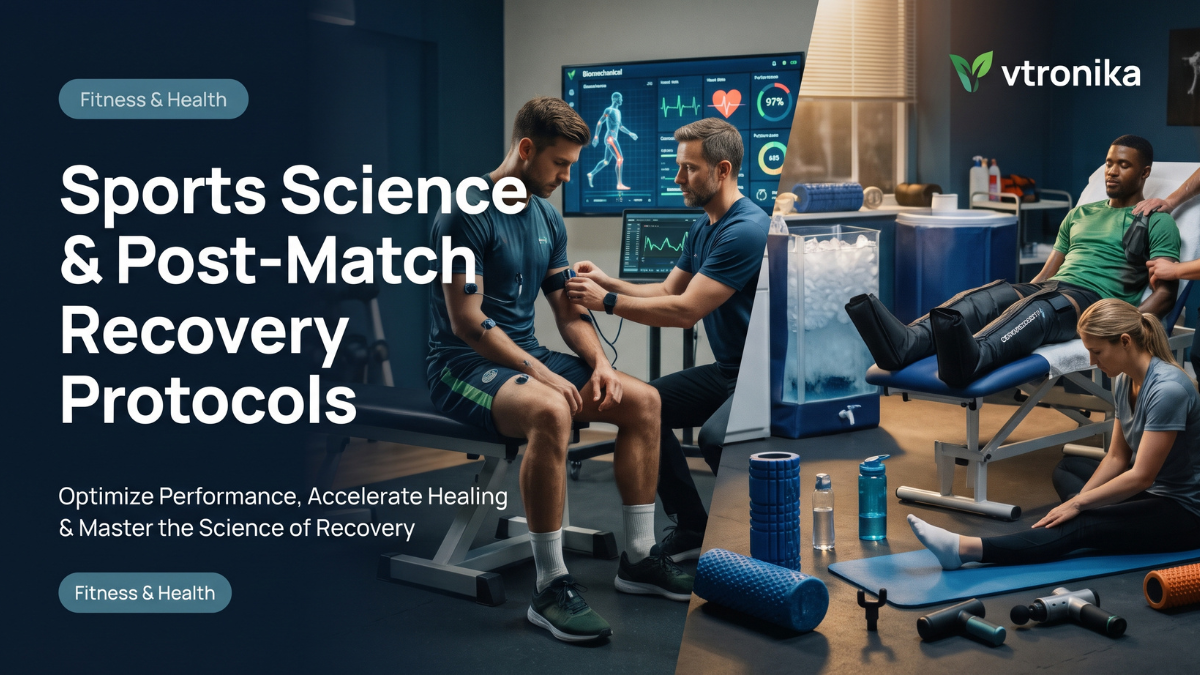
While external performance metrics track speed, acceleration, and distance covered, internal load metrics uncover the biological toll exacted on the human body during competition. Modern athletes train equipped with unobtrusive, multi-modal biometric sensors—including continuous heart rate variability (HRV) monitors, electromyography (EMG) compression shorts, and transdermal sweat patches that evaluate electrolyte depletion in real time.
These sensor suites capture physiological stress long before visible fatigue or acute breakdown occurs. By monitoring sympathetic versus parasympathetic nervous system recovery, sports science departments calculate an individual athlete’s systemic readiness every morning. During training sessions, telemetry streams flag abnormal cardiac strain spikes or asymmetrical muscle activation across quadriceps and hamstrings, signaling the sports medicine team to pull an athlete from high-intensity drills before micro-tears turn into season-ending injuries.
Article 3: Computer Vision and Optical Kinematics — In-Game Tracking Without Markers
Early biomechanical evaluation required athletes to enter laboratory environments covered in reflective markers, a setting that failed to capture authentic in-game competitive mechanics. Modern multi-camera computer vision networks utilize markerless pose estimation to isolate bone segments, joint angles, and rotational velocities directly from live television feeds and stadium camera clusters.
This markerless revolution democratizes clinical biomechanical analysis across live competitive play. In baseball, systems dissect a pitcher’s shoulder abduction, elbow valgus torque, and hip-to-shoulder separation on every fastball thrown, pinpointing mechanical drift that degrades pitch command or stresses the ulnar collateral ligament. In tennis and soccer, ball-flight physics are coupled with player kinematic models to compute instantaneous release angles, aerodynamic drag, and kinetic chain energy transfer, giving biomechanists the exact mechanics required to refine an athlete’s technique without strapping a single wire to their body.
Article 4: Predictive Injury Modeling — Mitigating Soft-Tissue Trauma Before It Occurs
Soft-tissue injuries—such as hamstring strains, groin tears, and ACL ruptures—represent the costliest operational hazard in professional athletics, sidelining star players and draining hundreds of millions of dollars in payroll value. Sports franchises are deploying predictive injury platforms that aggregate kinematic tracking, biometric readiness, historical medical records, and acute-to-chronic workload ratios (ACWR) into unified predictive machine learning architectures.
When an athlete’s cumulative mechanical workload spikes beyond baseline thresholds while their autonomic recovery scores decline, neural networks flag elevated injury risks. In response, sports science teams implement adaptive load management, adjusting practice durations, altering strength conditioning protocols, or prescribing targeted neuromuscular stabilization exercises. By converting sports medicine from reactive rehabilitation to preventative, data-driven preservation, organizations extend athlete career longevity and protect their long-term financial investments.
Article 5: 5G and Sideline Telemetry — Real-Time Tactical Decision Making at the Edge
High-resolution performance data is functionally useless during a match if transmission latency prevents sideline staff from acting on it immediately. The integration of private, mmWave 5G standalone networks inside modern stadiums and training facilities enables edge-computing nodes to ingest millions of data points per minute with deterministic sub-millisecond latency.
Rather than waiting for post-match film review, coaching staffs analyze tactical breakdowns within seconds of an on-field sequence. During football or rugby set-pieces, drone telemetry and on-player ultra-wideband (UWB) tracking chips broadcast bird’s-eye tactical heatmaps directly to coaching benches. Positional errors, pressing traps, and coverage gaps are surfaced visually in real time, allowing coaches to deliver actionable tactical adjustments to players during brief timeouts or substitutions, turning live match management into a dynamic, software-augmented chess match.
Article 6: Dynamic Training Environments — Cognitive Load and Neuro-Performance Conditioning
Elite athletic performance requires split-second spatial decision-making under intense cognitive fatigue. The emerging frontier of sports training merges physiological performance with neuro-cognitive conditioning. Using virtual reality (VR) headsets, neuro-tracking goggles, and reactive LED light boards, athletes encounter sport-specific tactical scenarios operating at speeds 20% faster than live match conditions.
Quarterbacks, goalkeepers, and point guards train visual saccade speeds, peripheral target acquisition, and reaction inhibition while under physical exertion. By measuring pupil dilation, ocular fixation duration, and decision-making accuracy under elevated heart rates, cognitive performance specialists isolate mental burnout from physical exhaustion. This neuro-performance framework ensures that when an athlete faces a critical high-stress match situation, their cognitive processing remains calibrated to spot fleeting tactical opportunities without freezing.
Article 7: Precision Nutrition and Metabolic Mapping — Fueling the Modern High-Performance Body
Standardized nutritional guidelines and generic carbohydrate-loading protocols have been replaced by personalized sports endocrinology and metabolic tracking. Continuous glucose monitors (CGMs) paired with metabolic gas analysis give sports dietitians real-time visibility into an athlete’s glycogen depletion rates, metabolic flexibility, and substrate oxidation—identifying precisely when an athlete burns fats versus carbohydrates.
This biological granularity enables tailored intra-match fueling strategies. Rather than consuming generic energy gels at predetermined intervals, endurance runners, soccer players, and cyclists consume bespoke carbohydrate-electrolyte formulations timed to their exact real-time glycemic curves. Post-match nutrition is similarly customized based on metabolic waste products, muscle-damage blood biomarkers, and inflammatory cytokines, ensuring rapid cellular repair, minimal glycogen lag, and optimal muscle protein synthesis ahead of compressed competition schedules.
Article 8: Smart Arenas and Edge Infrastructure — Transforming the Live Venue Experience
The stadium of the future is no longer a passive concrete bowl, but a hyper-connected, software-defined edge node. Stadiums feature thousands of Wi-Fi 6E/7 access points, private 5G micro-cells, and distributed antenna systems (DAS) capable of sustaining hundreds of gigabytes of traffic simultaneously across tens of thousands of connected spectators.
This infrastructure synchronizes stadium operations with the athletic spectacle. Concession stands utilize autonomous computer-vision checkout systems that eliminate physical queues, while dynamic crowd management systems monitor pedestrian density to redirect foot traffic through uncrowded concourses. On the energy grid, smart stadium systems balance live broadcast power loads, HVAC chilling loops, and floodlighting arrays against real-time renewable microgrid generation, cutting operating overhead and lowering the overall municipal carbon footprint of large-scale sporting events.
Article 9: Immersive Fan Engagement — Volumetric Video, AR Overlays, and Personalized Broadcasts
Linear broadcast television—with fixed camera perspectives and generic play-by-play commentary—is shifting toward fully interactive, personalized streaming experiences. Volumetric video capture rings stadiums with dozens of synchronized 8K cameras that render real-time, three-dimensional digital reconstructions of the pitch, allowing spectators to view any play from any angle, including the referee’s or striker’s point of view.
Through mobile applications and spatial computing headsets, fans pointing their devices at the field unlock live augmented reality (AR) data ribbons showing player running speeds, shot probabilities, and tactical pass matrices hovering directly over the athletes. Broadcasters dynamically tailor streams to user preferences, offering alternate audio commentary feeds, localized live statistics, and integrated peer-to-peer micro-betting markets, converting passive viewers into active, engaged participants within the sporting narrative.
Article 10: Biometric Governance and Player Data Sovereignty — The Ethics of Athletic Privacy
The exponential expansion of biometric and positional tracking raises complex ethical and legal questions regarding player privacy, commercialization, and digital rights. Highly sensitive biological data—such as cardiac irregular telemetry, sleep cycles, genetic markers, and hormonal profiles—crosses the boundary between workplace performance evaluation and fundamental medical privacy.
Professional sports leagues, players’ unions, and regulatory bodies are drafting collective bargaining agreements that establish explicit boundaries around “data sovereignty.” Central questions center on who owns an athlete’s performance and biometric data: Does a franchise retain ownership after an athlete enters free agency? Can biometric telemetry be weaponized during salary negotiations to diminish player market value, or licensed to sports betting syndicates for public wagering? Establishing cryptographic zero-knowledge proofs, strict institutional data firewalls, and clear athlete-first governance models is essential to ensure that the technological optimization of sports does not erode the foundational labor rights and personal privacy of the competitors themselves.