Article 1: The Convergence Era — How Innovation, Connectivity, and Intelligence Form the Modern Tech Triad
Technological advancement has historically occurred in isolated waves: the mechanization of labor, the rollout of telecommunications, and the rise of digital computing. Today, humanity has entered a fundamentally distinct epoch defined by convergence. Innovation creates novel hardware and materials; connectivity links these systems across instantaneous, distributed networks; and intelligence analyzes the resulting data streams to execute autonomous decisions. Rather than acting as separate industry verticals, these three pillars function as an interdependent, self-reinforcing flywheel. A breakthrough in semiconductor manufacturing (innovation) enables higher-throughput edge computing nodes (connectivity), which in turn feeds multi-modal neural networks (intelligence) with real-time sensory data.
The practical consequence of this convergence is the compression of innovation cycles. Where physical engineering once required years of trial and error, interconnected generative simulations now iterate thousands of structural designs overnight. Intelligent networks automatically balance bandwidth allocation for autonomous vehicle corridors, while connected medical implants use embedded machine learning models to detect cardiac anomalies before symptoms manifest. As these disciplines deepen their mutual integration, the boundary between physical operations and digital orchestration dissolves, establishing a unified foundation for the next century of technological progress.
Article 2: The Quantum Leap — Next-Generation Computing Redefining Modern Innovation
Classical silicon architectures face insurmountable thermodynamic and physical constraints as transistor gate widths approach atomic scales. In response, quantum computing represents a paradigm shift from binary bits to quantum bits (qubits) capable of superposition and entanglement. This fundamental departure allows quantum systems to evaluate complex combinatorial problems simultaneously rather than sequentially. While general-purpose consumer quantum computing remains distant, specialized quantum processors already demonstrate superior performance in cryptographic modeling, molecular simulation, and complex supply-chain optimization.
The broader impact on technological innovation is profound. In material science, quantum algorithms accurately simulate molecular interactions at the subatomic level, bypassing months of wet-lab synthesis to engineer high-energy-density battery chemistries andRoom-Temperature-adjacent superconductors. In pharmacology, quantum modeling maps complex protein folding mechanisms, cutting drug discovery timelines from a decade down to months. Paired with post-quantum cryptography standards, this branch of innovation redefines computational feasibility, unlocking breakthroughs that classical supercomputers could not compute within human lifespans.
Article 3: Pervasive Connectivity — From Terrestrial 5G to Global 6G and Satellite Constellations
High-performance computational models are functionally inert without low-latency data pipelines to transmit input telemetry and dispatch instructions. While early 5G rollouts prioritized raw download bandwidth for mobile handsets, the industrial focus has transitioned toward ultra-reliable low-latency communications (URLLC) and massive machine-type communications (mMTC). Simultaneously, non-terrestrial networks (NTNs)—comprising low-Earth-orbit (LEO) satellite mega-constellations—blanket oceanic, polar, and underserved continental zones with broadband gigabit connectivity, eliminating historical geographic digital divides.
The trajectory toward 6G introduces sub-terahertz radio frequencies and integrated sensing and communication (ISAC), effectively transforming wireless towers into environmental radar systems capable of tracking physical objects without dedicated optical cameras. This infrastructure level supports ubiquitous machine coordination: autonomous drone logistics corridors operate seamlessly beyond visual line of sight (BVLOS), offshore automated drill rigs synchronize telemetry with mainland command centers, and industrial automation protocols execute critical control loops over airwaves with microsecond determinism.
Article 4: Cognitive Edge Computing — Relocating Intelligence from the Cloud to the Device
Centralized cloud computing transformed software scalability over the past two decades, but modern latency constraints, bandwidth costs, and privacy standards have rendered total cloud dependency obsolete. Edge intelligence relocates model inference—and increasingly, federated on-device training—directly to endpoints such as industrial gateways, automotive domain controllers, and wearable biomedical devices. Specialized neural processing units (NPUs) deliver tens of operations per watt, executing sophisticated deep learning inference locally without transmitting raw sensor data across the public internet.
This architectural shift directly resolves critical operational vulnerabilities. Autonomous vehicles cannot tolerate a 100-millisecond round-trip cloud latency spike when calculating emergency braking vectors; localized edge intelligence computes trajectory corrections in sub-millisecond windows. Similarly, in healthcare and consumer hardware, on-device intelligence protects sensitive biometric and visual data by ensuring user telemetry never departs local physical memory, establishing a privacy-by-design standard that satisfies global regulatory requirements while preserving computational agility.
Article 5: The Autonomous Enterprise — AI Agents, Robotic Process Automation, and Algorithmic Operations
Enterprise operations are transitioning from passive data analytics dashboards to agentic artificial intelligence frameworks capable of goal-directed execution. Modern business intelligence is no longer restricted to querying relational databases to summarize past performance; specialized AI agents synthesize financial, logistical, and operational telemetry in real time to anticipate disruptions and execute corrective workflows. When a port strike threatens a critical component shipment, enterprise agents autonomously identify secondary suppliers, issue revised purchase orders, modify manufacturing schedules, and adjust consumer delivery estimates without manual intervention.
This operational automation fundamentally restructures the modern corporate hierarchy. Low-tier clerical verification, invoice reconciliation, software code linting, and tier-one customer service become fully programmatic baselines. Human capital is consequently redeployed toward strategic governance, boundary-case decision-making, and high-order product architecture. By combining continuous telemetry with adaptive neural models, the autonomous enterprise operates with unprecedented organizational responsiveness, turning operational agility into a core competitive moat.
Article 6: Smart Cities and Dynamic Infrastructure — Connecting the Built Environment
Urban centers worldwide are evolving into unified cyber-physical platforms where municipal services, transit systems, and energy grids interlock into a single adaptive ecosystem. Municipal Internet of Things (IoT) sensors embedded in roadways, bridges, and water mains monitor physical stress, acoustic anomalies, and flow dynamics, predicting structural failures before catastrophic degradation occurs. Dynamic traffic management systems analyze live visual and vehicular telemetry, continuously modulating traffic signal phases to alleviate bottleneck congestion, reduce idle fuel emissions, and guarantee clear corridors for emergency response vehicles.
Energy conservation represents an equally transformative domain of smart city deployment. Municipal smart microgrids combine distributed rooftop solar arrays, community battery banks, and electric vehicle charging hubs into unified virtual power plants (VPPs). Algorithmic demand-response systems adjust public lighting levels, commercial HVAC loads, and municipal water pumping schedules to match real-time renewable generation curves. The result is a resilient urban footprint that minimizes carbon footprints, lowers municipal maintenance overhead, and systematically enhances urban livability.
Article 7: Precision Healthcare — Digital Twins, Remote Diagnostics, and Tailored Therapeutics
Modern medicine is undergoing a profound structural shift from episodic, reactive treatments to continuous, personalized, and preventive clinical care. This transition relies on high-resolution continuous biosensors—such as continuous glucose monitors, photoplethysmography wearables, and acoustic respiratory patches—that supply persistent physiological data to algorithmic diagnostic platforms. Machine learning classifiers analyze these multivariate data streams to identify sub-clinical biomarkers, warning clinicians of imminent cardiovascular failure, septic shock, or diabetic ketoacidosis days before conventional symptoms appear.
Concurrently, the development of human digital twins—computational, multi-scale biological models calibrated to an individual patient’s specific genome, metabolome, and real-time biometric metrics—revolutionizes clinical trials and pharmacotherapy. Rather than subjecting patients to empirical trial-and-error treatment regimens, oncologists simulate therapeutic drug efficacy and toxicity profiles across the patient’s digital twin first. Paired with robotic surgical systems capable of sub-millimeter precision over 5G networks, top-tier surgical and diagnostic expertise becomes globally accessible, bypassing historical geographic and socio-economic bottlenecks.
Article 8: Next-Gen Industrial Automation — Smart Manufacturing and the Software-Defined Factory
The modern factory floor has evolved beyond mechanical conveyor belts and fixed robotic arms into modular, software-defined production ecosystems. Industrial machines are retrofitted with vibration, acoustic, thermal, and electrical telemetry probes that continuously feed industrial IoT platforms. Machine learning models detect the microscopic micro-abrasions of a high-speed spindle bearing thousands of operating cycles before catastrophic structural failure, scheduling automated robotic replacement during non-peak operational shifts to eliminate unexpected assembly line downtime.
Furthermore, dynamic computer vision systems oversee quality control along high-speed manufacturing lines, identifying micron-scale surface fractures, irregular solder joints, or paint inconsistencies at production speeds impossible for human inspection teams to match. Collaborative robots (cobots) equipped with spatial awareness and force-feedback sensors operate alongside human personnel without physical safety cages, dynamically shifting workstations based on immediate assembly requirements. This agility allows factories to switch between distinct product customizations in minutes, turning mass manufacturing into high-mix, low-volume on-demand fabrication.
Article 9: Sustainable Technology — Clean Innovation and Circular Electronics
The relentless expansion of computational infrastructure carries a massive physical footprint, primarily measured in megawatt consumption, clean water utilization for data center heat exchange, and electronic waste generation. The vanguard of hardware innovation is therefore focused on architectural sustainability. Chip designers are engineering sub-nanometer lithography architectures optimized specifically for sparse neural network operations, dramatically lowering the thermal design power (TDP) required per floating-point operation. Simultaneously, hyper-scale facilities are adopting closed-loop dielectric liquid immersion cooling, cutting energy overhead by over 90% relative to legacy air-chilled server racks.
On the materials front, the tech industry is pivoting toward strict circular economy engineering. Modular hardware designs allow individual components—such as memory modules, optical transceivers, and silicon processing blocks—to be upgraded or harvested independently, ending the complete disposal of entire server racks. Advanced bio-based polymers and water-soluble circuit substrates are emerging to replace toxic epoxy resins, while automated disassembly robotics use computer vision to strip, sort, and recover critical rare-earth metals from retired consumer hardware, mitigating the environmental toll of raw earth extraction.
Article 10: Cyber Defense and Zero Trust — Automated Security for Hyper-Connected Architectures
As the attack surface expands across billions of interconnected IoT nodes, autonomous edge hardware, and distributed cloud microservices, legacy perimeter-based firewalls have become structurally inadequate. Modern cybersecurity has uniformly transitioned to the “Zero Trust” architecture: an engineering doctrine predicated on the premise that internal network traffic cannot be assumed secure. Every network request, device identity, cryptographic certificate, and user credential must undergo continuous, context-aware cryptographic verification regardless of geographic or network provenance.
Machine learning sits at the operational center of this defensive perimeter. Modern security information and event management (SIEM) engines ingest billions of distributed network telemetry events per second, utilizing unsupervised anomaly detection to identify zero-day exploits, advanced persistent threats (APTs), and sophisticated data exfiltration patterns within milliseconds. Human security operations centers (SOCs) are augmented with automated response orchestrators that isolate compromised virtual subnets, revoke authentication tokens, and rotate cryptographic keys in real time, preventing automated polymorphic cyberweapons from laterally traversing mission-critical infrastructure.
Article 11: FinTech Evolution — Algorithmic Assets, Central Bank Digital Currencies, and Frictionless Settlements
Global financial systems are shedding centuries-old correspondent banking infrastructures and multi-day settlement clearinghouses in favor of real-time, mathematically deterministic financial architectures. Distributed ledger technologies, zero-knowledge proofs, and automated smart contracts allow cross-border settlements to clear in seconds rather than days, eliminating counterparty settlement risk and slashing transaction fees. Simultaneously, sovereign Central Bank Digital Currencies (CBDCs) provide programmable monetary rails, enabling automated fiscal distributions, targeted economic stimuli, and real-time taxation tracking with complete audit integrity.
Within capital allocation and risk modeling, machine learning algorithms process multi-dimensional data sets far beyond conventional credit scoring matrices. Alternative credit scoring algorithms evaluate operational transaction cadence, supply chain integrity, and digital cash flows to extend working capital to underserved micro-enterprises with minimal default variance. Meanwhile, automated algorithmic trading engines and liquidity-provision protocols continually balance global asset pools, providing market depth and frictionless currency conversion across fragmented decentralized and centralized liquidity venues.
Article 12: Next-Horizon Human-Computer Interaction — Brain-Computer Interfaces and Spatial Computing
The human interface with digital systems has evolved across keyboard terminals, graphical desktop user interfaces, and capacitive glass touchscreens. The current frontier breaks free from two-dimensional displays entirely, migrating toward spatial computing and direct neural interfaces. Advanced spatial headsets use micro-OLED panels, eye-tracking arrays, and simultaneous localization and mapping (SLAM) sensor suites to anchor persistent, high-fidelity digital objects within the physical workspace, transforming industrial engineering, complex architectural design, and surgical training into natural, three-dimensional physical interactions.
Beyond optical projections, non-invasive and minimally invasive Brain-Computer Interfaces (BCIs) are transitioning from experimental clinical laboratories into practical human augmentations. High-density electroencephalography arrays and micro-electrode endovascular neural implants translate motor cortex neural firing patterns into digital intent. Paralyzed individuals operate digital communication tools, robotic prosthetic limbs, and smart home actuators using pure thought. As neural signal decoding models advance, BCIs promise an era where the latency between cognitive intention and machine execution reaches theoretical minimums.
Article 13: Supply Chain Autonomy — Traceability, Logistics Automation, and Predictive Sourcing
Global supply chains have historically operated under fragile “just-in-time” paradigms that buckle under geopolitical friction, material shortages, and transportation bottlenecks. Next-generation logistics replaces fragile human estimates with self-healing, predictive supply chain fabrics. Cryptographic item tracking—using micro-RFID chips and verifiable distributed ledger ledgers—ensures absolute provenance and anti-counterfeiting verification from the raw mineral mine through component fabrication to consumer delivery.
Simultaneously, autonomous line-haul trucking, automated harbor gantry cranes, and automated guided vehicles (AGVs) inside distribution centers form an unbroken physical logistics pipeline. Predictive inventory models ingest meteorological forecasts, labor trends, geopolitical risk indicators, and macroeconomic indices to dynamically divert shipping routes and reallocate warehouse inventory weeks before localized shortages occur. By merging real-time sensor tracking with predictive intelligence, global logistics shifts from reactive firefighting to proactive, mathematically optimized freight flows.
Article 14: Agritech and Food Security — Autonomous Farming, Hydroponics, and Biome Optimization
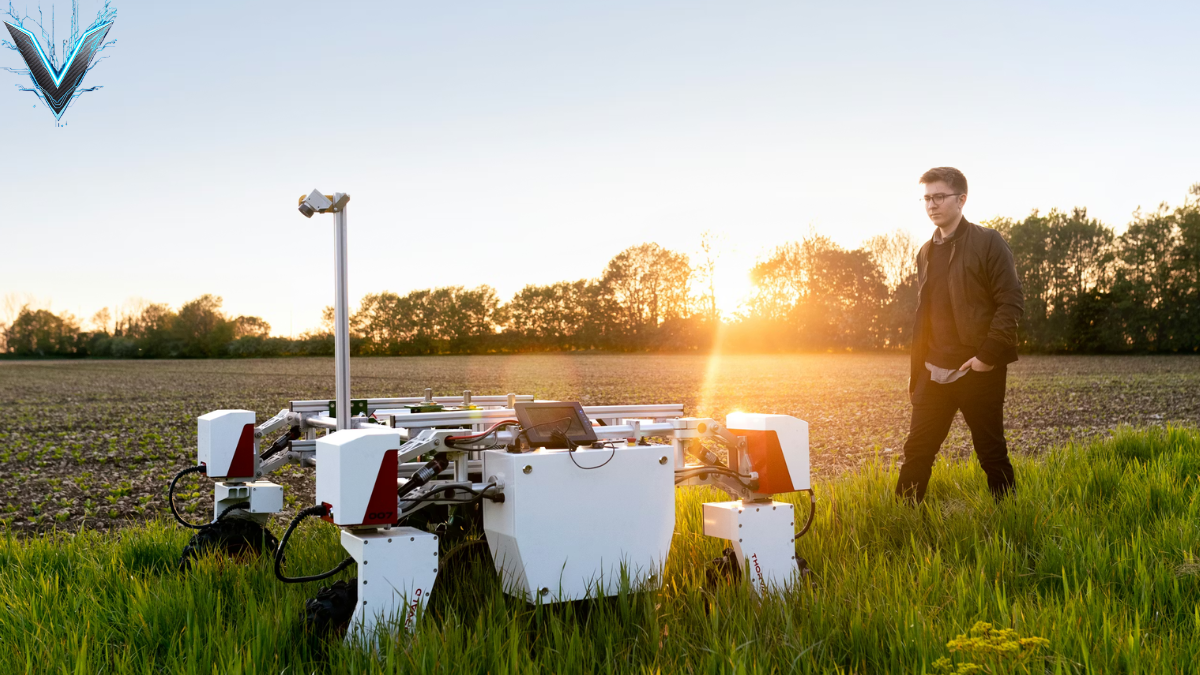
Feeding a growing global population under escalating climate volatility requires a radical decoupling of agricultural output from traditional acreage and water consumption. Precision agriculture deploys hyperspectral sensor payloads on autonomous agricultural drones and low-Earth-orbit satellites to analyze soil moisture content, nitrogen deficits, and early fungal infestations at the square-meter level. Autonomous tractors and laser-guided weeding robots sweep through farmland, targeting individual weeds with micro-doses of organic herbicide or high-intensity thermal pulses, reducing overall chemical run-off by up to 95%.
In metropolitan zones, controlled-environment vertical farming facilities optimize plant morphogenesis by modulating LED spectral bands, ambient carbon dioxide levels, and root nutrient solutions down to the minute. Machine intelligence governs these vertical closed-loop architectures, recycling 98% of operational water and completely removing the need for synthetic chemical pesticides. By combining environmental sensors, automated seedling robotics, and predictive plant genetics, agricultural production transforms into a predictable, climate-resilient manufacturing process.
Article 15: Ethical AI, Governance, and Digital Sovereignty — Managing the Risks of Exponential Tech
As modern software systems acquire the capacity to influence geopolitical balances, control critical municipal infrastructure, and shape social communication, the mandate for rigorous ethical governance and technical alignment becomes urgent. Algorithmic transparency, model explainability, and bias mitigation are no longer academic debates; they are hard engineering requisites for deploying machine learning models in judicial sentencing, consumer credit, and hiring systems. Developers must build cryptographic audit trails that demonstrate why a neural network arrived at a high-stakes decision, ensuring human oversight remains operational.
On the geopolitical stage, nations are asserting “digital sovereignty,” implementing strict national data residency mandates, domestic semiconductor supply chains, and sovereign foundation models to safeguard strategic autonomy. Regulatory frameworks globally are moving to establish safety thresholds for frontier model weights, autonomous military drone engagement protocols, and consumer biometric profiling. The overarching challenge of the next technological century will not merely be the speed at which we innovate, connect, and automate, but our collective capacity to construct robust ethical architectures that anchor these immense technological powers strictly to human flourishing.