Article 1: The Living Canvas — Indigenous Textiles as Sacred Archives
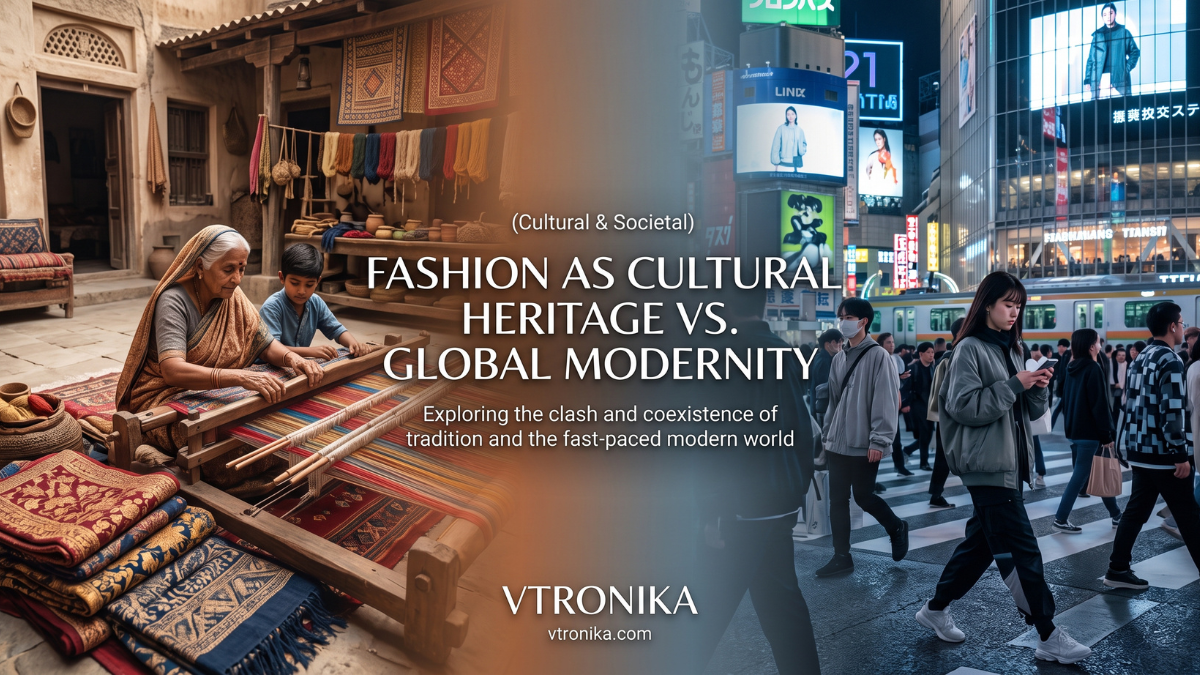
In traditional and indigenous societies, clothing has never existed merely as bodily coverage or commercial commodity; it functions as an intricate visual archive of communal cosmology, social hierarchy, and ancestral memory. From the hand-spun khadi and delicate ajrakh block prints of South Asia to the sacred geometry of West African kente cloth and the complex warp-ikat tapestries of Central Asia, heritage textiles encode a civilization’s spiritual vocabulary directly into raw fiber.
Weaving in these cultural ecosystems is a communal, sacred ritual. Natural dyers harvest regional botanicals—such as wild indigo, madder root, pomegranate rinds, and crushed minerals—creating palettes intrinsically tied to specific geographic terrains. The physical cloth takes months to calculate on manual wooden pit-looms, serving as an irreplaceable repository of regional wisdom that connects living generations with their ancestral roots.
- Symbolic Lexicons: Geometric motifs and color balances representing spiritual protections, lineage statuses, and agricultural calendar cycles.
- Geographic Terroir: Botanical dyes and regional natural fibers reflecting the specific botany, soil chemistry, and climate of the weaver’s homeland.
- Generational Transmission: Ancient weaving techniques passed orally from master to apprentice, preserving technical knowledge that industrial machinery cannot replicate.
Article 2: The Monoculture of Fast Fashion — Industrial Homogenization and Cultural Erasure
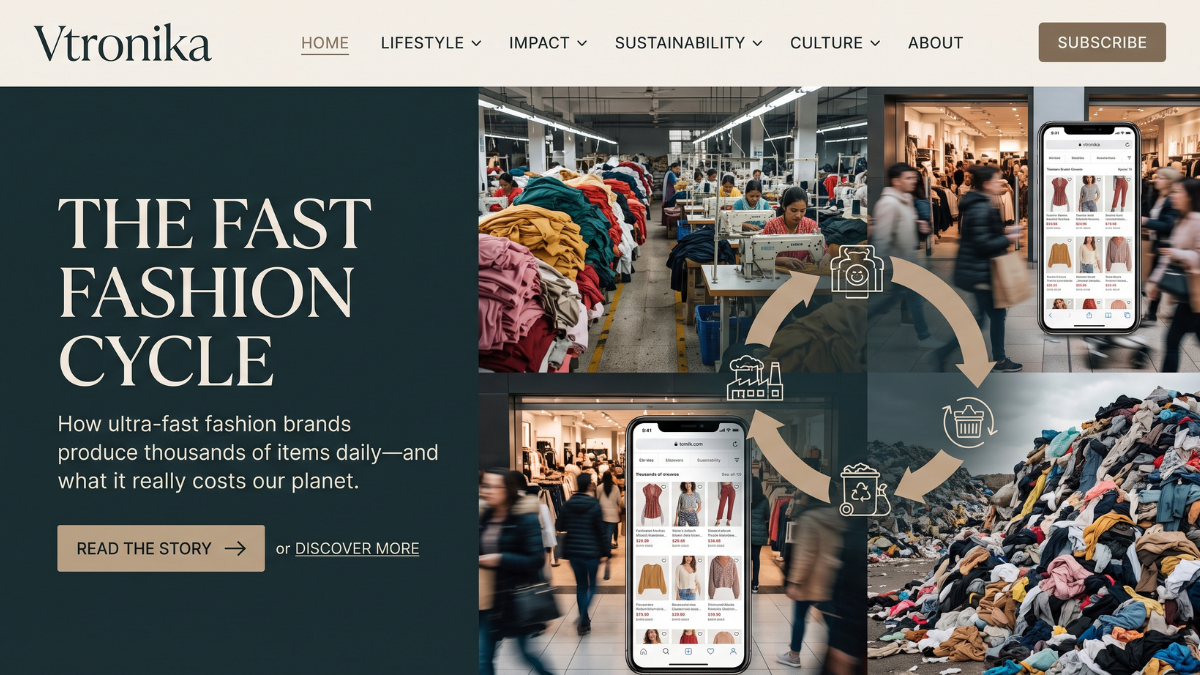
The rapid globalization of consumer retail and the dominance of Western apparel aesthetics have accelerated a sweeping homogenization of personal style worldwide. Multinational fast-fashion chains and algorithmic e-commerce applications flood global retail markets with standardized, petroleum-derived synthetic garments: mass-produced blue jeans, polyester graphic hoodies, and disposable sweatpants.
This uniform global aesthetic exerts immense cultural and economic pressure on younger generations within traditional societies. Traditional garments are frequently stigmatized as rural, ceremonial, or incompatible with modern urban workplace mobility. As inexpensive synthetic imports undercut local markets, master artisans find their livelihoods economically unviable, triggering an alarming loss of ancestral crafts as youth abandon family looms for urban industrial labor.
- Aesthetic Flattening: The replacement of thousands of distinct regional dress traditions with a singular, Western-centric casual uniform.
- The Price-Dump Dilemma: Cheap polyester imports undercutting the price of labor-intensive, hand-woven artisanal goods in developing economies.
- Generational Disconnection: Younger demographics abandoning heritage textile apprenticeships due to low compensation and perceived lack of modern prestige.
Article 3: The Ethics of Appropriation — Cultural Exploitation on the Global Runway
The friction between cultural heritage and corporate fashion often erupts into intense ethical controversy through cultural appropriation. For decades, international luxury houses and fast-fashion conglomerates have extracted sacred indigenous motifs, traditional embroidery patterns, and religious symbols, plastering them onto commercial garments without consent, credit, or compensation.
This dynamic creates an extractive imbalance: global brands capture cultural capital, commercial prestige, and millions in corporate profits by commodifying traditional designs, while the indigenous communities who preserved those art forms for centuries remain economically marginalized. Stripping sacred garments of their ceremonial context turns deep spiritual traditions into fleeting, disposable internet aesthetics.
- Extractive Design Practices: Commercial entities lifting traditional motifs without engaging, consulting, or compensating indigenous artisan keepers.
- Sacred Desecration: Printing spiritually significant or ceremonial tribal patterns onto casual swimwear, underwear, and party accessories.
- The Power Imbalance: Billion-dollar global corporations profiting off the intellectual heritage of vulnerable craft communities.
Article 4: Intellectual Property and the Law — Protecting Intangible Cultural Heritage
A major reason cultural appropriation persists unchecked is that modern intellectual property (IP) law was engineered for industrial capitalism, not communal heritage. Western patent and copyright laws protect individual inventors or corporate entities for fixed, limited periods. They are ill-equipped to safeguard communal, intergenerational designs where authorship belongs to an entire cultural collective.
In response, international bodies like the World Intellectual Property Organization (WIPO) and UNESCO are drafting legal frameworks to protect Traditional Cultural Expressions (TCEs). Developing nations are increasingly deploying Geographical Indications (GIs)—similar to legal protections for Champagne or Parmigiano Reggiano—to certify authentic artisanal traditions like Kashmiri Pashmina, Harris Tweed, and Oaxaca Zapotec rugs against industrial counterfeits.
- Communal Authorship Lacuna: Conventional copyright failing to protect designs that belong to a community rather than a single corporate author.
- Geographical Indications (GI): Legal territorial certifications that legally restrict regional textile names strictly to artisans working in that origin area.
- Binding International Treaties: Emerging legal frameworks mandating free, prior, and informed consent (FPIC) before commercializing indigenous textile designs.
Article 5: The Sari in the Metropolis — Reinventing South Asia’s Unstitched Drapes
The unstitched drape of the South Asian sari represents one of the world’s most enduring examples of heritage apparel coexisting with modern city life. Rather than remaining frozen in museum displays or reserved solely for formal weddings, the sari is experiencing an urban design renaissance driven by contemporary youth and independent designers.
Modern wearers are deconstructing the garment’s traditional formality: pairing handloom chanderi, jamdani, and linen saris with tailored blazers, sneakers, crop tops, and graphic t-shirts. Concurrently, zero-waste designers are celebrating the sari’s unstitched geometry—an adaptable strip of fabric that requires no scissors, fits any body size, produces zero scrap waste, and can be draped into dozens of regional styles suited for fast-paced urban commutes.
- The Zero-Waste Geometry: A 6-yard unstitched textile that produces zero pattern-cutting waste and accommodates changing body shapes over a lifetime.
- Metropolitan Layering: Modern styling incorporating utilitarian belts, denim jackets, and boots to blend heritage elegance with functional urban utility.
- Reviving Handloom Cooperatives: Direct-to-consumer digital channels enabling rural South Asian weavers to sell hand-woven pieces straight to urban consumers.
Article 6: The Modern Kimono & Hanbok — Deconstructing East Asian Formalism
In East Asia, garments like the Japanese kimono and the Korean hanbok have historically held strict codes regarding sleeve cuts, fabric weights, collar overlaps, and ceremonial formality. In recent decades, however, strict social etiquette rendered these garments difficult and expensive for younger generations to wear on normal days.
Visionary designers across Seoul and Tokyo are leading a modern design revival: “Modern Hanbok” and streetwear-infused kimonos. Designers retain signature silhouette features—such as the jeogori tie, curved hemlines, and wrap-over collars—while constructing them from machine-washable cottons, technical windbreaker ripstops, and relaxed denim. This pragmatic adaptation preserves historical identity while allowing heritage shapes to integrate effortlessly into everyday streetwear.
- Fabric Modernization: Swapping delicate dry-clean silks for durable, machine-washable natural cottons and functional technical nylon blends.
- Silhouette Adaptation: Shortening dramatic floor-length skirts and streamlining complex under-ties for easy 60-second dressing.
- Streetwear Cross-Pollination: Wearing cropped kimono haori jackets over hoodies and cargo pants as distinctive, gender-neutral outerwear.
Article 7: African Wax Print vs. Indigenous Weaves — The Complex Politics of Ankara
The vibrant, colorful cotton prints commonly known as Ankara or Dutch Wax have long served as a visible symbol of pan-African fashion identity. However, the history of wax print illustrates the complex globalized paths of fashion trade: originally inspired by Indonesian batik, industrialized by Dutch manufacturers, and adopted across West Africa through maritime trade routes.
Today, a significant creative debate surrounds the reclamation of authentic indigenous African weaving over European- or Chinese-manufactured wax cottons. Designers across Nigeria, Ghana, and Senegal are increasingly elevating indigenous hand-woven textiles—such as Aso-Oke, Bogolanfini (mud cloth), and hand-loomed Kente—into contemporary haute couture. This shift channels commercial investment back into local artisanal mills rather than foreign textile cartels.
- The Origin Paradox: Navigating the historical reality of Dutch wax prints while honoring their deeply adopted cultural status across West Africa.
- Resurrecting Indigenous Looms: Shifting luxury design focus toward authentic strip-woven textiles that support local West African cotton growers and dyers.
- High-Fashion Pan-Africanism: Modern runway collections using native woven structures to contest Western luxury definitions.
Article 8: Sustainable Coexistence — Ancient Craft as the Blueprint for Slow Fashion
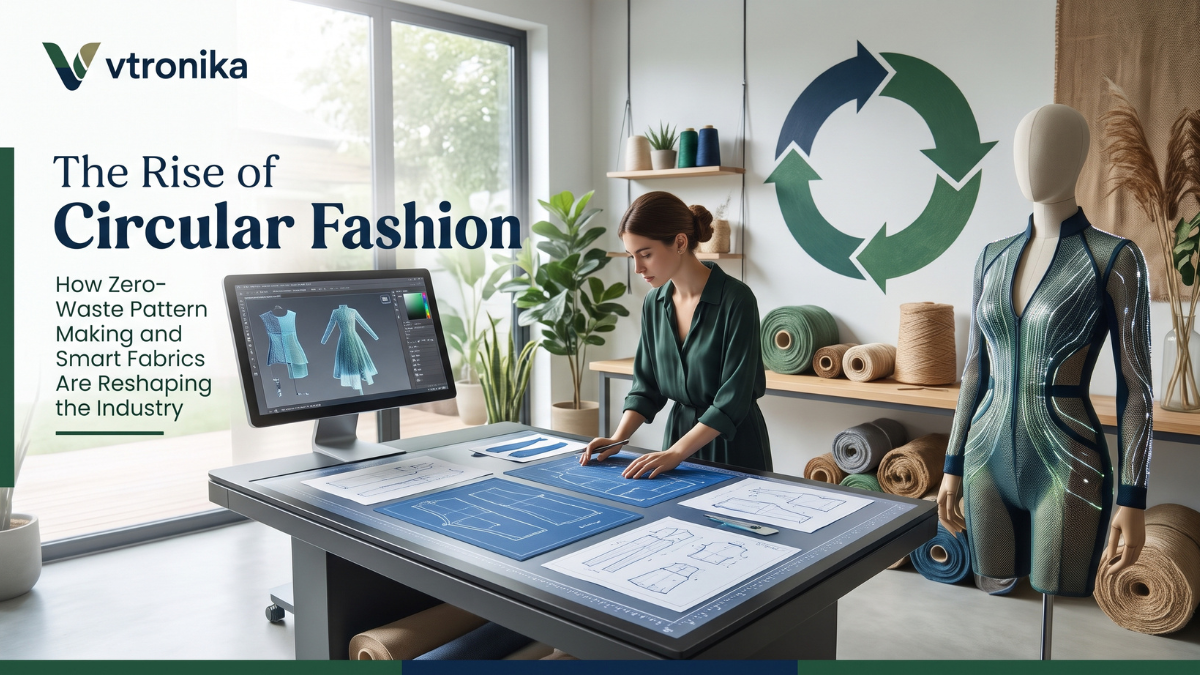
As the modern fashion industry faces an environmental crisis driven by overproduction, fossil-fuel synthetics, and toxic chemical dyes, sustainability experts are recognizing that indigenous craft traditions have held the solutions all along. Traditional textile making is inherently circular, regenerative, and low-impact.
Heritage production models rely on rain-fed indigenous cotton varieties, hand-harvested wild bast fibers, natural biological fermentation vats, and zero-waste pattern layouts. Furthermore, these garments are made to be repaired, passed down as family heirlooms, and eventually returned safely to the soil to biodegrade. Embracing cultural craft offers the modern fashion industry a proven, sustainable blueprint for phasing out petroleum-based linear manufacturing.
- Regenerative Sourcing: Utilizing ancient, drought-tolerant crop varieties (like indigenous Kala cotton) that require no chemical pesticides or excessive irrigation.
- Non-Toxic Biological Chemistry: Employing living indigo and botanical dye vats that produce nutrient-rich agricultural runoff rather than toxic industrial waste.
- Built-in Circularity: Handloom textiles made without synthetic plastic blends that decompose naturally and enrich composting soils at the end of their life.
Article 9: Ethical Co-Creation — Transparent Partnerships Between Luxury and Artisans
The path forward through the tension between tradition and modernity lies in “ethical co-creation”—collaborative business models that replace exploitative extraction with equitable, transparent partnerships. Rather than buying artisan motifs as flat imagery, forward-thinking luxury fashion houses and independent labels are employing artisan communities as co-designers and shared equity partners.
In verified ethical co-creation projects, artisan cooperatives retain complete ownership of their designs, receive guaranteed living wages, work in self-determined village workshops, and receive prominent credit on runway tags. These commercial collaborations provide rural craft communities with consistent, dignifying economic capital while offering modern fashion consumers authentic, storytelling-rich luxury pieces that honor genuine human craftsmanship.
- Shared Design Equity: Artisan collectives involved directly in the concept, patterning, and execution phases as recognized creative collaborators.
- Decentralized Production: Allowing rural artisans to work within their home communities on their own seasonal agricultural schedules rather than forcing urban migration.
- Provenance Storytelling: Hangtags and digital passports detailing the artisan’s name, village, cooperative, and the historical lineage of the technique.
Article 10: The Future of Global Heritage — Hybrid Identity and Archival Preservation
In an interconnected 21st century, cultural heritage cannot remain frozen in antique glass vitrines like static museum relics. Culture is a living, evolving ecosystem that gains resilience through dialogue, cross-pollination, and modern adaptation. The ultimate modern fashion statement is not choosing between pure ancestral tradition and modern streetwear, but mastering their thoughtful synthesis.
Modern consumers increasingly wear hybridized wardrobes that reflect multicultural realities: combining hand-embroidered tribal jackets with tailored trousers, wearing artisanal leather sandals alongside high-tech sportswear, and utilizing digital archives to record endangered textile stitches. By allowing tradition to interact dynamically with global modernity, fashion preserves ancient craft while empowering future generations to wear their cultural stories with relevance, dignity, and pride.
- Living Tradition: Treating cultural apparel as an adaptable, evolving language rather than a rigid, immutable historical artifact.
- Digital Craft Archiving: Utilizing 3D scanning, high-resolution stitch databases, and video tutorials to preserve endangered textile techniques for future generations.
- Hybrid Cultural Confidence: Creating personal styles that blend ancient heritage with global modernity, asserting identity in a multicultural world.