10-Article Series: Sustainable & Ethical Fashion Design — Zero-Waste Pattern Making
Article 1: The Hidden Crisis of Pre-Consumer Textile Waste
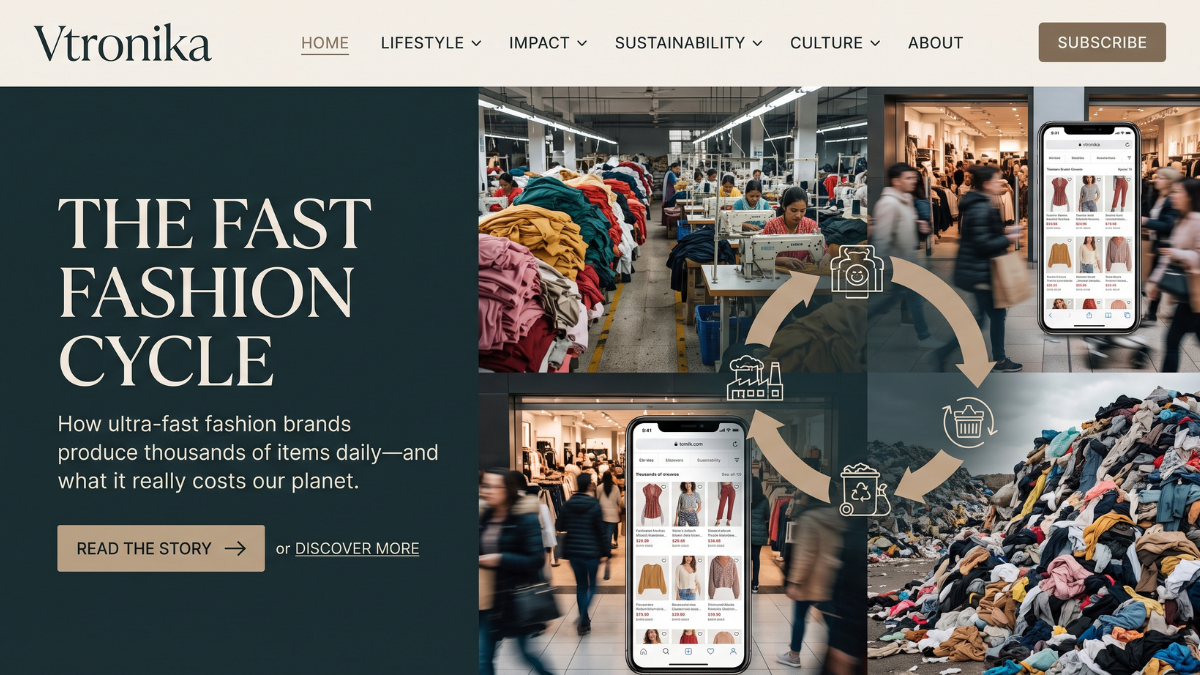
In conventional garment manufacturing, the journey of textile waste begins long before a consumer purchases a garment. During standard cutting-room operations, approximately 15% to 20% of the total fabric bolt ends up on the floor as off-cuts, trimmings, and interstitial scraps. Across the global apparel industry, this equates to tens of millions of tons of pristine, virgin fabric routed straight to incinerators and landfills every year.
This pre-consumer waste carries a hidden environmental footprint:
- Embedded Resource Loss: Every lost square centimeter represents wasted agricultural water, synthetic petrochemicals, energy-intensive weaving, toxic dyes, and carbon emissions from global shipping.
- Economic Inefficiency: Brands pay for 100% of a fabric roll but charge consumers to offset the 15% to 20% they throw away.
- The Disposal Dilemma: Most blended scraps (such as poly-cotton blends) cannot be mechanically recycled easily, making landfill burial or toxic burning the default disposal route.
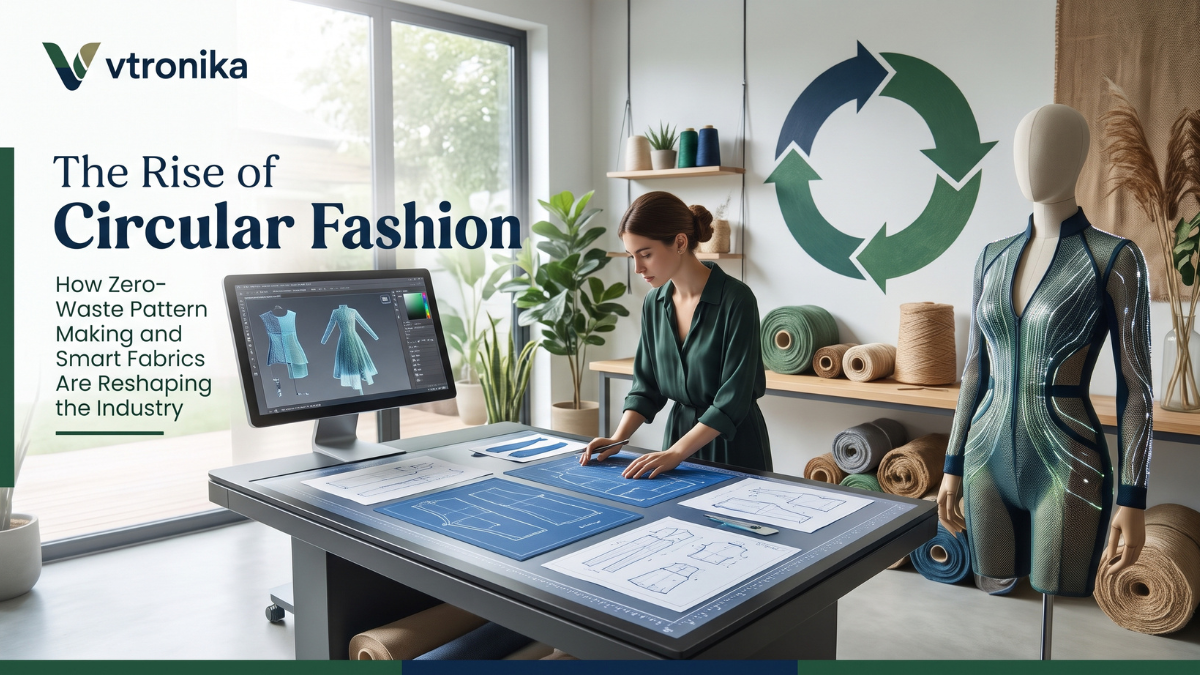
Zero-waste pattern making tackles this environmental issue at the source. Rather than trying to recycle off-cuts after the damage is done, it reimagines the garment development process so that scrap fabric is never created in the first place.
Article 2: Deconstructing the Craft: The Fundamental Geometry of Zero-Waste
Zero-waste pattern cutting is not merely an alternative cutting style; it is an inversion of standard fashion design methodology. In conventional studios, a designer sketches an aesthetic silhouette, hands it to a pattern maker, and leaves the cutting technician to fit the pieces onto a rectangular marker as tightly as possible. In zero-waste design, the fabric boundary is an active design constraint from the first sketch.
The garment design and pattern drafting happen simultaneously. The designer treats the entire textile bolt—defined by its exact width (e.g., 140 cm or 150 cm)—as a canvas where every piece interlocks like a jigsaw puzzle:
- Tessellation: Utilizing geometric shapes (triangles, parallelograms, and trapezoids) that interlock along shared cut lines, eliminating negative space between components.
- Negative-Space Repurposing: When a curved armhole or neckline is cut out, the remaining cutout is not discarded; it is repurposed as an internal pocket bag, a structural collar stand, a decorative cuff, or an interior reinforcement facing.
- Fold-and-Slash Manipulation: Deriving complex three-dimensional forms by cutting directly into folded planes of fabric, using architectural pleats and origami tucks instead of curved hollowed darts.
By letting the dimensions of the fabric dictate the lines of the garment, designers discover unexpected architectural silhouettes that traditional drafting could never produce.
Article 3: Historical Blueprint: What Folk Dress Teaches Modern Fashion
Before industrialization and fossil-fuel-powered textile mills made fabric an artificially cheap commodity, historical cultures treated textiles as precious, labor-intensive assets. Traditional clothing around the world was inherently zero-waste or near-zero-waste by necessity.
Analyzing historical garments provides modern sustainable designers with a proven technical foundation:
| Traditional Garment | Culture / Origin | Zero-Waste Technique Employed |
| The Kimono | Japan | Rectangular loom-width panels cut along straight lines; zero textile off-cuts; sizing adjusted via internal folds and tucks. |
| The Sari | India | Completely uncut, unstitched textile lengths draped dynamically around the human form, eliminating all cutting waste. |
| The Chiton & Himation | Ancient Greece | Single rectangular lengths of woven wool or linen secured with fibulae pins and tied girdles. |
| The Bog Coat / Tunics | Pre-Medieval Europe | Single-piece rectangular cuts with strategic slits and fold-overs forming the body and sleeves simultaneously. |
These historical garments prove that clothing does not require complex, rounded hollows to fit the human form gracefully. Modern zero-waste practitioners combine these rectangular, modular principles with modern tailoring to create contemporary, functional apparel.
Article 4: The 2D-to-3D Paradox: Transforming Flat Grids into Sculptural Fits
The core technical challenge of zero-waste design is reconciling the flat, rectangular grid of woven textiles with the organic, compound curves of the human body. Traditional tailoring achieves curvature by carving away fabric—cutting deep curved armholes, hollowed necklines, and waist darts.
Zero-waste pattern makers use distinct structural techniques to achieve anatomical fit without discarding fabric:
- Integrated Pleating & Smocking: Instead of slashing away a wedge of fabric to make a dart, the excess volume is folded into exterior knife pleats, box pleats, or smocking channels that serve as design details.
- Bias Grain Manipulation: Cutting rectangular panels at a 45-degree angle across the warp and weft harnesses natural mechanical stretch, allowing woven fabrics to contour smoothly around the bust, waist, and hips.
- Gussets and Godets: Triangular or diamond cutouts resulting from adjacent pattern cuts are inserted into underarm junctions or skirt seams, increasing range of motion and adding volume.
This approach creates garments with a distinct architectural presence, proving that structural efficiency can elevate garment aesthetics rather than compromise them.
Article 5: Software & Innovation: Algorithmic Nesting and 3D Virtual Prototyping
While manual zero-waste drafting requires intense spatial calculation, modern digital software has streamlined the process, making it viable for commercial development teams.
Integrating 3D fashion simulation (CLO 3D, Browzwear) with 2D algorithmic pattern drafting software creates a real-time feedback loop:
┌────────────────────────────────┐       ┌────────────────────────────────┐
│  2D CAD Pattern Editor         │       │  3D Digital Avatar Simulation  │
│  - Adjust interlocking puzzle  │◄─────►│  - Real-time drape & fall      │
│  - Eliminate negative margins  │       │  - Tension & stress heatmaps   │
└────────────────────────────────┘       └────────────────────────────────┘
                                  │
                                  ▼
                   [Algorithmic Nesting Engine]
                   (100% Surface Area Utilization)
Digital tools assist zero-waste designers through:
- Bidirectional Synchronization: Modifying a seam line on the 2D cutting marker immediately updates the garment drape on the 3D virtual avatar, showing the designer the fit impact in seconds.
- Automated Marker Optimization: Specialized nesting engines calculate fabric utilization metrics down to two decimal places, alerting the pattern maker to lingering negative space.
- Digital Prototyping Without Waste: Testing zero-waste pattern puzzles digitally removes the need to cut multiple physical muslin iterations, keeping the entire R&D phase zero-waste.
Software shifts zero-waste pattern making from an experimental, labor-intensive niche into an agile, scalable commercial methodology.
Article 6: The Grading Dilemma: Sizing Zero-Waste Patterns for Commercial Production
The biggest bottleneck preventing global apparel brands from adopting zero-waste pattern cutting is grading—the process of scaling a base size up and down across an entire size spectrum (e.g., XS to XXL).
In standard manufacturing, grading expands each pattern piece outward independently, with the marker technician simply spreading them across more yardage. In zero-waste design, because every piece interlocks edge-to-edge, expanding one piece alters the dimensions of all adjacent pieces.
Designers resolve this grading challenge through three production methods:
- Variable Width Marker Strategy: Keeping pattern piece proportions identical while varying the width of the fabric bolt sourced for each size tier (e.g., Size S uses a 130 cm roll; Size L uses a 145 cm roll).
- Modular Infill Scaling: Maintaining fixed external puzzle dimensions while adjusting internal pleats, tucks, overlap seams, and hem allowances to accommodate larger or smaller circumferences.
- One-Size-Fits-Many Kinetic Cuts: Designing modular wrap garments, batwing constructions, and drawstring-tunneled silhouettes that naturally adapt across multiple body types without requiring independent pattern variations.
Solving the grading equation requires shifting from rigid, static sizing toward dynamic, adaptive garments that fit diverse body types.
Article 7: Material Purity and Circularity: The Power of Mono-Materials
Zero-waste pattern cutting solves the problem of pre-consumer scrap generation, but ethical fashion demands accountability for the garment’s eventual end-of-life. A garment cut with zero fabric waste can still end up polluting the planet if constructed from non-biodegradable or unrecyclable materials.
True zero-waste design embraces the concept of mono-materiality:
[100% Pure Organic Fiber] ──► [Zero-Waste Pattern Cut] ──► [Mono-Material Construction]
(Cotton, Wool, Linen, Silk)     (0% Pre-Consumer Waste)      (Matching Shell, Thread & Tape)
                                                                       │
                                                                       ▼
                                                           [Industrial Composting]
                                                                      OR
                                                           [Closed-Loop Fiber Recycling]
To achieve true circularity, designers align pattern efficiency with material discipline:
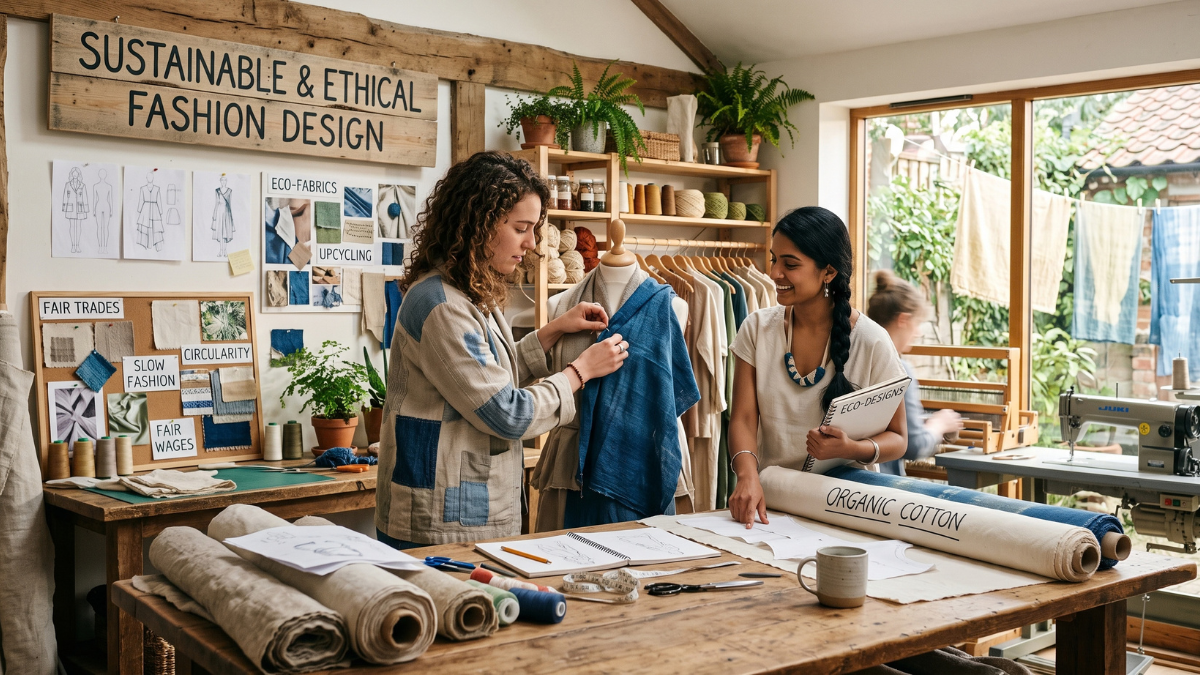
- Unified Components: Using 100% organic cotton, wool, or linen for the shell, lining, sewing thread, internal interfacing, and drawstring tapes.
- Zero Mixed Synthetics: Avoiding synthetic elastane/polyester blends, which choke standard textile recycling machinery and shed microplastics during laundering.
- Removable or Biodegradable Hardware: Replacing synthetic plastic buttons and metal zippers with corozo nuts, untreated wood toggles, embroidered buttonholes, and fabric tie closures.
When cutting efficiency meets material purity, a garment transitions from an extractive product into a regenerative asset that can return safely to the soil or re-enter the fiber stream.
Article 8: Economic Realities: Cutting Room Efficiency and Labor Costs
Adopting zero-waste pattern making requires rethinking conventional production economics. Fashion executives often view zero-waste design as a luxury ideal, assuming the increased design time inflates production costs. However, evaluating the overall balance sheet reveals clear economic advantages.
A comparative breakdown illustrates the financial mechanics:
| Financial / Operational Metric | Conventional Pattern Making | Zero-Waste Pattern Making |
| Raw Material Utilization | 80% to 85% (15%–20% discarded) | 98% to 100% utilization |
| Material Cost per Garment | High (must absorb lost fabric costs) | Lower (every purchased meter is worn) |
| Initial Design & Drafting Time | Standard (2–4 iterations) | Higher (requires puzzle-solving precision) |
| Marker Nesting Efficiency | Manual adjustments, high fabric loss | Fixed, continuous cutting lines |
| Disposal & Incineration Costs | Incurred fees for off-cut disposal | Zero pre-consumer disposal costs |
While initial technical development requires more design investment, those costs diminish across production volume. By extracting 100% commercial value from premium organic or luxury textiles, brands save substantial material capital on large manufacturing runs, offsetting development costs.
Article 9: Ethical Labor and Factory Floor Transformation
Sustainable design cannot exist without ethical labor practices. Pattern making and marker layout directly impact the physical realities and safety of the garment workers who assemble the clothing.
Standard fast-fashion manufacturing pressures factory workers with aggressive time quotas, repetitive micro-tasks, and low pay. Conventional assembly lines rely on straight, standardized seams designed for high-speed automated sewing machines, deskilling the craft and degrading working conditions.
Zero-waste fashion supports ethical labor through several practical mechanisms:
- Valuing Craftsmanship: Zero-waste assembly often features unconventional seam configurations, origami folds, and integrated panels that require skilled sewing technicians, elevating garment construction back into a recognized artisanal craft.
- Reduced Chemical Inhalation: By eliminating fabric off-cuts, cutting rooms generate significantly less airborne lint, micro-dust, and chemical dye particles, improving air quality for workers.
- Fair Living Wages: Brands committed to sustainable pattern design typically operate under transparent, fair-trade supply chains, prioritizing worker livelihoods, fair compensation, and safe factory conditions over exploitative turnaround speeds.
Human-centered design must protect the people stitching the seams just as conscientiously as it protects the natural environment.
Article 10: The Future Atelier: Consumer Education, Modular Design, and Open-Source Patterns
For zero-waste fashion to move from a niche practice into an industry-wide standard, the movement must engage directly with end consumers and the broader global design community.
The future of sustainable fashion lies in transparent, modular, and collaborative frameworks:
┌────────────────────────────────────────────────────────┐
│             The Open-Source Zero-Waste Studio          │
│                                                        │
│  [Downloadable PDF Patterns] ──► [Local On-Demand Make]│
│               │                                        │
│               ▼                                        │
│  [Modular Garment Replacement] ──► [Circular Takeback] │
└────────────────────────────────────────────────────────┘
Three emerging developments are driving this evolution:
- Consumer Storytelling & Transparency: Brands are printing the actual cutting layout and puzzle markers directly onto garment hangtags, internal linings, or digital product passports (DPPs), educating consumers on how the garment eliminated fabric waste.
- Modular & Transformative Clothing: Designers are creating garments with detachable, replaceable panels. If a collar wears out or a sleeve tears, the wearer replaces that specific zero-waste module rather than discarding the entire coat.
- Open-Source Pattern Communities: Forward-thinking designers (such as Timo Rissanen, Holly McQuillan, and Liz Haywood) are releasing open-source zero-waste pattern layouts online, empowering independent makers and small brands to bypass traditional fast-fashion supply chains.
By demystifying pattern making and treating fabric as a finite resource, zero-waste design transforms fashion from an extractive business model into a conscious, creative discipline.