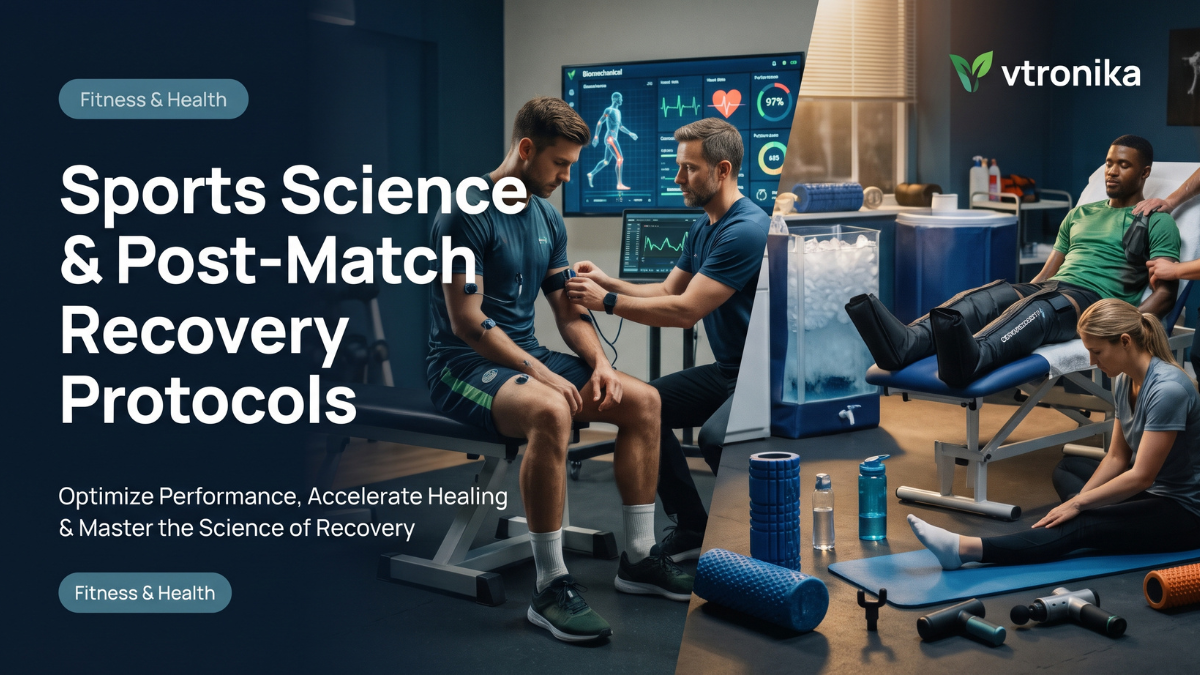
Comprehensive Elite Sports Science & Post-Match Recovery Guide: 10 Full-Length Specialized Articles
Core Focus: Sports Science & Post-Match Recovery Protocols (Fitness & Health)
Target Readership: Sports scientists, athletic trainers, physical therapists, strength and conditioning coaches, elite athletes, and sports medicine practitioners.
Article 1: The Physiology of Post-Match Fatigue: Metabolic Depletion, Structural Disruption, and Central Fatigue
SEO Metadata
- Primary Keyword: Post-Match Recovery Protocols
- Secondary Keywords: Exercise physiology, central nervous system fatigue, metabolic depletion, structural muscle damage, sports science
- Meta Description: An in-depth physiological breakdown of tri-phasic post-match fatigue, analyzing glycogen depletion, micro-trauma, and central nervous system down-regulation.
Introduction
Post-match fatigue is not a singular biological state; it is a multifactorial cascade involving peripheral muscular exhaustion and central nervous system (CNS) down-regulation. Following competitive athletic output—such as a 90-minute football match, a five-day cricket Test, or an intense basketball playoff—the human body exhibits systemic disturbances that require structured, phased recovery protocols.
1. Metabolic Depletion: Substrate Exhaustion
At the intracellular level, high-intensity intermittent sprinting and physical collisions rapidly deplete intramuscular glycogen reserves in Type I and Type II muscle fibers:
- Glycogen Depletion: Intramuscular glycogen drops from baseline values (~$120\text{–}150\text{ mmol/kg}$ dry weight) to critical thresholds below $30\text{–}50\text{ mmol/kg}$, directly impairing sarcoplasmic reticulum calcium ($Ca^{2+}$) release.
- Adenosine Triphosphate (ATP) Resynthesis: Phosphocreatine (PCr) degradation leaves elevated concentrations of adenosine diphosphate (ADP) and inorganic phosphate ($P_i$), hindering cross-bridge cycling and force production.
2. Structural Disruption: Exercise-Induced Muscle Damage (EIMD)
Mechanical stress—particularly the eccentric loading of decelerations, direction changes, and jumping—causes mechanical shearing of myofibrillar structures:
- Disruption of the sarcomeric Z-line matrix releases intracellular proteins, such as creatine kinase (CK) and myoglobin, into the systemic circulation.
- The integrity of the sarcolemma is compromised, promoting fluid accumulation, localized edema, and delayed onset muscle soreness (DOMS), which typically peaks between 24 and 72 hours post-event.
3. Central Nervous System (CNS) Fatigue
While peripheral fatigue occurs at or distal to the neuromuscular junction, central fatigue originates within the brain and spinal cord:
- Neurotransmitter Imbalances: Fluctuations in serotonin ($5\text{-HT}$), dopamine ($DA$), and noradrenaline alter perceived exertion and motivation.
- Afferent Feedback Down-regulation: Group III and IV muscle afferents convey chemical and mechanical stress back to the cerebral cortex, blunting maximal voluntary activation (MVA) and dampening alpha motor neuron recruitment.
Practical Application Matrix
Phase 1 (0–2h post-match): Address Acute Metabolic Strain & Dehydration
Phase 2 (2–24h post-match): Mitigate Progressive Inflammatory Signaling & Muscle Edema
Phase 3 (24–72h post-match): Resolve Residual Neuromuscular & Central Inefficiencies
Article 2: The Anabolic Window and Cellular Resynthesis: Immediate Post-Match Nutrition and Hydration
SEO Metadata
- Primary Keyword: Sports Science Recovery Protocols
- Secondary Keywords: Post-exercise nutrition, glycogen resynthesis, muscle protein synthesis (MPS), rehydration kinetics, sports nutrition
- Meta Description: Evidence-based nutritional protocols to maximize muscle protein synthesis, replenish substrate deficits, and restore fluid-electrolyte equilibrium.
Introduction
The post-match nutritional window represents a period of heightened cellular insulin sensitivity and blood flow. Sports dietitians leverage this phase to halt exercise-induced catabolism and initiate tissue rebuilding through targeted substrate delivery.
1. Glycogen Resynthesis Dynamics
The rate-limiting enzyme in muscular glycogen reconstitution is glycogen synthase:
- The Non-Insulin Dependent Phase (0–45 minutes post-exercise): Glut-4 glucose transporters remain translocated to the sarcolemmal membrane independently of insulin, allowing rapid intracellular glucose uptake.
- Target Delivery: Ingest $1.0\text{–}1.2\text{ g/kg/hour}$ of high-glycemic carbohydrates (e.g., maltodextrin, dextrose) during the first 4 hours to maximize resynthesis rates. Combining carbohydrates with $0.3\text{–}0.4\text{ g/kg}$ of rapidly digested protein can further stimulate insulin secretion when total carbohydrate intake falls short.
2. Muscle Protein Synthesis (MPS) and Proteolysis Attenuation
Mechanical micro-trauma triggers muscular proteolysis. To shift net muscle protein balance from negative to positive:
- Administer $25\text{–}40\text{ g}$ of high-biological-value protein (such as native whey or micellar casein hydrolysate) containing at least $3.0\text{ g}$ of leucine.
- Leucine acts as a primary molecular trigger for the mechanistic Target of Rapamycin Complex 1 (mTORC1), up-regulating ribosomal biogenesis and peptide elongation.
3. Rehydration Kinetics and Electrolyte Homeostasis
Fluid replacement requires more than pure water consumption, as hypoosmotic hydration induces diuresis and fails to retain vascular volume:
- Measure pre- and post-match naked body mass. Athletes should consume $120\text{–}150\%$ of lost body weight in fluid over a 2- to 4-hour window.
- Solutions must include $40\text{–}60\text{ mmol/L}$ of sodium chloride to drive osmotic retention and restore intravascular volume, alongside potassium and magnesium to mitigate post-match muscle cramping.
Article 3: Cold-Water Immersion vs. Active Recovery: The Cryotherapy Controversy
SEO Metadata
- Primary Keyword: Post-Match Recovery Protocols
- Secondary Keywords: Cold-water immersion (CWI), cryotherapy, active recovery, muscle hypertrophy blunting, inflammation modulation
- Meta Description: Cold-water immersion vs. active recovery: Learn how cooling modalities alter systemic inflammation and when cryotherapy may impair adaptations.
Introduction
Hydrotherapy and cryotherapeutic chambers are standard fixtures in high-performance sports training facilities. However, modern exercise physiology recognizes that blunting the acute inflammatory response is not universally beneficial for every training cycle.
+--------------------------------------------------------------------------+
|                      POST-MATCH RECOVERY SPECTRUM                        |
|                                                                          |
|   ACUTE PERFORMANCE CONGESTION        HYPERTROPHY & CHRONIC ADAPTATION   |
|   [Match every 72h / Tournaments]         [Pre-season / Base Training]   |
|                 │                                       │                |
|                 ▼                                       ▼                |
|   Cold-Water Immersion / Cryo               Active Recovery & Mobility   |
|   • Vasoconstriction                        • Natural Cytokine Signaling |
|   • Blunts Acute Inflammation               • Angiogenesis Supported     |
|   • Fast Neuromuscular Clearance            • Uninhibited mTORC1 Pathway |
+--------------------------------------------------------------------------+
1. Mechanisms of Cold-Water Immersion (CWI)
Standard protocols involve submerging athletes up to the sternum in water at $10\text{–}15^\circ\text{C}$ for $10\text{–}15\text{ minutes}$:
- Hydrostatic Pressure: Increases central blood volume, facilitating venous return and reducing interstitial edema.
- Peripheral Vasoconstriction: Reduces local microvascular perfusion, attenuating secondary enzymatic tissue damage by curbing localized neutrophil and macrophage migration.
- Analgesic Neurological Effect: Slows nerve conduction velocity (NCV), providing short-term relief from soreness and lowering subjective ratings of perceived fatigue.
2. The Adaptation Blunting Hypothesis
While CWI is effective for quick turnaround schedules (e.g., tournament formats with matches every 48–72 hours), its frequent application during pre-season or hypertrophy phases can be counterproductive:
- Blunting reactive oxygen species (ROS) and macrophage infiltration down-regulates p70S6K and downstream mTORC1 signaling, which can reduce long-term muscular hypertrophy and mitochondrial enzyme adaptations.
3. The Role of Low-Intensity Active Recovery
Contrast CWI with active recovery: $15\text{–}20\text{ minutes}$ of low-impact, non-eccentric activity (e.g., stationary cycling at $<55\%\text{ }VO_2\text{ max}$):
- Promotes blood flow without adding mechanical micro-trauma.
- Facilitates blood and muscle lactate clearance without interrupting natural anti-inflammatory signaling cascades, making it the preferred approach during foundational training blocks.
Article 4: Sleep Architecture and Neuroendocrine Regulation in Elite Recovery
SEO Metadata
- Primary Keyword: Sports Science Recovery Protocols
- Secondary Keywords: Sleep architecture, slow-wave sleep, human growth hormone, athlete sleep hygiene, athletic recovery
- Meta Description: Explore how sleep architecture, slow-wave states, and circadian optimization drive neuroendocrine recovery and soft-tissue remodeling in elite sport.
Introduction
Sleep is the most potent biological recovery tool available to athletes. While technological recovery modalities offer marginal gains, disruptions to sleep architecture lead to hormonal dysfunction, compromised cognitive function, and increased injury risk.
1. Sleep Architecture Breakdown
- Slow-Wave Sleep (SWS / NREM Stage 3): Accounts for physical recovery. The pituitary gland releases the majority of daily human growth hormone (hGH), stimulating amino acid uptake and protein synthesis to repair structural damage.
- Rapid Eye Movement (REM) Sleep: Accounts for cognitive recovery. The brain consolidates motor-skill patterns, recalibrates spatial perception, and restores neurotransmitter balance.
2. Neuroendocrine Cascade of Sleep Deprivation
When match congestion, late travel, or elevated sympathetic drive disturbs sleep:
- Cortisol: Circulating levels of catabolic glucocorticoids rise, breaking down structural tissues and impairing cellular repair.
- Testosterone & Insulin Sensitivity: Total and free testosterone decrease, while cellular insulin sensitivity drops, hindering effective post-match glycogen resynthesis.
- Immune Dysregulation: Circulating natural killer (NK) cells and pro-inflammatory interleukins (e.g., $IL\text{-}6$) fluctuate, increasing susceptibility to upper respiratory tract infections (URTI).
3. Implementation of Elite Sleep Hygiene Protocols
To protect an athlete’s circadian rhythm under modern competitive constraints:
- Thermal Regulation: Set sleep environments to approximately $17\text{–}19^\circ\text{C}$ ($63\text{–}66^\circ\text{F}$) to facilitate the core body temperature drops required for deep sleep induction.
- Photobiological Management: Limit high-intensity blue light ($450\text{–}480\text{ nm}$) exposure 90 minutes before bed to allow endogenous melatonin synthesis, or utilize optical filters.
- Strategic Napping: Use 20- or 90-minute naps (to avoid sleep inertia) between 13:00 and 15:00 to supplement sleep during congested travel schedules.
Article 5: Compression Therapy, Lymphatic Drainage, and Percussive Technologies
SEO Metadata
- Primary Keyword: Post-Match Recovery Protocols
- Secondary Keywords: Intermittent pneumatic compression, sports massage, percussive therapy, myofascial release, lymphatic return
- Meta Description: An examination of pneumatic compression boots, percussive massage, and soft-tissue therapies for post-match venous return and muscle recovery.
Introduction
Mechanized recovery devices—ranging from intermittent pneumatic compression (IPC) boots to high-frequency percussive massage guns—have moved from specialized clinics into team locker rooms. Assessing their utility requires looking past commercial marketing to examine the vascular and fascial evidence.
       [DISTAL CHAMBERS: Foot/Ankle]
              │ (Sequential Pressure: 80–100 mmHg)
              ▼
       [MID CHAMBERS: Gastrocnemius/Soleus]
              │ (Sequential Pressure: 60–80 mmHg)
              ▼
       [PROXIMAL CHAMBERS: Quadriceps/Hamstrings]
              │ (Sequential Pressure: 40–60 mmHg)
              ▼
       [CENTRAL CIRCULATION: Venous Return & Lymphatic Inflow]
1. Intermittent Pneumatic Compression (IPC)
IPC systems use multi-chambered sleeves to deliver sequential, peristaltic pulse waves moving distally to proximally:
- Hemodynamic Effects: Mimics the natural skeletal muscle pump, increasing venous flow velocity and promoting lymphatic clearance of metabolic waste and interstitial fluid.
- Arterial Compliance: Transiently reduces vascular resistance, improving peripheral microcirculation and reducing passive stiffness without requiring active energy expenditure.
2. Percussive Therapy and Myofascial Mobilization
Percussive massage tools utilize rapid, short-amplitude strokes ($12\text{–}16\text{ mm}$ amplitude at $30\text{–}40\text{ Hz}$):
- Neurological Gate Control: High-frequency vibration stimulates cutaneous Pacinian and Meissner’s corpuscles, overriding nociceptive signals traveling along unmyelinated C-fibers to temporarily dull localized pain.
- Thixotropy and Tissue Compliance: Increases local temperature and alters the fluid viscosity of extracellular fascia, breaking transient cross-links and restoring acute range of motion (ROM) without impairing motor-unit firing rates.
3. Practical Usage Guidelines
To avoid tissue bruising or neural irritation:
- Limit percussive therapies to $60\text{–}90\text{ seconds}$ per targeted muscle group post-match.
- Program IPC boots at pressures matching or slightly above diastolic pressure ($60\text{–}80\text{ mmHg}$) for $20\text{–}30\text{ minutes}$ during the acute or secondary recovery window.
Article 6: Biometric Monitoring: Heart Rate Variability (HRV) and Biochemical Markers
SEO Metadata
- Primary Keyword: Sports Science Recovery Protocols
- Secondary Keywords: Heart rate variability (HRV), creatine kinase, biochemical markers, athlete monitoring, fatigue quantification
- Meta Description: How elite performance staff monitor internal load, track autonomic stability with HRV, and use biomarkers to build individualized recovery plans.
Introduction
Modern sports medicine relies on objective biometric data to remove guesswork from recovery programming. By monitoring autonomic stability and circulating biomarkers, performance staffs track how an athlete’s internal physiology responds to external competitive stressors.
1. Heart Rate Variability (HRV) and Autonomic Equilibrium
HRV quantifies the beat-to-beat variations in normal-to-normal (R-R) intervals, serving as a non-invasive window into the autonomic nervous system (ANS):
- Root Mean Square of Successive Differences (rMSSD): The primary metric used to evaluate parasympathetic tone. A sharp drop in rMSSD indicates sympathetic dominance, prolonged systemic stress, and unrecovered cardiac homeostatic function.
- High-Frequency (HF) vs. Low-Frequency (LF) Power: Reflects shifts between sympathetic tone and vagal-mediated recovery.
- Contextual Analysis: High absolute HRV does not always mean an athlete is fully adapted; an unexpected spike in parasympathetic tone can occasionally signal deep autonomic exhaustion.
2. Biochemical Biomarkers in Modern Sports Science
- Creatine Kinase (CK): Peaking 24–48 hours post-competition, serum CK provides an objective estimate of structural sarcolemmal breakdown. Baseline baselines must be established, as individual responsiveness varies widely.
- Urea & Blood Urea Nitrogen (BUN): Elevated levels point to heightened protein catabolism and inadequate carbohydrate intake during recovery.
- Salivary Cortisol & Alpha-Amylase: Non-invasive indicators of neuroendocrine stress and sympathetic nervous activity, often measured before and after games to confirm stress resolution.
3. Data Integration: The Internal-to-External Load Ratio
Tracking external metrics (total distance run, sprint counts, acceleration/deceleration profiles via GPS) alongside internal markers (HRV, rating of perceived exertion, muscle soreness scales) allows sports scientists to flag overreaching early and personalize recovery interventions.
Article 7: Thermal Therapy: Infrared Saunas, Contrast Baths, and Heat-Shock Proteins
SEO Metadata
- Primary Keyword: Post-Match Recovery Protocols
- Secondary Keywords: Heat therapy, infrared sauna, heat-shock proteins (HSPs), contrast water therapy, microvascular perfusion
- Meta Description: Discover how infrared saunas, contrast water therapy, and heat-shock protein expression accelerate soft-tissue remodeling and systemic recovery.
Introduction
While cryotherapy focuses on acute vasoconstriction and blunting inflammation, targeted heat therapies take the opposite approach: driving vasodilation, increasing local perfusion, and stimulating cellular stress proteins that aid structural repair.
1. Cellular Mechanisms of Heat-Shock Proteins (HSPs)
Thermal stress from hot-water immersion ($38\text{–}40^\circ\text{C}$) or far-infrared saunas ($60\text{–}70^\circ\text{C}$) activates heat-shock transcription factors (HSF1):
- Molecular Chaperone Function: Upregulates HSP70 and HSP90, which refold misfolded or structurally damaged intracellular proteins disrupted by high mechanical forces during play.
- Nitric Oxide (NO) Synthesis: Heat activates endothelial nitric oxide synthase (eNOS), inducing robust arterial vasodilation that enhances nutrient delivery to healing muscle fibers.
2. Contrast Water Therapy (CWT) Dynamics
Contrast therapy alternates immersions between hot and cold water (typically 1 minute cold at $10\text{–}12^\circ\text{C}$ to 2–3 minutes hot at $38\text{–}40^\circ\text{C}$ for 3–5 cycles):
- Pumping Action: Rapid alternations between vasoconstriction and vasodilation produce a rhythmic mechanical pumping effect within the capillary bed.
- Metabolite Clearance: Accelerates the clearance of interstitial metabolites and reduces subjective feelings of stiffness compared to passive resting protocols.
3. Strategic Timing Considerations
- Avoid in Acute Trauma: Never apply heat therapy immediately post-match if an acute joint sprain, contusion, or severe muscle strain has occurred, as heating can worsen active intramuscular hemorrhaging.
- Ideal Window: Thermal interventions perform best during secondary recovery windows (24–48 hours post-match) to resolve residual structural tension and promote restful sleep.
Article 8: Psychological Recovery and Parasympathetic Down-Regulation
SEO Metadata
- Primary Keyword: Sports Science Recovery Protocols
- Secondary Keywords: Parasympathetic nervous system, breathwork, vagus nerve stimulation, autonomic balance, sports psychology
- Meta Description: Explore how mindfulness, vagal nerve stimulation, and controlled breathwork regulate the nervous system after intense athletic competition.
Introduction
Physical recovery cannot be separated from neurological recovery. Elite sporting environments expose the central nervous system to high levels of cognitive stress, performance anxiety, and adrenergic stimulation. If an athlete remains trapped in a sympathetic “fight-or-flight” loop post-game, physiological repair slows down.
1. The Neurobiology of Persistent Hyper-Arousal
- Intense competitive matches flood the bloodstream with catecholamines (epinephrine, norepinephrine).
- Cortisol remains elevated, maintaining heightened vigilance, an elevated resting heart rate, and blunted digestive motility.
- This prolonged sympathetic state delays the onset of physical recovery by impairing nutrient absorption and disrupting sleep quality.
2. Vagal Nerve Stimulation and Controlled Respiratory Dynamics
Down-regulating hyper-arousal requires intentional activation of the parasympathetic branch via the vagal nerve:
- The Physiological Sigh: Two deep nasal inhalations followed by an extended, unforced oral exhalation recruits pulmonary stretch receptors, slowing the heart rate via respiratory sinus arrhythmia.
- Box Breathing & 4-7-8 Breathing: Shifting to rhythmic, extended exhalations decreases vagal inhibition, signaling the cardiovascular center to lower peripheral arterial resistance.
3. Integrated Recovery Room Atmospheres
Elite sports organizations are increasingly designing dedicated recovery hubs featuring:
- Dim, red-shifted lighting to protect endogenous melatonin production.
- Soundscapes designed to shift brainwave states from beta waves ($13\text{–}30\text{ Hz}$) toward alpha ($8\text{–}12\text{ Hz}$) and theta ($4\text{–}8\text{ Hz}$) bands.
- Structured mental debriefing sessions scheduled for the following morning, separating immediate physiological downtime from analytical critiques.
Article 9: Tailoring Recovery: Match Demands, Positional Specificity, and Individualized Loading
SEO Metadata
- Primary Keyword: Post-Match Recovery Protocols
- Secondary Keywords: Positional loading, athlete-specific recovery, sports tracking, mechanical load profiles, tactical sports science
- Meta Description: Learn how to customize post-match recovery protocols based on individual playing styles, GPS movement profiles, and positional workloads.
Introduction
Generic, team-wide recovery plans overlook the unique physiological demands placed on different athletes. A central midfielder covering 12 kilometers of high-intensity running requires a different recovery approach than a goalkeeper dealing with repeated high-velocity eccentric landings and impact forces.
       [ATHLETE COMPLETES MATCH]
                  │
                  ▼
       [PULL GPS & INERTIAL MOVEMENT DATA]
                  │
     ┌────────────┴────────────┐
     ▼                         ▼
[HIGH RUNNING DISTANCE /     [HIGH IMPACT / REPEATED
 DECELERATION ACCUMULATION]   COLLISION LOADS]
 • Focus: Glycogen Top-Up    • Focus: Anti-inflammatory CWI
 • Foam Rolling & Myofascial • Soft-tissue Mobilization
 • Microvascular Flushing    • Joint Decompression
1. Running Profiles vs. Collision Demands
- Endurance & Sprint Volume (e.g., Midfielders, Wingers): High accumulated distance, sprint distances, and directional changes primarily trigger metabolic depletion and eccentric muscular strain. Recovery must prioritize rapid carbohydrate replenishment, rehydration, and light active cycling to clear systemic metabolites.
- Collision & Impact Loading (e.g., Rugby Backs, Fast Bowlers, American Football Linebackers): Direct physical collisions cause blunt micro-trauma, contusions, and joint-capsule stress. Protocols should emphasize cold-water immersion, gentle soft-tissue mobilization, and joint decompression to calm acute inflammation.
2. Muscle Architecture and Fiber-Type Considerations
- Athletes with a high percentage of fast-twitch (Type IIx/IIa) fibers generate high explosive power but take longer to recover from exercise-induced muscle damage and neuromuscular fatigue.
- Athletes with predominant slow-twitch (Type I) profiles tend to clear metabolic fatigue faster and can typically resume higher training volumes sooner.
3. Dynamic Protocol Adjustment
Modern performance programs adjust recovery prescriptions based on real-time game tracking:
- If an athlete’s high-speed decelerations exceed their four-week rolling average by more than $20\%$, their recovery plan automatically scales up its focus on myofascial release, cold hydrotherapy, and extended sleep windows.
Article 10: Designing a 72-Hour Elite Microcycle Recovery Blueprint
SEO Metadata
- Primary Keyword: Sports Science Recovery Protocols
- Secondary Keywords: Microcycle planning, 72-hour recovery timeline, weekly periodization, sports rehabilitation, training recovery
- Meta Description: A step-by-step 72-hour post-match recovery timeline, integrating nutrition, hydrotherapy, soft-tissue work, and active movement for elite sports teams.
Introduction
Bridging the gap between recovery research and on-pitch execution requires a structured, periodized timeline. The following operational protocol provides an evidence-based roadmap for the critical 72-hour window following an elite competition.
The 72-Hour Periodized Recovery Blueprint
Phase 1: Acute Homeostasis (0 to 2 Hours Post-Final Whistle)
- Minute 0–15: Ingestion of a recovery beverage providing $1.2\text{ g/kg}$ of high-GI carbohydrates, $30\text{ g}$ of whey protein hydrolysate, and essential electrolytes.
- Minute 15–30: Low-intensity active cool-down (e.g., stationary cycling at $50\text{–}60\text{ RPM}$) to promote venous return and prevent blood pooling.
- Minute 30–45: Cold-water immersion ($11\text{–}13^\circ\text{C}$ for 12 minutes) to lower core body temperature, reduce capillary permeability, and soothe acute joint stress.
- Minute 45–90: High-protein, nutrient-dense whole-food meal with complex carbohydrates, healthy fats, and targeted anti-inflammatory foods (e.g., tart cherry juice for anthocyanin-mediated pain reduction).
Phase 2: Rest and Cellular Restoration (2 to 24 Hours Post-Match)
- Night of Match: Implement strict sleep hygiene (bedroom temperature at $18^\circ\text{C}$, blue-light suppression, zero caffeine post-match). Aim for $\ge 9$ hours of sleep.
- Morning After (+12 to 16h): Measure waking heart rate variability (rMSSD) and complete an internal wellness questionnaire covering soreness, mood, and sleep quality.
- Mid-Day (+16 to 20h): Passive therapy session: 20 minutes of intermittent pneumatic compression (IPC) paired with gentle foam rolling of tight muscle groups.
Phase 3: Neuromuscular Reactivation (24 to 48 Hours Post-Match)
- Morning (+36h): Low-impact active recovery session: Pool mobility work, dynamic stretching, and light core activation routines to restore range of motion.
- Afternoon (+40h): Thermal session: Contrast water therapy or infrared sauna to promote microvascular blood flow, loosen fascial restrictions, and encourage tissue remodeling.
- Dietary Focus: Maintain a high daily protein intake ($1.8\text{–}2.2\text{ g/kg/day}$) paired with balanced carbohydrate loading to fully restock cellular energy stores.
Phase 4: Tactical Reintegration (48 to 72 Hours Post-Match)
- Morning (+60h): Comprehensive neuromuscular screening (e.g., countermovement jump performance using force plates) to check that dynamic force production and power output have returned to baseline.
- On-Field Session (+62h): Transition from individual recovery work back to tactical, sport-specific team drills under regulated, monitored training volumes.
- Final Check (+72h): Full systemic recovery confirmed; the athlete is safely cleared to resume high-intensity match preparations.
Summary Checklist for Performance Teams
[ ] Hour 0:   Targeted Carbohydrate/Protein/Electrolyte shake consumed
[ ] Hour 1:   Hydrotherapy Completed (Cold-Water Immersion)
[ ] Hour 8+:  High-Quality Slow-Wave Sleep protected
[ ] Hour 16:  Morning Biometric Capture (HRV, Sleep Score, Subjective Soreness)
[ ] Hour 24:  Active Pool-Based Mobility or Light Flush Cycling
[ ] Hour 48:  Thermal Contrast Therapy & Deep Tissue Work
[ ] Hour 72:  Force Plate / Neuromuscular Testing for Safe Return to Training