1. The Game Day Blueprint: Pre-Match Rituals, Focus, and Mental Priming
A successful game day starts long before the whistle blows. Elite athletes rely on structured pre-game rituals to transition from everyday life into competitive focus.
- The 24-Hour Lead-in: Reduce intense physical exertion 24 hours prior to competition. Prioritize light dynamic movement, stretching, and neural priming to keep the nervous system responsive without generating fatigue.
- Mental Rehearsal and Visualization: Spend 10 to 15 minutes mentally walking through game scenarios, anticipating high-pressure moments, executing key plays, and envisioning calm responses to unexpected referee decisions or scoreboard deficits.
- Environmental Familiarization: Arriving at the venue early allows players to evaluate field conditions, weather elements (wind, turf wetness, temperature), and locker room pacing. Consistent warm-up music and breathing routines (such as box breathing: 4 seconds in, 4 hold, 4 out, 4 hold) ground the nervous system and manage pre-game adrenaline spikes.
2. Tactical Field Vision: Reading Opponents and Decision-Making Under Pressure
Tactical intelligence separates physically gifted athletes from dominant game-changers. Field vision requires understanding spacing, reading opponent tendencies, and making calculated decisions in split seconds.
- Pattern Recognition: Watch how the opponent sets their defensive lines or presses during the opening minutes. Identify their trigger players, dominant sides, and defensive gaps that can be exploited in transition phases.
- Scanning and Spatial Awareness: High-level players scan their surroundings every 2 to 3 seconds before receiving the ball or making a cut. This continuous intake of spatial data reduces hesitation and enables faster, more accurate execution.
- Managing High-Stress Moments: When the score is tight or momentum shifts, maintain disciplined decision-making rather than forcing risky plays. Reset tempo, secure possession, and communicate clearly across all positions to re-establish control.
3. Progressive Strength & Conditioning: The Engine Behind Power and Endurance
Physical conditioning is the foundation of athletic resilience. A well-designed strength and conditioning program balances maximal strength, explosive power, and aerobic capacity without overtraining the athlete.
- Periodization and Load Management: Divide training cycles into distinct phases: hypertrophy/base conditioning in the off-season, explosive power and speed during pre-season, and strength maintenance during the competitive season.
- Compound Multi-Joint Movements: Center core workouts around functional movements—squats, deadlifts, clean variations, lunges, and pull-ups—which strengthen the posterior chain and mimic the kinetic demands of running, jumping, and cutting.
- Energy System Development: Match conditioning drills to sport-specific work-to-rest ratios. High-Intensity Interval Training (HIIT) and repeated sprint ability (RSA) protocols develop both the aerobic base and anaerobic recovery pathways needed in late-game situations.
4. Speed, Agility, and Quickness (SAQ): Mastering Acceleration and Change of Direction
Linear speed is valuable, but multi-directional speed and rapid deceleration dictate on-field effectiveness. SAQ training teaches the body to produce, absorb, and redirect ground force efficiently.
- First-Step Acceleration: Work on explosive drive mechanics by maintaining an aggressive forward lean (roughly 45 degrees), driving the knees forward, and applying forceful downward-backward force through the balls of the feet.
- Deceleration and Eccentric Control: Most non-contact injuries occur during sudden stops. Train eccentric leg strength using drop landings, plant-and-cut drills, and resistance bands to absorb force through hips and knees safely.
- Multi-Directional Agility: Incorporate cone drills (5-10-5 shuttle, L-drill, reactive agility lights) where the athlete must react to visual cues rather than running scripted patterns, directly translating training to unpredictable game environments.
5. Injury Prevention and Biomechanics: Protecting Joints, Tendons, and Ligaments
Durability is an athlete’s most valuable asset. Preventing common injuries—such as ACL tears, hamstring strains, and rotator cuff impingements—requires proactive biomechanical conditioning.
- Posterior Chain and Hamstring Resilience: Prioritize eccentric hamstring exercises like Nordic hamstring curls and Romanian deadlifts to prevent high-speed running strains.
- Knee and Ankle Stability: Implement the FIFA 11+ or similar neuromuscular warm-up protocols. Focus on landing alignment where knees track straight over toes rather than collapsing inward (valgus collapse).
- Mobility vs. Flexibility: Static stretching alone does not protect joints. Dynamic mobility drills that open hip flexors, strengthen thoracic spine rotation, and improve ankle dorsiflexion ensure joints move freely through full athletic ranges under load.
6. Sports Nutrition and Hydration: Fueling the Competitive Engine
Nutrition directly dictates energy output, cognitive clarity, and physical recovery. A haphazard diet undermines even the most rigorous training schedules.
- Fueling Pre-Competition: Consume a high-carbohydrate, moderate-protein, low-fat meal 3 to 4 hours before competition (e.g., oatmeal with banana and whey, or chicken breast with brown rice). Keep fiber low right before games to avoid gastrointestinal distress.
- In-Game Hydration and Electrolytes: Dehydration of just 2% of body weight degrades reaction time and endurance. Drink fluids containing sodium, potassium, and simple carbohydrates during extended matches or hot environments to maintain electrolyte balance and prevent muscle cramping.
- The Post-Game Window: Within 45 to 60 minutes after intense exertion, replenish glycogen stores and initiate muscle repair with a 3:1 or 4:1 carbohydrate-to-protein recovery meal or shake (roughly 30g protein and 60–90g fast-digesting carbohydrates).
7. Recovery Science: Sleep Optimization, Active Recovery, and Soft-Tissue Care
Muscles are broken down during training and rebuilt during recovery. Elite athletes invest as much discipline into their regenerative protocols as they do into their drills.
- Sleep Architecture: Sleep is the single most potent recovery tool. Aim for 8 to 9 hours of quality sleep, optimizing the bedroom environment (cool temperature around 18°C, complete blackout curtains, and eliminating blue screens 60 minutes before bed) to maximize deep sleep and growth hormone release.
- Active Recovery Sessions: Dedicate off-days to low-impact aerobic movement (swimming, stationary cycling, light rowing) at low heart rates (Zone 1/2) to flush metabolic byproducts and deliver oxygen-rich blood to sore tissues without adding fatigue.
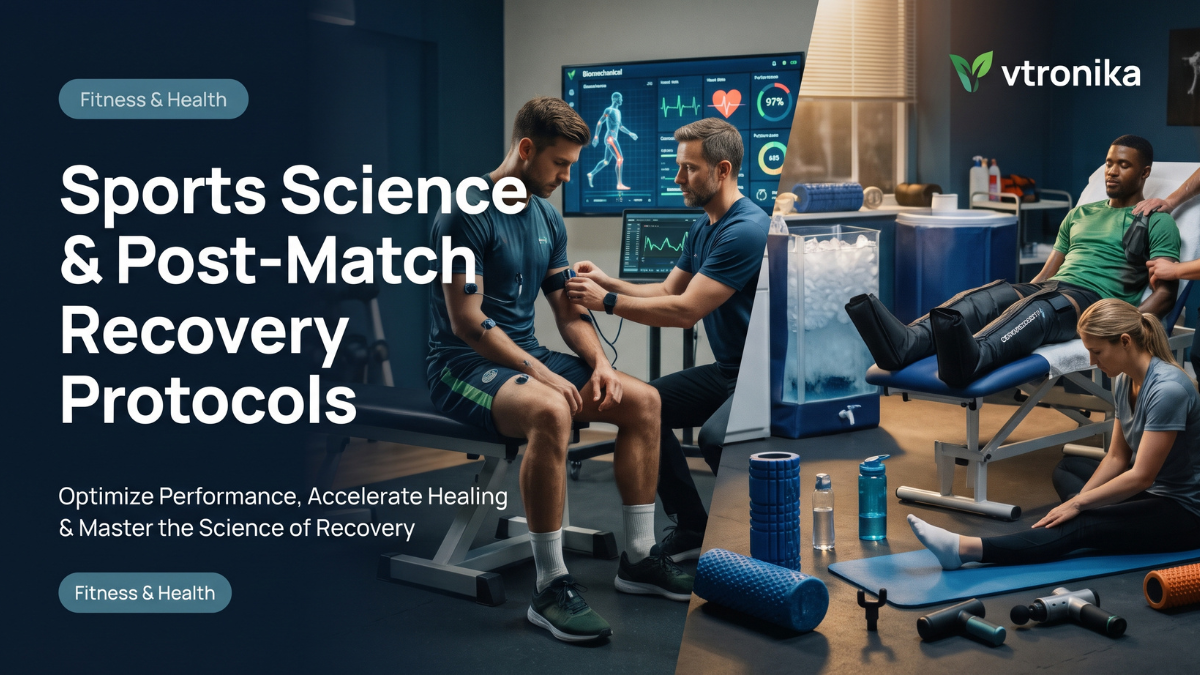
- Targeted Soft-Tissue Therapy: Use foam rolling, percussion massage guns, and contrast therapy (alternating hot sauna/baths and cold plunges) to alleviate systemic inflammation and relieve muscular tightness in overworked calves, quads, and back muscles.
8. Sports Footwear and Surface Mechanics: Selecting the Right Cleats and Shoes
The wrong footwear compromises performance and dramatically increases injury risks. Traction must match the specific playing surface and biomechanical needs of the athlete.
- Surface-Specific Outsoles:
- Firm Ground (FG): Molded plastic studs designed for dry, natural grass fields.
- Artificial Grass (AG): Shorter, hollow circular studs that reduce traction drag on rubber-infill turf, preventing caught studs that torque the knee.
- Court/Indoor (IC/IN): Non-marking gum-rubber soles engineered for grip and lateral stopping power on polished hardwood or concrete.
- Foot Support and Ankle Mechanics: Athletes with flat arches or hypermobility require footwear with rigid midfoot shanks and reinforced heel counters to prevent lateral roll.
- Fit and Break-In Period: Ensure half a thumb’s width of space at the toe box to prevent black toenails from repetitive hard stops. Never debut new shoes or cleats directly in a competitive match; wear them through several training sessions first.
9. High-Performance Apparel and Protective Gear: Function, Fit, and Safety
Modern athletic apparel has evolved from simple cotton jerseys into engineered technical gear designed to regulate temperature, improve circulation, and protect vital anatomy.
- Moisture-Wicking and Thermoregulation: Synthetic fibers (polyester, nylon, elastane blends) pull sweat away from the skin to evaporate quickly, preventing heavy, waterlogged fabric from causing chafing or hypothermia in cold, wet conditions.
- Compression Garments: Graduated compression tights and calf sleeves improve venous blood return, reduce muscle oscillation during high-impact movement, and minimize perceived muscle soreness during extended training sessions.
- Impact Protection: Helmets, mouthguards, shin guards, and padded compression shirts must be properly fitted and meet certified safety standards. Inspect gear regularly for structural degradation, micro-cracks, or compressed padding that no longer absorbs shock.
10. Wearable Tech and Data-Driven Performance: Monitoring Load and Health Metrics
Smart devices and biometric tracking have made professional-level performance analytics accessible to every dedicated athlete. Using data prevents overtraining and tracks progress objectively.
- GPS and Workload Metrics: GPS vests track total distance covered, sprint speed, acceleration counts, and high-intensity running zones. Tracking Acute-to-Chronic Workload Ratios (ACWR) helps identify sudden workload spikes that precede soft-tissue strains.
- Heart Rate and Recovery Biomarkers: Monitor Heart Rate Variability (HRV) and Resting Heart Rate (RHR) each morning using smart rings or watches. A suppressed HRV combined with elevated resting pulse signals central nervous system fatigue, indicating the athlete should dial back intensity for that day.
- Objective Benchmark Testing: Test vertical jump height, 40-yard dash, or beep tests every 6 to 8 weeks. Rely on objective data rather than guesswork to measure training effectiveness and adjust programming accordingly.